
Stepping into the role of caregiver for an aging parent often feels overwhelming, marked by a sudden influx of responsibilities that can be difficult to manage. Juggling medical appointments, financial paperwork, daily safety concerns, and personal well-being requires a clear, organized approach. This is where a structured plan becomes not just helpful, but essential.
This comprehensive elderly parent care checklist is designed to be your roadmap, breaking down the complex process into manageable, actionable steps. It moves beyond generic advice, offering a detailed guide to creating a robust support system for your loved one. Think of it as a blueprint for building a safe, dignified, and comfortable environment for them to age in place gracefully.
From conducting a foundational health and safety assessment to organizing critical legal documents and arranging professional in-home care, each section provides the practical details you need. We will cover how to manage medications effectively, implement a fall prevention strategy, and coordinate with healthcare providers. For those in New Jersey, we will also touch on navigating local resources like Medicaid for home care services.
By following this guide, you can transition from a state of uncertainty to one of confident, compassionate control. It empowers you to create a supportive environment where your parent can thrive while also helping you maintain your own peace of mind. Let’s begin building your personalized care plan.
1. Conduct a Comprehensive Health and Safety Assessment
The first and most crucial step in any elderly parent care checklist is to establish a clear, comprehensive baseline of your parent's current situation. A thorough health and safety assessment is not just a casual check-in; it's a systematic evaluation of their medical status, cognitive function, mobility, and home environment. This foundational assessment serves as the cornerstone of your entire care plan, helping you identify immediate needs, anticipate future challenges, and make informed decisions.

This process moves beyond surface-level observations. For instance, an assessment might reveal that a parent’s recent confusion isn't early dementia but a side effect of a new medication or a urinary tract infection. Similarly, a home safety walkthrough could identify a loose rug or poor bathroom lighting as a serious fall risk, prompting simple yet life-saving modifications like installing grab bars.
Key Insight: A formal assessment creates an objective record. This documentation is invaluable for coordinating with doctors, family members, and potential in-home caregivers, ensuring everyone is working from the same set of facts.
How to Implement Your Assessment
To conduct an effective assessment, you need to be methodical. The goal is to gather detailed information across several key domains.
- Medical Evaluation: Compile a complete list of all medical conditions, past surgeries, and current healthcare providers. Review all medications, including prescriptions, over-the-counter drugs, and supplements, with a pharmacist to check for dangerous interactions.
- Home Safety Check: Walk through every room in their home specifically looking for hazards. Check for adequate lighting, secure railings, clear pathways, and potential fall risks like clutter or unsecured cords. Pay special attention to the bathroom and kitchen.
- Cognitive and Functional Screening: Observe your parent’s ability to manage Activities of Daily Living (ADLs) like bathing and dressing, and Instrumental Activities of Daily Living (IADLs) such as cooking and managing finances. For cognitive concerns, a primary care physician can administer screenings like the Mini-Mental State Exam (MMSE).
- Actionable Tip: Consider hiring a professional geriatric care manager for an objective, expert evaluation. They are trained to spot subtle issues families might miss and can provide a neutral perspective, which is especially helpful if family dynamics are complex. Schedule regular reassessments every 6-12 months or whenever there is a significant change in health.
2. Organize and Manage Medical Records and Medications
After establishing a baseline health assessment, the next critical step in any elderly parent care checklist is to create a centralized system for all medical information. Disorganized records and poor medication management are among the most significant threats to a senior's well-being. This step involves methodically tracking doctor's names, appointment schedules, test results, diagnoses, and a complete medication list, including dosages and pharmacy contacts. This organizational framework is essential for coordinating care among multiple specialists and ensuring every caregiver has accurate, up-to-date information.

The consequences of poor medical organization can be severe. For example, a complete record might reveal that a parent is taking duplicate blood pressure medications prescribed by two different specialists, preventing a dangerous overdose. In another scenario, an organized list detailing a parent's known allergies could prevent an emergency room doctor from prescribing a medication that would cause a life-threatening reaction. This system transforms chaotic information into a clear, actionable resource.
Key Insight: A well-maintained medical binder or digital file acts as a single source of truth. It empowers you to be a more effective advocate during doctor visits, hospitalizations, and emergencies, ensuring continuity and safety of care.
How to Implement Your Organizational System
Effective medical management requires a systematic and consistent approach. The goal is to make critical information easily accessible to family, doctors, and caregivers.
- Create a Central Medical Binder: Use a three-ring binder with color-coded tabs for different categories like "Doctors," "Medications," "Test Results," and "Insurance." Include contact information for all providers, a full medical history, and a log of recent appointments.
- Master Medication Management: Maintain an up-to-date list of all prescriptions, over-the-counter drugs, and supplements. For each, note the dosage, frequency, prescribing doctor, and purpose. Use a labeled pill organizer to prevent missed or double doses. For more complex schedules, you can learn more about effective senior medication management.
- Leverage Digital Tools: Utilize HIPAA-compliant platforms like MyChart or pharmacy apps (CVS, Walgreens) to access records, schedule appointments, and request refills. These tools can consolidate information from multiple healthcare systems into one convenient location.
- Actionable Tip: Create a portable "Medical Summary Card" that fits in your parent's wallet. This card should list their full name, date of birth, primary doctor's contact info, major medical conditions, allergies, and a complete list of current medications. Update this card and the main binder after every single doctor's visit or medication change to ensure it remains accurate.
3. Establish Legal and Financial Planning Documents
Navigating your elderly parent care checklist requires addressing the often-uncomfortable but critical area of legal and financial planning. Establishing these documents is not about planning for the worst; it's about empowering your parent and family to honor their wishes and protect their assets. This involves creating a set of advance directives and legal instruments that grant specific individuals the authority to make decisions on your parent’s behalf if they become incapacitated.
These documents are proactive tools designed to prevent legal chaos during a crisis. For example, without a designated healthcare proxy, a family might face a costly and lengthy court battle for guardianship if a parent has a sudden stroke. Similarly, a living will ensures that a parent’s deeply held beliefs about end-of-life care are respected, preventing unwanted and invasive medical treatments.
Key Insight: These legal documents are only effective if they are created before they are needed. Once a parent loses cognitive capacity, they can no longer legally sign these forms, which can lead to immense stress and financial burden for the family.
How to Implement Your Legal and Financial Plan
The goal is to create a clear, legally-binding framework that outlines your parent's wishes and designates trusted decision-makers. This process requires open communication and professional guidance.
- Consult an Elder Law Attorney: This is the most critical step. A specialized attorney, particularly one familiar with New Jersey law, can draft essential documents like a Power of Attorney (for finances) and a Healthcare Proxy (for medical decisions). They can also guide you on Medicaid planning and asset protection.
- Create Advance Directives: Work with your parent to create a living will, which details their preferences for medical treatments like life support. Additionally, a HIPAA authorization form is crucial, as it allows doctors to legally share medical information with designated family members.
- Organize and Distribute Documents: Once signed, store original documents in a secure, accessible location like a safe deposit box. Provide copies to the designated agents (the people named in the documents), primary care physicians, and other relevant family members so everyone is informed.
- Actionable Tip: Schedule a family meeting to discuss these documents openly. It’s vital that the chosen healthcare proxy fully understands your parent's values and is emotionally prepared to make difficult decisions. Review all documents every 3-5 years or after a major life event, such as a new diagnosis or the death of a spouse, to ensure they remain current. For more details on the specific forms, you can learn more about medical and financial power of attorney in New Jersey.
4. Arrange Professional In-Home Care Services and Caregiver Support
For many families, providing comprehensive care becomes a balancing act that is unsustainable without outside help. Arranging for professional in-home care is a pivotal step in any elderly parent care checklist, providing essential support that allows your parent to age safely and comfortably in their own home. These services range from companionship and personal care to specialized nursing for complex medical conditions, bridging the gap between family assistance and full-time residential care.

This step is not about replacement but reinforcement. For instance, a professional caregiver can assist a parent with Parkinson’s disease with morning routines and medication management, allowing their adult child to maintain their full-time job. Similarly, scheduled respite care can give a primary family caregiver 20 hours of relief a week, a crucial intervention for preventing burnout and depression. Professional support makes the entire care ecosystem more resilient and effective.
Key Insight: Professional in-home care is a proactive strategy, not a last resort. Introducing services early can prevent crises like falls or hospitalizations, improve health outcomes, and preserve family relationships by reducing caregiver stress.
How to Implement Your Care Plan
Finding the right in-home care provider requires a structured and diligent approach. The goal is to match your parent’s specific needs with a qualified, trustworthy, and compatible caregiver or agency.
- Assess and Define Needs: Before contacting agencies, create a detailed list of required tasks. Specify needs like assistance with bathing (ADLs), meal preparation (IADLs), medication reminders, transportation to appointments, or specialized dementia support.
- Research and Vet Providers: Interview at least three different agencies, such as local providers like NJ Caregiving or national franchises like Home Instead Senior Care. Ask about their screening process, caregiver training, and insurance. Always request and check multiple references from current or former clients.
- Verify Credentials: Confirm that the agency is licensed, bonded, and insured. Ensure that all caregivers have undergone thorough background checks, possess the necessary certifications, and have training relevant to your parent’s specific conditions.
- Actionable Tip: If cost is a significant barrier, investigate New Jersey's Medicaid waiver programs, like the Home and Community-Based Services (HCBS) waiver, which can fund in-home care for eligible seniors. Start with a part-time schedule to allow your parent and the caregiver an adjustment period, and establish clear, consistent communication protocols from day one.
5. Monitor Cognitive and Mental Health Status
An essential part of any elderly parent care checklist is the proactive monitoring of cognitive and mental well-being. This goes beyond casual conversations and involves systematically observing and tracking your parent's memory, mood, reasoning, and overall mental state. This focused assessment helps in the early detection of conditions like dementia, Alzheimer's disease, or depression, which are often missed or attributed to normal aging.
Early identification is critical. For instance, a family might notice a parent repeatedly asking the same questions. A prompt visit to a geriatrician could lead to an early Alzheimer's diagnosis, allowing the family to access support groups and plan for the future while the parent can still participate. In another case, behavioral changes that seem like dementia could actually be depression, a treatable condition that, once addressed, can significantly restore a parent’s quality of life.
Key Insight: Many cognitive symptoms are reversible. Issues like a urinary tract infection, a vitamin deficiency, or side effects from a new medication can mimic dementia. Consistent monitoring helps differentiate these from progressive cognitive decline.
How to Implement Your Monitoring
Effective monitoring requires a structured approach that combines observation with professional evaluation. The goal is to establish a baseline and note any significant deviations over time.
- Establish a Cognitive Baseline: During a routine check-up, ask the primary care physician to perform a baseline cognitive screening, such as the Montreal Cognitive Assessment (MoCA) or Mini-Mental State Exam (MMSE). This provides an objective starting point.
- Keep a Detailed Observation Journal: Document specific changes you notice. Instead of writing "mom was confused," note "mom got lost driving to the grocery store she's been going to for 20 years on Tuesday." Track memory lapses, personality shifts, and difficulties with complex tasks. This log is invaluable for doctor appointments.
- Screen for Depression: Mood changes are as important as memory issues. Look for signs of withdrawal, loss of interest in hobbies, changes in appetite, or persistent sadness. Depression is common in seniors and can severely impact cognitive function.
- Actionable Tip: Schedule an annual medication review with your parent's pharmacist specifically to discuss potential cognitive side effects. Some common medications for blood pressure or sleep can cause confusion and memory fog. A simple adjustment could lead to a dramatic improvement in mental clarity. Also, actively involve your parent in brain-healthy activities like puzzles, social clubs, and reading to support cognitive resilience.
6. Develop a Nutrition and Hydration Plan
Proper nutrition and hydration are fundamental pillars of health that directly impact an elderly parent's strength, cognitive function, and ability to resist illness. As part of a comprehensive elderly parent care checklist, creating a dedicated nutrition and hydration plan is a proactive measure to prevent common issues like malnutrition, dehydration, and frailty. This goes beyond just providing meals; it involves a thoughtful strategy tailored to their specific medical needs, dietary restrictions, and personal preferences.
A well-designed plan can yield significant benefits. For example, for a parent with diabetes and swallowing difficulties, a plan that includes texture-modified meals carefully timed with insulin injections can prevent dangerous blood sugar fluctuations. For another parent experiencing confusion, simply increasing fluid intake by tracking water, juice, and soups can reduce urinary tract infections and improve mental clarity.
Key Insight: Nutrition and hydration are often the first areas to decline with age, but they are also among the most modifiable. A structured plan transforms eating and drinking from a daily chore into a powerful tool for maintaining health and independence.
How to Implement Your Assessment
Building an effective plan requires careful observation, planning, and often, professional guidance. The goal is to make mealtimes safe, enjoyable, and nutritionally beneficial.
- Consult a Professional: Work with your parent's doctor or a registered dietitian to create a personalized plan. They can address dietary needs related to conditions like heart disease or kidney issues and recommend appropriate nutritional supplements if food intake is insufficient.
- Adapt to Their Needs: Offer five to six small, nutrient-dense meals throughout the day instead of three large ones, which can be overwhelming. If they have trouble with utensils, invest in adaptive eating aids. Accommodate food preferences and cultural favorites to make eating more enjoyable.
- Prioritize Hydration: Many seniors have a diminished sense of thirst. Encourage consistent fluid intake by keeping a water bottle nearby, offering foods with high water content like fruits and soups, and using a simple log to track consumption.
- Actionable Tip: Prepare and freeze single-portion meals in advance. This ensures your parent has access to healthy, safe food, especially on days when you or another caregiver cannot be there to cook. Label each meal clearly with the contents and reheating instructions. Monitor your parent’s weight weekly and report any significant, unplanned changes to their doctor immediately.
7. Create a Fall Prevention and Home Safety Plan
For aging adults, a fall can be a catastrophic event, often leading to serious injury, loss of independence, and a significant decline in quality of life. An essential part of any elderly parent care checklist is proactively creating a comprehensive fall prevention and home safety plan. This goes beyond simple tidying up; it involves a systematic approach to identifying and mitigating risks within your parent's living environment, addressing physical limitations, and establishing clear safety protocols.
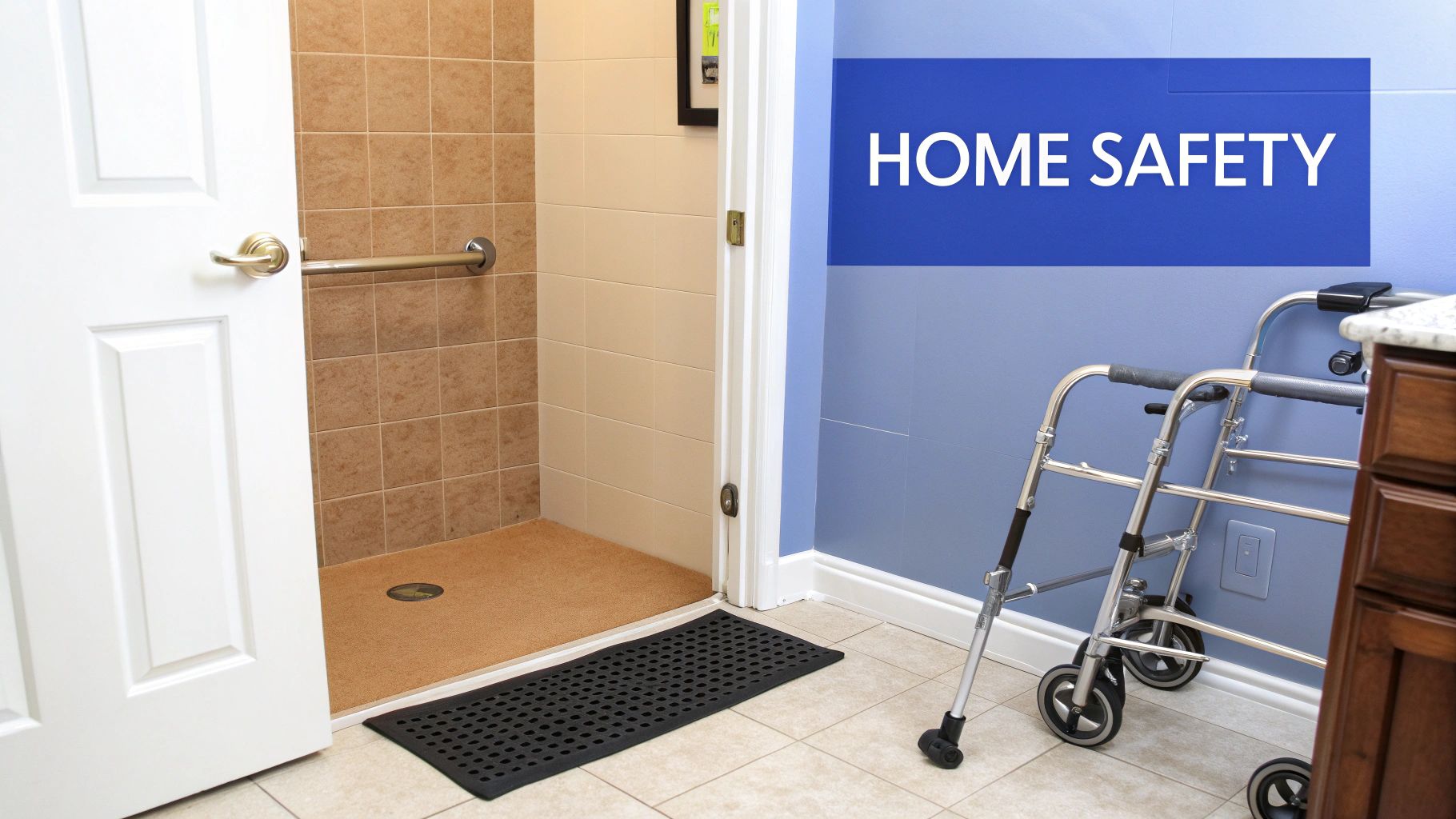
The goal is to create a safe space that supports their mobility and confidence. For example, a family might notice their father has had several near-falls. A thorough plan could lead them to remove hazardous throw rugs and install a medical alert system, which later enables a rapid response when a fall does occur, preventing a long lie time. This proactive stance transforms the home from a place of potential danger into a secure haven.
Key Insight: Fall prevention is not a one-time task but an ongoing strategy. It combines environmental modifications with personal health management, including regular exercise, medication reviews, and vision checks, to address the root causes of falls.
How to Implement Your Safety Plan
A multi-faceted approach is most effective for reducing fall risk. Focus on making both the environment and your parent safer and more resilient.
- Environmental Modifications: Conduct a room-by-room walkthrough to eliminate hazards. Remove clutter and throw rugs, secure electrical cords away from walkways, and ensure all areas are well-lit, especially pathways to the bathroom at night. Install grab bars near toilets and in showers, and place non-slip mats in the bathroom and kitchen. For long-term safety and comfort, exploring options for an aging in place bathroom remodel can significantly adapt the home to their changing needs.
- Medical and Physical Interventions: Schedule a medication review with their pharmacist, as some drugs can cause dizziness or affect balance. Ensure their eyeglass prescription is current. Encourage participation in strength and balance exercises, like tai chi or programs recommended by a physical therapist.
- Emergency Preparedness: Equip your parent with a medical alert system, such as a necklace or wristband. This ensures they can call for help immediately after a fall, even if they cannot reach a phone. Practice what to do in an emergency with all family members and caregivers.
- Actionable Tip: Hire an occupational therapist for a professional home safety assessment. They are trained to identify subtle risks that family members might overlook and can provide customized recommendations for assistive devices and home modifications. You can find many valuable strategies and resources for fall prevention for elderly at home.
8. Schedule and Coordinate Regular Healthcare Provider Appointments
A crucial part of any elderly parent care checklist is establishing a proactive and organized system for managing all healthcare appointments. This goes far beyond simply booking a time slot; it involves a comprehensive process of scheduling, preparing for, attending, and diligently following up on every visit. Proper coordination ensures that chronic conditions are monitored, preventive care is maintained, and new health issues are addressed promptly before they escalate.
This systematic approach can have a profound impact on your parent's health outcomes. For instance, a regular primary care visit might lead to the early detection of a thyroid issue causing fatigue, while a coordinated medication review with a specialist could prevent a dangerous drug interaction. An organized system ensures that annual screenings, like mammograms or colonoscopies, are not missed, which could lead to detecting a condition at its most treatable stage.
Key Insight: Consistent and coordinated medical oversight acts as a safety net. It creates a complete, up-to-date picture of your parent's health, allowing providers to make better-informed decisions and preventing critical details from falling through the cracks between different specialists.
How to Implement Your Appointment Coordination
Effective management requires a clear, repeatable process. The goal is to create a reliable system that ensures every appointment is productive and that all follow-up actions are completed.
- Create a Centralized System: Maintain a master list of all healthcare providers, including their names, specialties, and contact information. Use a shared digital or physical calendar to track all appointments, tests, and follow-ups so family members stay informed.
- Prepare for Every Visit: Before each appointment, compile a list of current symptoms, questions for the doctor, and any changes in your parent's condition. Always bring their ID, insurance cards, and a complete, updated list of all medications.
- Actively Participate and Document: If possible, attend appointments to hear information firsthand and act as your parent’s advocate. Take detailed notes on the doctor’s findings, recommendations, and any new prescriptions or treatment plans. Request a written summary of the visit before you leave.
- Actionable Tip: To make the most of each visit, request the first appointment of the morning when your parent is more alert and the clinic is less likely to be running behind schedule. For complex issues, ask for an extended appointment slot when booking. Always follow up on test results and schedule any recommended specialist visits immediately to maintain momentum in their care plan.
8-Point Elderly Parent Care Checklist Comparison
| Item | Implementation complexity 🔄 | Resource requirements & efficiency ⚡ | Expected outcomes ⭐📊 | Ideal use cases 💡 | Key advantages ⭐ |
|---|---|---|---|---|---|
| Conduct a Comprehensive Health and Safety Assessment | Medium–High 🔄 — multidisciplinary coordination, tests | Moderate time; clinician/geriatric assessor, tools; lower speed (periodic) ⚡ | High ⭐⭐⭐⭐ — baseline established; risks and care needs identified 📊 | New concerns, post-discharge, baseline care planning 💡 | Early risk detection; informs personalized care plans ⭐ |
| Organize and Manage Medical Records and Medications | Medium 🔄 — initial build then ongoing updates | Low–Moderate time; secure binder/portal, pharmacist review; improves efficiency ⚡ | High ⭐⭐⭐⭐ — fewer med errors; faster emergency response 📊 | Polypharmacy, multiple specialists, frequent visits 💡 | Prevents interactions, streamlines provider communication ⭐ |
| Establish Legal and Financial Planning Documents | Medium 🔄 — legal steps and signatures required | Moderate cost and time; elder-law attorney, notarization; one-time effort yields efficiency ⚡ | Very High ⭐⭐⭐⭐ — legal authority, reduced disputes, smoother decisions 📊 | Incapacity risk, asset protection, Medicaid planning 💡 | Protects wishes, avoids guardianship/probate delays ⭐ |
| Arrange Professional In-Home Care Services and Caregiver Support | Medium 🔄 — vetting, scheduling, ongoing supervision | High ongoing cost; agency/staffing, training, backup plans; variable speed ⚡ | High ⭐⭐⭐⭐ — safety, independence, reduced readmissions 📊 | ADL assistance, chronic conditions, caregiver respite 💡 | Enables aging in place with trained support; flexible care options ⭐ |
| Monitor Cognitive and Mental Health Status | Medium 🔄 — regular screening and documentation | Moderate; screening tools, clinician/neuropsych consults; quicker detection improves outcomes ⚡ | High ⭐⭐⭐ — early diagnosis, targeted interventions, fewer crises 📊 | Suspected memory decline, mood changes, dementia risk 💡 | Distinguishes causes (depression vs dementia); guides care and legal planning ⭐ |
| Develop a Nutrition and Hydration Plan | Low–Medium 🔄 — assessment and meal planning | Moderate; dietitian, meal prep/meal services, supplements; steady daily effort ⚡ | High ⭐⭐⭐⭐ — prevents malnutrition, supports chronic disease management 📊 | Weight loss, swallowing issues, diabetes/heart disease management 💡 | Maintains strength, healing, cognition; reduces hospitalizations ⭐ |
| Create a Fall Prevention and Home Safety Plan | Medium 🔄 — assessment, modifications, training | Moderate; OT assessment, minor modifications, assistive devices; rapid benefit once done ⚡ | Very High ⭐⭐⭐⭐ — fewer falls/injuries; sustained mobility and independence 📊 | History of falls, mobility impairment, cluttered home 💡 | Reduces injuries and costs; many low-cost fixes available ⭐ |
| Schedule and Coordinate Regular Healthcare Provider Appointments | Medium 🔄 — continual calendar and follow-up work | Moderate time; transport, scheduling tools, caregiver time; improves care flow ⚡ | High ⭐⭐⭐⭐ — better chronic disease control, early problem detection 📊 | Complex care plans, multiple specialists, preventive care needs 💡 | Ensures continuity, prevents gaps/duplication of care ⭐ |
Putting Your Plan into Action with Confidence and Support
Navigating the journey of caring for an elderly parent can feel like assembling a complex puzzle. This comprehensive elderly parent care checklist provides the framework, organizing the essential pieces from medical management and home safety to legal preparations and caregiver support. Completing this checklist is a monumental achievement, transforming a daunting responsibility into a series of manageable, actionable steps.
The true value of this guide lies not in a one-time completion but in its role as a living document. Your parent's needs are not static; they will evolve with time, health changes, and life circumstances. Regularly revisiting each section, from the fall prevention plan to the organization of financial documents, is crucial. This proactive approach allows you to anticipate challenges, adapt your care strategy, and maintain a sense of control and preparedness.
From Checklist to Confident Caregiving
Think of this checklist as more than just a list of tasks; it is a communication tool and a foundation for your caregiving philosophy. It empowers you to have structured, meaningful conversations with your parent, siblings, and healthcare providers. Instead of reacting to crises, you are equipped to build a stable, supportive environment that honors your parent’s dignity and independence.
Key takeaways to carry forward include:
- Proactivity Over Reactivity: Addressing legal documents, home modifications, and care options before they become urgent needs reduces stress and ensures your parent's wishes are respected.
- Centralization is Key: A single, organized system for medical records, contact lists, and medication schedules is your most powerful tool for preventing errors and ensuring seamless coordination among providers.
- You Are Part of the Equation: Effective caregiving is impossible without self-care. Prioritizing your own well-being, seeking respite, and building a support network are non-negotiable components of a sustainable care plan.
The Power of a Comprehensive Support System
Perhaps the most critical insight is that you do not have to do this alone. The journey is far more manageable and rewarding when you build a robust team. This team includes family members who can share responsibilities, friends who offer emotional support, and, crucially, professional caregivers who bring expertise, consistency, and relief.
Leveraging professional services, especially for specialized needs like dementia care or assistance with Activities of Daily Living (ADLs), elevates the quality of life for your parent and preserves your own health. It transforms your role from an overwhelmed, hands-on provider of all tasks to a confident care manager who oversees a team dedicated to your parent’s well-being. By thoughtfully implementing every part of this elderly parent care checklist, you create a resilient, compassionate, and comprehensive system of support. This organized approach not only ensures your parent receives the best possible care but also allows you to navigate your role with greater peace of mind, confidence, and the ability to cherish the time you have together.
Navigating the details of this checklist can be overwhelming, but professional guidance can make all the difference. NJ Caregiving specializes in creating personalized in-home care plans that align perfectly with your elderly parent care checklist, from assistance with ADLs to specialized dementia support in the Princeton and Hamilton areas. Visit NJ Caregiving to learn how our expert team can help you put your plan into action with confidence and compassion.