
When families start exploring care options, the term live-in home care often comes up. But what does it really mean? At its core, it’s a deeply personal and comprehensive way to support a loved one. A dedicated caregiver actually lives in the senior's home, offering consistent, one-on-one support and companionship around the clock.
This setup gives families incredible peace of mind, knowing help is always just a room away. More importantly, it allows seniors to age with dignity in the one place they feel most comfortable: their own home. It’s a powerful alternative to moving into a residential facility.
What Is the Live In Home Care Model
Think of a live-in caregiver as a dedicated household manager whose entire focus is the health, safety, and well-being of your family member. This isn't about scheduled visits for a few hours here and there. Live-in care creates a continuous, stable environment that helps build a deep, trusting bond between the caregiver and the person they're supporting.
The whole model is built on consistency. Because the caregiver lives right there, they become a familiar, reassuring part of the daily routine. They're present not just to help with meals or medication reminders, but to offer a steady presence that can make all the difference. This is especially vital for seniors who get anxious when they're alone or who might need a hand at unpredictable times, day or night.
A Deeper Look at the Benefits
The single biggest advantage of live-in care is the uninterrupted, truly personal attention it provides. A caregiver who is always there gets to know the senior’s routines, preferences, and personality inside and out. This allows for support that’s genuinely customized to their needs—something that’s nearly impossible to replicate in a facility where staff are stretched thin across many residents.
Here are a few of the standout benefits:
- Enhanced Safety and Security: With someone always on hand, you can worry less about falls, emergencies, or other accidents. Help is immediate.
- Greater Independence: Seniors get the exact support they need to keep living in their own homes, surrounded by cherished memories and familiar comforts.
- Meaningful Companionship: The constant presence of a friendly face is a powerful antidote to the loneliness and isolation that can be so detrimental to a senior's health.
At its heart, live-in care isn’t just about managing tasks; it's about preserving dignity, promoting independence, and enhancing the overall quality of life within the comfort of one's own home.
To get a clearer picture, it helps to see how live-in care stacks up against other common senior care options.
Comparing Live-In Care with Other Senior Care Options
Every family's situation is different, so understanding the key distinctions between care models is crucial. This quick comparison should help you see where each one fits.
| Care Type | Setting | Level of Support | Ideal For Seniors Who |
|---|---|---|---|
| Live-In Home Care | Senior's Own Home | Continuous, one-on-one support from a resident caregiver. | Need consistent oversight and companionship but not intensive, 24/7 medical monitoring. |
| Hourly Home Care | Senior's Own Home | Scheduled visits for specific tasks (e.g., 4 hours/day). | Require assistance with daily activities for set periods but are safe alone otherwise. |
| Nursing Home | Residential Facility | 24/7 medical and personal care in a clinical setting. | Have complex medical needs requiring constant skilled nursing supervision. |
Each model serves a valuable purpose. The right choice really comes down to the individual’s specific health needs, their desire for independence, and what will ultimately provide the best quality of life.
Understanding the Scope of Services
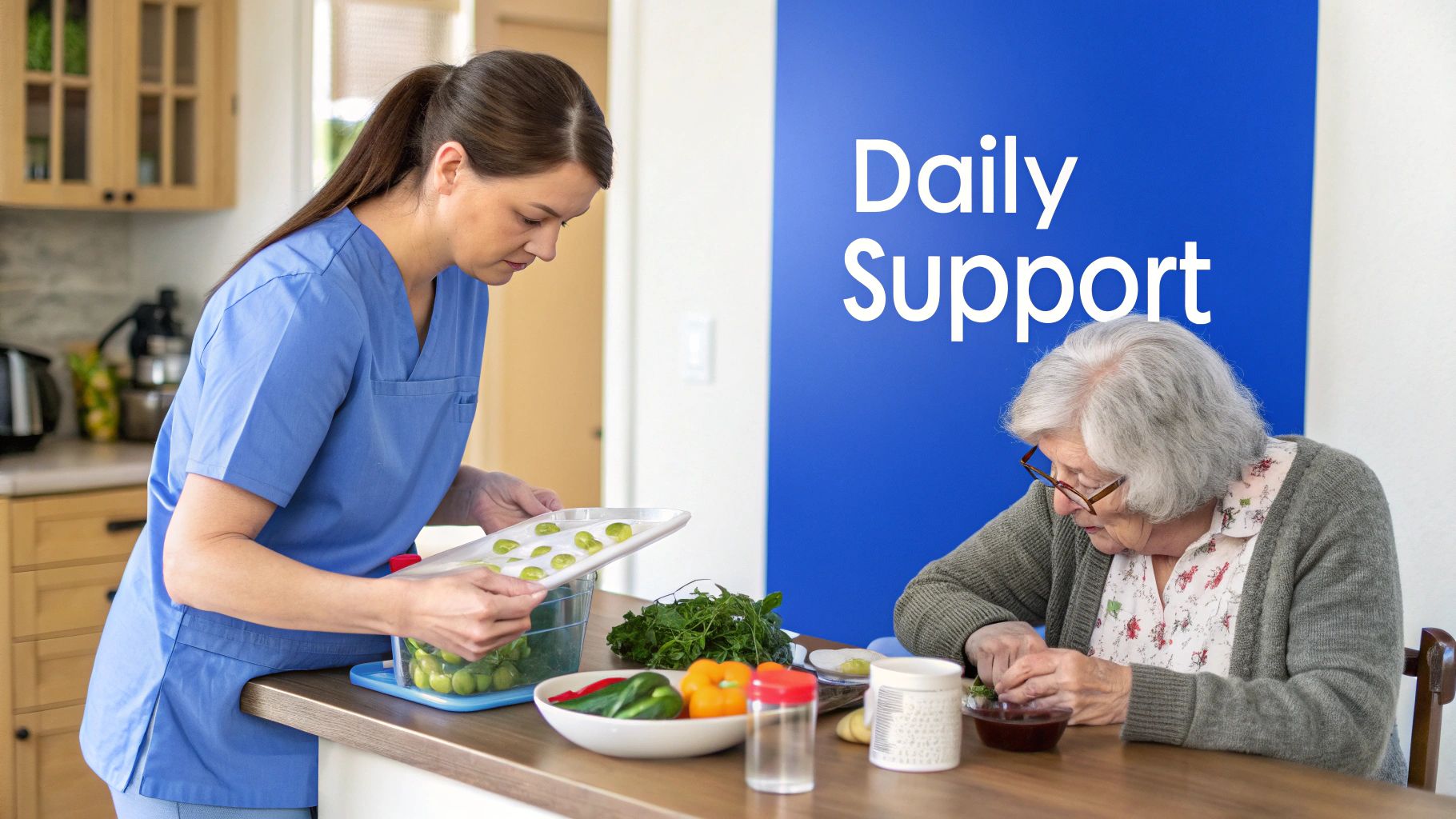
When families start looking into live-in home care, one of the first questions is almost always, "So, what does the caregiver actually do all day?" The answer is that their support becomes part of the very fabric of daily life, creating a safety net that covers physical, practical, and even emotional needs. This isn't just a service—it's more like an integrated partnership designed to make life better.
The best way to think about the services is to see them as three distinct but connected pillars of support. Together, they create a holistic approach that allows a senior to live not just safely, but also comfortably and with dignity, right in their own home.
Let's break down what that really looks like day-to-day.
Personal Care and Assistance
This is the foundation of live-in care, focusing on what experts call Activities of Daily Living (ADLs). These are the basic self-care tasks most of us don't think twice about, but they can become a real challenge with age or illness. A live-in caregiver provides respectful, hands-on help to make sure these fundamental needs are met safely.
Picture a senior in Mercer County with mobility issues who is at a high risk for falls. Their caregiver is right there in the morning to help them get out of bed, assist with bathing and dressing, and make sure they're steady on their feet. This constant presence turns a potentially dangerous part of the day into a secure and dignified routine.
Common personal care services include:
- Mobility Support: Helping with walking, transferring from a bed to a chair, and just moving around the house safely.
- Bathing and Hygiene: Assisting with showers, grooming, and personal cleanliness to maintain comfort and health.
- Toileting and Incontinence Care: Providing discreet and compassionate assistance whenever it's needed.
- Medication Reminders: Making sure medications are taken on schedule and in the right dose—a critical task for managing chronic conditions.
Homemaking and Household Management
Beyond direct personal care, a live-in aide helps manage the household, taking the weight of daily chores off a senior's shoulders. Think of it as maintaining a safe, clean, and nourishing environment. This kind of practical support has a profound impact, making home feel like a place of comfort again, not a source of stress.
For example, a caregiver can prepare meals that follow specific dietary rules, like a low-sodium diet for someone with high blood pressure. They can handle the grocery shopping, light housekeeping like laundry and tidying up, and run errands. This ensures the senior has healthy food, a clean space, and everything they need without having to manage the logistics themselves.
The whole point of homemaking services is to create a seamless, supportive living environment. When a caregiver handles the practical tasks of running a home, it frees the senior to focus on their health and well-being.
Companionship and Emotional Support
This might be the most underestimated, yet vital, pillar of live-in home care. Loneliness and social isolation are serious health risks for seniors, often linked to depression and a decline in cognitive health. A live-in caregiver offers a constant, friendly presence that provides social interaction and emotional reassurance.
It’s so much more than just having another person in the house; it’s about building a real human connection. It could be sharing a conversation over a cup of tea, playing a game of cards, or watching a favorite TV show together. For a senior in Princeton whose family lives far away, this consistent companionship can be an absolute lifeline, preventing isolation and bringing back a sense of connection and purpose.
This emotional support is often what transforms the client-caregiver relationship into a truly meaningful bond, making the whole experience positive and life-affirming.
How Live-In Caregiver Staffing Works
When you hear “live-in care,” it’s easy to picture one person moving in and just… staying. But in reality, professional home care is structured very differently. Agencies have to balance providing seamless, round-the-clock support with preventing caregiver burnout and following labor laws.
Understanding how the staffing actually works is key to setting the right expectations. It all boils down to your loved one’s specific needs, and there are two main ways agencies approach it.
The Single Dedicated Caregiver Model
This is the most common setup for what people typically think of as live-in home care. One primary caregiver lives in the home for a set block of days—maybe four or five in a row—and then takes a few days off to rest and recharge. While they're off, a trusted relief caregiver steps in to ensure there are no gaps in support.
This approach works beautifully for seniors who need someone present for safety, companionship, and help with daily tasks but don't require intensive, hands-on care all through the night. The caregiver sleeps in the home and is on-hand for occasional nighttime needs, but they are legally entitled to their own rest.
- Work Schedule: The main caregiver typically works a 4-5 day stretch, with a relief person covering the rest of the week.
- Breaks and Sleep: Caregivers must have a private space to sleep and are required to get 8 hours of rest, with at least 5 hours of that being uninterrupted sleep. They also get personal and meal breaks during the day.
- Best For: Seniors who are generally safe and can sleep through the night but need the peace of mind that comes with having a consistent presence in the home.
The Team-Based 24-Hour Care Model
Sometimes, a loved one’s needs are more complex. They might be recovering from surgery, have advanced dementia that disrupts their sleep, or need frequent help repositioning. In these situations, having a caregiver who is also sleeping isn’t enough.
That’s where team-based, 24-hour care comes in. This model isn't the same as the standard live-in arrangement. Instead of one person, a team of caregivers works in shifts, usually 8 or 12 hours long, to provide continuous, active support. This means someone is always awake, alert, and ready to help, no matter the time.
A team-based approach provides true, around-the-clock active care. It’s the solution for situations where a sleeping caregiver wouldn’t be sufficient to meet the senior’s intensive needs.
This model is more expensive because it involves more caregiver hours, but it provides the absolute highest level of safety and non-medical supervision. Choosing between these two models is a critical step, and getting familiar with the ins and outs of hiring in-home care will help you make a confident decision for your family.
This distinction is more important than ever as our population ages. The number of Americans aged 65 and older is projected to hit 88.8 million by 2060, driving a massive need for skilled in-home support. To keep up, the direct care workforce grew from 3.5 million in 2014 to 5 million workers by 2023, a clear sign of how vital this industry has become. You can find more statistics on this growing demand in this comprehensive statistical overview.
Navigating the Costs and Payment Options in NJ
Let's talk about the financial side of live in home care. For most families, this is where the planning gets serious. It's not just about the numbers; it's about creating a realistic, sustainable plan that provides peace of mind.
In New Jersey, there’s no one-size-fits-all price tag. The final cost really depends on the specific level of care your loved one needs, the staffing model you settle on, and the agency you choose to work with. While it can feel a little overwhelming at first, the good news is you have options. Exploring them early can make all the difference.
Breaking Down the Primary Payment Methods
Most families in New Jersey use a mix of personal resources and available programs to cover the cost of live-in care. Getting familiar with each avenue is the best first step.
Here are the most common ways to fund care:
- Private Pay: This is the most direct route. Families use personal savings, retirement accounts, or other private assets to pay for services. The biggest advantage here is the flexibility—you have complete control over who you hire and what services are included.
- Long-Term Care Insurance: If your loved one planned ahead with a long-term care policy, now is the time to pull it out. These policies are designed specifically for services like in-home care. You'll want to carefully review the coverage limits, any waiting periods (called "elimination periods"), and what specific conditions trigger the benefits.
- Veterans Benefits: This is a resource that’s often overlooked. Veterans and their surviving spouses may qualify for benefits like the Aid and Attendance pension, which can provide a significant monthly stipend to help pay for home care.
This decision tree helps visualize how different care needs influence the staffing model, which is a major factor in the overall cost.
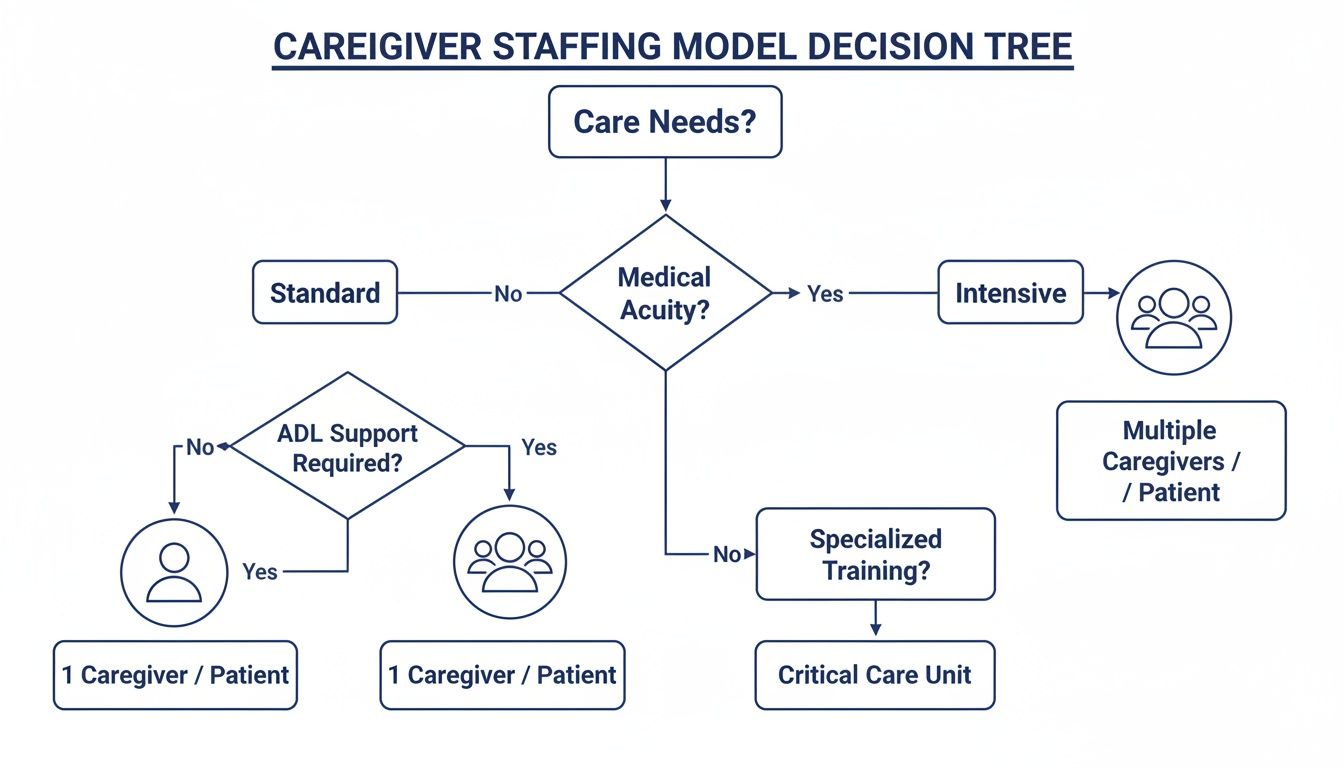
As you can see, a senior with fairly standard needs might do perfectly well with a single caregiver. But for someone with more complex medical issues or significant mobility challenges, a team approach is often necessary to provide truly round-the-clock, active support.
Understanding New Jersey Medicaid Programs
For families who meet certain financial and medical requirements, New Jersey's Medicaid programs can be a lifeline. The main program you'll want to look into is called Managed Long Term Services and Supports (MLTSS).
Think of MLTSS as a complete support system. It’s not just about medical care; it’s designed to provide everything a person needs to stay safe and comfortable at home. This includes in-home personal care, respite breaks for family caregivers, and other community-based services that are all aimed at preventing a move to a nursing facility.
Enrolling in a program like MLTSS can be a game-changer for eligible families, providing access to high-quality live-in care that might otherwise be financially out of reach. It’s designed to honor a senior’s wish to age in place with dignity.
So, who qualifies for MLTSS? Generally, an individual must:
- Be a New Jersey resident who is 65 or older, or an adult with a physical disability.
- Meet both the clinical and financial eligibility rules set by the state. A clinical assessment will determine the level of care needed, while a financial review looks at income and assets.
- Be able to live safely at home with the support the program provides.
The application process can feel a bit tangled, but you don't have to navigate it alone. A great first call is to your local County Area Agency on Aging—they can point you in the right direction.
Creating a Sustainable Financial Plan
Figuring out how to pay for care is a critical piece of the puzzle. The payment methods we've discussed are the most common paths families take.
To help you get a clearer picture, we've put together a simple table outlining how each funding option works.
How to Fund Live-In Home Care in New Jersey
| Payment Method | How It Works | Important Considerations |
|---|---|---|
| Private Pay | Using personal savings, investments, or retirement funds to pay the home care agency directly. | Offers the most freedom and flexibility in choosing caregivers and services. Requires having sufficient personal assets. |
| Long-Term Care Insurance | A private insurance policy purchased in advance that covers long-term care costs once eligibility criteria are met. | You must review your specific policy for details on daily benefit amounts, coverage limits, and elimination periods. |
| Veterans Benefits | Federal programs like the Aid and Attendance benefit provide a monthly pension to eligible veterans and surviving spouses. | The application process can take time. It's best to start early and work with a VA-accredited representative if possible. |
| NJ Medicaid (MLTSS) | A state and federally funded program for low-income individuals who meet medical and financial eligibility requirements. | Provides comprehensive services but has strict income and asset limits. The application process is thorough. |
No matter which path you take—private funds, insurance, or a state program—creating a clear budget is essential. When you partner with a reputable agency, they should provide a completely transparent breakdown of costs so you know exactly what you're paying for.
For a deeper dive into the numbers, check out our guide on in-home caregiver costs. Taking the time to map out your finances and explore every available resource will empower you to make the best decision for your loved one and your family.
How to Choose the Right Home Care Provider
Choosing a partner for live in home care is one of the biggest decisions your family will ever make. This isn't just about hiring a service. You’re inviting someone into your home and entrusting them with a person you love. The right agency becomes an extension of your family, so taking the time to vet them properly is absolutely critical.
Making a good choice starts with knowing what to ask. Any quality provider will welcome your questions and be completely transparent. This is your chance to look past the shiny brochures and really understand their values, procedures, and the safeguards they have in place.
Your Vetting Checklist: Key Questions for Agencies
When you start talking to home care agencies, it's easy to feel overwhelmed. Having a list of questions ready helps you compare apples to apples and make sure nothing important gets missed. Think of this as your roadmap to finding a partner you can truly trust.
Here are the non-negotiable questions you should ask every single provider:
- Screening and Background Checks: How exactly do you screen your caregivers? What's included in your background checks—criminal records, driving history, reference checks?
- Caregiver Training and Qualifications: What kind of initial and ongoing training do you provide? Do your aides have specialized training for conditions like dementia or Parkinson's?
- Liability and Insurance: Is your agency licensed, bonded, and fully insured in New Jersey? Crucially, do you cover your caregivers under worker's compensation?
- Emergency Protocols: What’s the plan if there's a medical emergency or a fall? How do you communicate with the family when something urgent happens?
Asking these tough questions upfront protects both your loved one and your family. A professional, buttoned-up agency will have clear, immediate answers for every single one. That’s how you know they’re committed to safety and accountability.
Evaluating the Care Plan and Communication
A personalized care plan is the heart and soul of quality live-in home care. This shouldn't be a generic checklist; it should be a detailed, living document that covers everything from daily routines and dietary needs to personal preferences and emergency contacts. As you talk to an agency, pay close attention to how they build this plan.
Is it a team effort involving you, your loved one, and a registered nurse or care manager? A one-size-fits-all approach is a huge red flag. The plan should show they see your family member as a unique individual.
The quality of a home care agency is often revealed in its communication style. Look for a partner who is proactive, transparent, and responsive. You should never feel like you’re in the dark about your loved one’s care.
Also, ask them point-blank about their communication rules. How often can you expect updates? Who is your go-to person if you have a question or concern? Clear, consistent communication is what builds the trust you need for a successful long-term care relationship. For more advice on this, check out our detailed guide on how to choose a home care agency.
Understanding the Bigger Picture
The demand for reliable home care is skyrocketing. The global market was valued at around $595.10 billion in 2025 and is expected to hit an incredible $1,193.11 billion by 2032. This explosive growth shows just how many families around the world are choosing to care for their loved ones at home.
This means you have more options than ever, but it also means being a careful consumer is essential. By following a structured approach—asking the right questions, digging into the care planning process, and insisting on clear communication—you can confidently find a provider who will honor your trust and give your loved one the compassionate, professional care they deserve.
Answering Your Key Questions About Live In Care
Deciding to bring a caregiver into your home is a big step, and it naturally comes with a lot of questions. Families want to feel completely comfortable with how live in home care actually works day-to-day. Getting clear on the details is the best way to make sure it's a positive, smooth experience for everyone.
Let's talk through some of the most common questions we hear from families starting this journey. Getting these answers upfront can provide a whole lot of peace of mind.
Live-In vs. 24-Hour Care: What’s the Difference?
This is probably the most frequent point of confusion, and for good reason. Both options ensure someone is always in the home, but they’re built for very different needs and follow completely different staffing models.
-
Live-In Care: Think of this as one primary caregiver who lives in the home as their residence. They are there for support and safety around the clock but are legally required to have a period of uninterrupted sleep. This setup is perfect for seniors who are mostly independent but need consistent help and the security of knowing someone is there overnight, just in case.
-
24-Hour Care: This is a true team approach. Multiple caregivers work in shifts, usually 8 or 12 hours each, to provide continuous, awake coverage. One caregiver hands off to the next, so there's always someone alert and ready to provide hands-on assistance. This is the right choice for individuals with serious medical needs, advanced dementia, or a high risk of falling during the night.
Handling Caregiver Absences
"What happens if our caregiver gets sick or needs a vacation?" It's a critical question, and one you should absolutely be asking. A professional, reputable agency will never leave you in a lurch. They must have a solid system for providing a qualified, fully vetted relief caregiver.
Before you partner with any agency, ask them to walk you through their backup plan. A well-run provider will have a team of skilled caregivers on standby, ready to step in without missing a beat. This ensures your loved one’s care and safety are never compromised.
Peace of mind comes from knowing your chosen agency has a dependable contingency plan. The system for providing relief care is a key indicator of a provider's professionalism and commitment to reliable service.
Meeting and Approving Caregivers
Inviting someone to live in your family member's home is incredibly personal. You absolutely should have the final say in who that person is. Any quality agency will arrange a "meet and greet" before care officially starts, giving you and your loved one a chance to connect with the proposed caregiver.
This meeting is your time to see if the personalities click, ask your own questions, and get a feel for the connection. Your approval is the final, most important step. The real goal is to find a professional who isn't just skilled, but who is also a great personal match. That's the foundation for a trusting, long-term relationship.
It's also common for families to have questions about managing specific health conditions. For example, if a loved one has asthma, choosing the right cleaning products for asthma sufferers is a small but crucial part of creating a healthier, more comfortable home environment.
At NJ Caregiving, we believe in complete transparency and are here to answer every one of your questions. To learn more about our live-in home care services in Mercer County, visit us at https://njcaregiving.com.