
In-home care is a way for seniors to get the support they need to live safely and comfortably right where they want to be: in their own homes. The services can be as simple as having a friendly face to share a cup of tea with or help with laundry, all the way to complex medical care. It's a compassionate and practical alternative to moving into a nursing home, giving families much-needed peace of mind.
Why Families Choose Comfort and Familiarity
For so many families in Mercer County, the conversation about a loved one’s future care is tough. It’s packed with emotion and hard choices. Just think about the Rodriguez family in Princeton. Their mother, Maria, absolutely cherished her home and garden, but a recent fall made it hard for her to manage on her own. The thought of her leaving the house she’d lived in for 40 years was just heartbreaking.
Like millions of others, the Rodriguez family was looking for a solution that would honor Maria’s wishes while making sure she was safe. Their story gets to the heart of a universal desire: we all want our elders to age with dignity in the place they know and love. It’s about so much more than a physical location—it’s about holding onto a sense of self, daily routines, and a lifetime of memories.
Professional in-home care for elderly loved ones is the bridge that makes this possible. It's more than just a service; it's a partnership that helps seniors thrive where they feel most at home.
The Growing Preference for Aging in Place
This desire to stay home isn't just a feeling; it's a powerful trend that’s completely reshaping how we think about senior care. The demand for in-home care is surging as our population ages, and the vast majority want to avoid moving into a facility.
In fact, nearly 90% of seniors say they want to ‘age in place.’ This preference is driving huge growth in the industry, with U.S. home care projected to become a $155.9 billion market by 2025. You can dig deeper into these trends and what they mean on the Future Market Insights website.
Think of this guide as your roadmap. We're going to walk you through:
- The different kinds of in-home support you can get.
- How to figure out costs and funding options right here in New Jersey.
- The steps to finding a provider you can trust.
Our goal is to give you a clear path forward, so you can feel confident you're making the best decisions for the security and well-being of your entire family.
Decoding The Different Types Of In Home Care Services
Choosing the right kind of support for a loved one can feel like learning a whole new language. You hear terms like "personal care" and "skilled nursing" thrown around, and it's easy to get overwhelmed. But figuring out the specific types of in home care for elderly individuals is the most important first step to creating a plan that actually works for your family.
Think of it like building a custom support system. You wouldn't use a hammer to fix a leaky faucet, right? In the same way, you need to match the type of care to the specific situation. Each service is designed to solve different challenges, making sure your loved one gets the precise, effective, and compassionate help they need.
This chart can help you visualize where to start when thinking about the different paths of elder care.
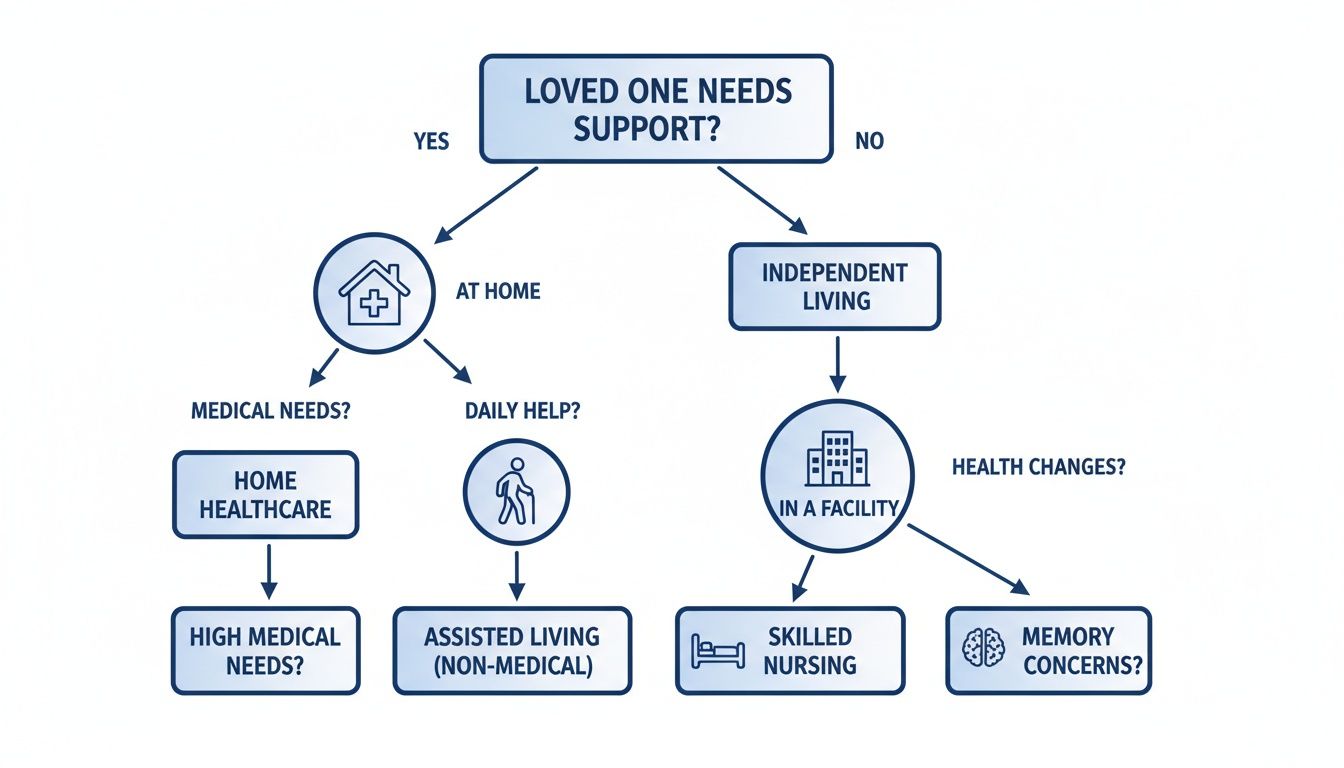
As the flowchart shows, once a family decides that staying at home is the goal, a new set of choices opens up, each tailored to different levels of need. Let's break down what they are.
To make it even clearer, here’s a quick look at how these care types match up with different family needs.
Matching Care Types to Your Family's Needs
| Type of Care | Key Services Provided | Best Suited For Seniors Who… |
|---|---|---|
| Personal Care | Help with bathing, dressing, grooming, mobility, meal prep, and light housekeeping. | Need hands-on help with daily self-care tasks but don't require medical attention. |
| Skilled Nursing Care | Wound care, medication administration (IVs), injections, and complex medical monitoring. | Are recovering from surgery, an injury, or managing a serious health condition under a doctor's orders. |
| Companionship | Social interaction, conversation, playing games, transportation to appointments or events. | Are mostly independent but feel isolated or lonely and would benefit from social engagement. |
| Respite Care | Any of the above services, provided on a short-term or temporary basis. | Have a primary family caregiver who needs a temporary break to rest and recharge. |
This table is just a starting point, of course. Many families find they need a blend of these services, and a good care plan is flexible enough to adapt as needs change over time.
Personal Care Assistance
Personal care is the foundation of most home care plans. It’s all about helping with the Activities of Daily Living (ADLs)—those essential, everyday tasks that are fundamental to taking care of oneself. This kind of non-medical support helps seniors keep their dignity and stick to their routines in the comfort of home.
A certified home health aide (CHHA) is the one who provides this hands-on support. For instance, a CHHA might visit a senior in Hamilton each morning to help them get out of bed safely, take a shower, get dressed, and make a healthy breakfast. Their job is to empower independence while making sure everything is done safely.
Common personal care services include:
- Bathing and Hygiene: Helping with showers, grooming, and dressing.
- Mobility Support: Assistance with walking, transferring from a bed to a chair, and fall prevention.
- Meal Preparation: Planning and cooking nutritious meals that meet dietary needs.
- Light Housekeeping: Tidying up living areas, doing laundry, and running errands.
You can dive deeper into this topic by reading our guide on what is non-medical home care.
Skilled Nursing Care
When a person's health needs are more complex than basic assistance, skilled nursing care is the next step. This is medical-level care that can only be provided by a Registered Nurse (RN) or Licensed Practical Nurse (LPN), always under a doctor's orders. It’s the kind of care you’d get in a hospital, but delivered right in the home.
Think about a senior who has just come home after surgery. A skilled nurse would be there to manage their wound care, administer IV medications, and keep a close eye on their vital signs, helping to prevent complications and make recovery as smooth as possible.
Companionship and Social Engagement
We can’t overstate the impact of loneliness on an older adult's mental and physical health. Companionship care is designed specifically to fight the isolation many seniors feel by providing social interaction and emotional support. It’s about connection.
A companion caregiver might spend afternoons with a client talking, playing cards, going for a walk, or driving them to a doctor's appointment. This service is less about physical tasks and much more about enriching a senior's life. It’s really about being a friend.
Respite Care For Family Caregivers
Family caregivers are the unsung heroes in so many stories, but even heroes need a break. Respite care provides that essential, short-term relief, giving family members a chance to rest, run errands, or even take a vacation knowing their loved one is in great hands.
Respite care isn’t a luxury—it’s a lifeline. It helps prevent caregiver burnout, which impacts over 30% of people caring for an elderly family member.
This type of care can be scheduled for just a few hours a week or for a whole weekend. It ensures the person receiving care has what they need and, just as importantly, supports the well-being of the entire family. To get a better sense of what these professionals do day-to-day, this realistic guide to working in home health care as a CNA offers some great insights.
Recognizing When Your Loved One Needs Support at Home
Deciding to bring in professional help is one of the most difficult and emotional moments for any family. It’s rarely a single event that triggers this. Instead, it’s usually a slow accumulation of small changes—subtle shifts you might notice during a visit or a phone call that leave you with a lingering sense of concern.
The decision can feel overwhelming, but recognizing these signs early is the key to acting proactively. It allows you to prevent a crisis and ensure your loved one remains safe where they're most comfortable: at home. These signals often fall into three main categories: physical challenges, cognitive shifts, and difficulties managing the household. Trust your instincts. If something feels off, it probably is.
Paying close attention to these warning signs allows you to start the conversation about in home care for elderly family members from a place of support, not panic.
Changes in Physical Health and Mobility
The most obvious signs are often physical. These changes can dramatically increase the risk of accidents and signal that your loved one is struggling to manage their daily routine safely on their own.
Look for these key indicators:
- Increased Falls or Unsteadiness: Have you noticed new bruises or scrapes? Do they seem hesitant when walking, maybe using furniture to steady themselves? A history of falls is a major red flag, as one in four older adults reports falling each year.
- Difficulty with Daily Activities: Are they struggling with tasks they once did easily, like bathing, dressing, or even just getting out of a chair? This difficulty can be a sign that basic self-care has become too challenging.
- Significant Weight Loss or Gain: Unexplained changes in weight can point to poor nutrition, difficulty with cooking, or underlying health issues that need attention.
- Neglecting Personal Hygiene: A decline in grooming—like unkempt hair, body odor, or wearing dirty clothes—often indicates that the physical effort of self-care is simply becoming too much.
Shifts in Cognitive Function and Mood
Cognitive and emotional changes can be more subtle, but they're just as critical to observe. These shifts often affect safety, decision-making, and overall well-being, making independent living much riskier.
Consider the following signs:
- Memory Lapses: While some forgetfulness is normal, repeated instances of missing appointments, forgetting to take medication, or asking the same questions over and over are concerning.
- Confusion and Disorientation: Does your loved one get lost in familiar places, lose track of time, or seem confused about their surroundings?
- Changes in Mood or Personality: Have they become unusually withdrawn, irritable, or apathetic? A sudden loss of interest in hobbies and social activities can be a sign of depression or isolation.
Noticing these patterns is the first step toward getting the right support. A professional assessment can help determine the level of care needed. To better understand this process, you can learn more about a comprehensive Activities of Daily Living assessment and what it entails.
Challenges with Household Management
The state of a person's home is often a direct reflection of their ability to cope. A once-tidy house that has fallen into disarray is a clear signal that they are feeling overwhelmed and need a hand.
Watch for these household clues:
- An Untidy or Unsafe Home: Look for clutter, piles of laundry, spoiled food in the refrigerator, or a general lack of cleanliness. These signs indicate that housekeeping has become too physically demanding.
- Unpaid Bills or Financial Confusion: A stack of unopened mail, late payment notices, or strange purchases can suggest they are struggling to manage their finances, making them vulnerable.
- Poor Diet or Lack of Food: Is the kitchen empty, or are they relying on easy-to-make, non-nutritious snacks? This could mean grocery shopping and meal preparation have become too difficult.
Navigating Care Costs and Funding Options in New Jersey
Let's talk about the elephant in the room: the cost. For most families, the financial side of things is the biggest and most stressful question when considering professional support.
The good news is that high-quality in home care for elderly loved ones is often more attainable than you might imagine, especially here in New Jersey. The key is knowing where to look. When you understand the different ways to pay for care, what felt like a huge, scary unknown starts to look like a manageable plan.
Think of it like putting together a financial puzzle. Some pieces might come from personal savings, others from an insurance policy you’ve had for years, and still others from state or federal programs. Our job is to help you see how the pieces fit together for your family’s unique situation. This section is your roadmap to the primary funding options available to New Jersey residents, so you can move forward with real confidence.
Common Ways to Fund In Home Care
Most families end up using a mix of resources to cover the cost of care. Let’s walk through the most common methods, from private funds to programs specifically designed to support seniors.
-
Private Pay: This is the most direct route. Families use their own funds—like savings, retirement accounts, or even a reverse mortgage—to pay for services. The biggest advantage here is flexibility. You have complete control over the type of care and the schedule without needing to meet strict eligibility rules.
-
Long-Term Care Insurance: If you or your loved one planned ahead with a long-term care insurance policy, now is the time to pull it out. These policies are built for this exact situation, designed to cover services like in-home care when someone can no longer handle certain daily activities on their own. You’ll want to review your specific policy carefully to understand the coverage limits, any waiting periods (called "elimination periods"), and exactly what types of care are included.
-
Veterans' Benefits: We can't forget our veterans. The Department of Veterans Affairs (VA) offers several benefits that can help. The VA Aid and Attendance benefit, for instance, provides an additional monthly pension to veterans (and their surviving spouses) who need help with daily activities. It’s a crucial resource that can make a real difference.
The reality of caregiving in America is staggering. Family caregiving has reached unprecedented levels, with 63 million Americans—about one in four adults—serving as caregivers in 2025. The toll is heavy: one in five caregivers reports poor health, and half face negative financial impacts. To help ease this burden, Medicare often plays a significant role, covering up to 28-35 hours of home health services weekly for eligible individuals. Discover more insights about the state of caregiving in the U.S. from AARP.
Leveraging New Jersey Medicaid for Home Care
For many New Jersey families, the state’s Medicaid programs are the single most important resource for funding in-home care. New Jersey is strongly committed to helping seniors age in place, and its programs are designed to do just that by covering a huge range of home and community-based services.
The main program that makes this possible is Managed Long Term Services and Supports (MLTSS). At its core, MLTSS is designed to be an alternative to nursing home placement. Instead of having to move into a facility to get help, this program allows a senior to receive the support they need right in the comfort of their own home.
Understanding MLTSS Eligibility
Getting approved for MLTSS involves meeting two different sets of criteria: one financial, one clinical.
-
Financial Eligibility: This part is all about the numbers. The state looks at an applicant's monthly income and their total assets to see if they qualify. These limits are updated periodically, but they're specifically designed to help low-to-moderate-income seniors get the care they need.
-
Clinical Eligibility: This determines the need for care. A registered nurse will come out to do a clinical assessment to confirm that the applicant requires a "nursing-facility level of care." This simply means they need hands-on help with several activities of daily living, like bathing, dressing, getting around safely, or eating.
Once approved, a managed care organization (MCO) partners with the family to create a personalized care plan. This plan details exactly which services will be covered, from personal care and skilled nursing to respite for family caregivers and even home modifications to improve safety.
While the application process can feel a little complicated, getting through it opens the door to consistent, funded care that can be a lifeline for families. You can learn much more about eligibility and services in our detailed guide on NJ Medicaid waiver programs.
How to Choose the Right In Home Care Provider
Picking a partner for in home care for the elderly is easily one of the biggest decisions your family will make. This isn't just about hiring help for a few tasks. You're inviting someone into your loved one's home and placing their well-being in that person's hands. The process takes some real diligence, but if you know what to look for, you can move forward with total confidence.
Think of it like hiring for the most important job in the world—because, in many ways, it is. You need a provider that’s not only qualified on paper but also compassionate, reliable, and just a good fit for your family's personality. Taking the time now to properly vet agencies in the Mercer County area will bring you peace of mind and ensure your loved one gets the care they truly deserve.

Your Non-Negotiable Agency Checklist
Before you even pick up the phone, it’s a good idea to create a list of must-haves. These are the absolute basics that any reputable home care agency needs to have in place to guarantee safety, professionalism, and quality.
Consider these your non-negotiables:
- State Licensing and Accreditation: In New Jersey, home care agencies are required to be licensed. This is your first, most basic quality check. It proves they meet the state's minimum standards to operate.
- Comprehensive Insurance: The agency must carry liability insurance, bonding, and workers' compensation. This is crucial because it protects your family from any financial responsibility if there's an accident or theft.
- Thorough Caregiver Screening: A quality provider will have a rock-solid hiring process. This means mandatory national criminal background checks, solid reference verification, and a skills assessment to make sure caregivers are competent.
- Ongoing Training and Supervision: Good caregiving evolves. The best agencies invest in continuous education for their staff, covering topics like dementia care, safety protocols, and communication. They should also have a Registered Nurse (RN) on staff who supervises the caregivers.
The in-home care industry is massive, with over 507,000 businesses in the US. With so many choices, the quality can be all over the map. But here's an encouraging number: among the 12 million Americans who receive home health care each year, client satisfaction is a sky-high 91% when the right provider is chosen. That just goes to show how critical it is to do your homework. You can learn more about industry statistics from IBISWorld.
Critical Questions to Ask Potential Providers
Once you've got a shortlist of agencies that tick all the basic boxes, it's interview time. Your goal here is to get a feel for their process and their philosophy of care. The way they answer these questions will tell you a lot about their commitment to the people they serve.
Use this list to guide your conversations:
-
How do you create and update the care plan?
A one-size-fits-all plan is a red flag. Ask who develops it (it should be an RN), how often it gets reviewed, and how your family is involved in making tweaks as needs change. -
How do you match caregivers to clients?
A great care relationship is all about chemistry. Does the agency actually consider your loved one’s personality, hobbies, and preferences when sending a caregiver? -
What is your protocol for emergencies?
What happens if there's a fall or a sudden medical issue? A professional agency will have clear, written procedures for handling a crisis and letting the family know immediately. -
How do you handle caregiver absences?
Life happens. If the regular caregiver is sick, how does the agency make sure you're not left in the lurch? Ask about their process for sending a qualified substitute.
Finding the right fit is a two-way street. A great agency should be just as interested in learning about your family as you are in learning about them. That partnership approach is a huge sign of a client-focused organization.
Trusting Your Instincts
Finally, after you've checked the licenses, asked the hard questions, and looked over their paperwork, just take a breath. Trust your gut. How did the conversation feel? Did the person you spoke with listen patiently, answer your questions with honesty, and show real empathy?
The relationship you build with your chosen in home care provider is a deeply personal one. The right agency will make you feel heard, respected, and confident from that very first call. That feeling of trust is just as important as any license or policy on a piece of paper.
What to Expect When You Begin Your Care Journey
Making that first call for professional support can feel like the biggest hurdle. It’s completely normal to feel a mix of hope and anxiety, along with a healthy dose of uncertainty. A good provider gets this. They’ll have a clear, straightforward process designed to build trust and put your mind at ease right from the first conversation.
The path to starting in home care for elderly loved ones isn't just a transaction; it's the start of a partnership. The whole point is to move from a place of constant worry to one of confidence, knowing a dedicated team is in your corner. Let’s walk through what this process usually looks like so you know exactly what’s coming.
The Initial Consultation Call
It all begins with a simple phone call. This is your time to share your story, explain your family’s unique situation, and get your first questions answered. A compassionate care coordinator will listen, learn about your loved one’s needs, and give you an idea of which services might be the best fit.
This is a no-pressure, no-obligation chat. Its real purpose is to give you clarity and help you get a feel for whether the agency is the right partner for your family.
The In-Home Assessment and Meeting
If you feel good about that initial call and decide to move forward, the next step is a comprehensive in-home assessment. This meeting is crucial and is almost always led by a Registered Nurse (RN). The RN will visit your loved one’s home to get a complete picture of their health, mobility, daily routines, and living environment.
This is a team effort and should include you, your loved one, and any other key family members. During this visit, the nurse will:
- Evaluate physical and cognitive needs to pinpoint the specific level of support required.
- Assess home safety, looking for potential fall risks or simple modifications that could make a big difference.
- Discuss routines and preferences—from mealtime habits to favorite TV shows—to make sure the care feels personal and respectful.
This face-to-face meeting is where a truly effective plan starts to take shape.
"The in-home assessment is where the care plan truly comes to life. It’s a holistic look at the individual—not just their medical chart, but who they are as a person. This is how we ensure care is respectful, dignified, and genuinely makes their life better."
Developing a Personalized Care Plan
After the assessment, the RN sits down with your family to create a detailed, written care plan. Think of this document as the roadmap for your loved one’s care, outlining every specific task, goal, and preference. It’s also a living document, meant to be flexible and change as your loved one's needs evolve.
This plan will clearly spell out:
- The specific services to be provided (like personal care, meal prep, or medication reminders).
- The schedule of caregiver visits, including days and times.
- Key goals, such as improving mobility, maintaining a healthy diet, or providing social engagement.
- How the agency will communicate with your family to keep you in the loop.
A critical part of providing steady, reliable care is having effective caregiver handoff strategies, particularly if more than one caregiver is involved. This ensures that every member of the care team is always on the same page, providing seamless support.
This collaborative approach guarantees that the care your loved one receives aligns perfectly with their personality and daily life. The entire process is built on partnership and transparency, with the shared goal of helping them live as independently as possible. By understanding these steps, you can feel prepared and empowered as you begin this journey toward compassionate, reliable care.
Your Top Questions About In-Home Care, Answered
Stepping into the world of senior support naturally brings up a lot of questions. We get it. Feeling confident in your decisions starts with getting clear, straightforward answers. Here are some of the most common questions we hear from families just like yours who are exploring in-home care for elderly loved ones.
How Is In-Home Care Different from Assisted Living?
This is probably the most frequent question we get, and the distinction is crucial. In-home care is all about providing personalized, one-on-one support right in the comfort and familiarity of a senior's own home. It’s built around their existing life and routines.
Assisted living, on the other hand, is a residential community. It’s a group setting where housing, meals, and care are provided on-site. The biggest difference comes down to the environment—your loved one’s cherished home versus a new facility—and the dedicated, individual attention that only home-based care can offer.
What Happens If Our Regular Caregiver Is Unavailable?
Life happens! A professional agency will always have a plan for this. We maintain a full team of qualified, vetted caregivers to ensure your loved one's support is never interrupted.
If your primary caregiver is sick or taking a well-deserved vacation, we arrange for a trained substitute to step in seamlessly. Whenever possible, we make it a point to introduce the substitute caregiver to your loved one beforehand to maintain that all-important sense of comfort and trust.
A great care plan isn't set in stone; it's a living document designed to adapt. Agencies conduct regular check-ins and keep the lines of communication wide open with the family. As your loved one's condition changes, the services and schedule are adjusted together.
Is In-Home Care Only for Long-Term Needs?
Not at all. While many of our clients benefit from consistent, long-term support for chronic conditions, the flexibility of in-home care is one of its greatest strengths. It’s also a perfect solution for short-term situations, like:
- Providing recovery support after a hospital stay or surgery.
- Giving a family caregiver a much-needed break with temporary respite care.
Services can be set up for just a few hours a week, around-the-clock, or anything in between. It all depends on what your family needs right now, and how those needs might evolve.
Are you ready to find peace of mind with professional, compassionate support? The team at NJ Caregiving is here to answer all your questions and help you create a personalized care plan for your loved one. Visit us at https://njcaregiving.com to start the conversation today.
