
When a loved one starts needing a bit more help around the house, the term personal care aide (PCA) often comes up. But what does that really mean?
Simply put, a personal care aide is a compassionate professional who provides crucial non-medical support, helping individuals with the essential activities of daily life. Their entire focus is on boosting quality of life, preserving independence, and making sure the home remains a safe, comfortable, and dignified space.
The Heart of In-Home Support
Think of a PCA as a trusted partner for daily living. They're the ones who step in when routine tasks—like getting dressed in the morning, preparing a favorite meal, or simply moving around the house—become a challenge due to age, an illness, or a disability.
It’s important to know that their role is completely different from a nurse or a home health aide. A PCA’s world revolves around personal assistance and companionship. They are the friendly face that helps a senior stick to their grooming routine, the steady arm offering support on a walk, and the reliable helper who keeps the home feeling tidy and welcoming.
Who Do Personal Care Aides Help?
The support of a PCA can be a game-changer for so many people who want to stay in their own homes. This includes:
- Seniors who want to age in place with safety and comfort.
- Individuals with chronic illnesses who need a consistent hand with daily living.
- People recovering from surgery or injury who just need some temporary help to get back on their feet.
- Adults with disabilities looking for assistance in managing everyday personal and household tasks.
A great PCA does so much more than just tick off a list of duties. They build real, trusting relationships, provide much-needed emotional support, and empower the people they care for to live with more confidence and peace of mind.
To give you a clearer picture, this table breaks down the essentials of what a personal care aide does.
Personal Care Aide Quick Summary
| Aspect | Description |
|---|---|
| Core Functions | Provides non-medical assistance with activities of daily living (ADLs), including bathing, dressing, meal prep, and light housekeeping. |
| Who They Serve | Seniors, individuals with disabilities, and people recovering from illness or surgery who need support to live independently. |
| Primary Benefits | Enhances client safety, promotes independence, provides companionship, and offers peace of mind for families. |
Ultimately, a PCA is there to make sure your loved one can continue to live a full and independent life in the place they know and love best: their home.
A Look at the Day-to-Day: What a Personal Care Aide Does
The work of a personal care aide is so much more than a checklist. It's about bringing compassionate, non-medical support right into the home to make daily life safer, easier, and more dignified. Every task, big or small, is geared toward one thing: helping your loved one maintain their independence and quality of life.
This kind of support is more important than ever. With the home care industry poised to generate over $107 billion by 2025 and nearly 90% of seniors hoping to age in place, the need for skilled, caring aides is growing fast. You can dig into this trend by exploring the latest US home care industry stats.
The duties a PCA handles generally fall into a few key areas, all working together to create a supportive and safe home environment.
Personal Care and Hygiene Support
This is the cornerstone of a PCA’s role. These tasks are incredibly personal, and a great aide approaches them with the utmost respect, patience, and understanding.
- Bathing and Toileting: Helping with a shower, bath, or using the restroom to ensure safety and maintain personal hygiene.
- Dressing and Grooming: Assisting clients in getting dressed for the day, styling their hair, or with other grooming routines that help them feel like themselves.
- Oral Care: Helping with brushing teeth or cleaning dentures, which is vital for overall health.
Think about a woman with limited shoulder mobility. A PCA can gently help her wash and brush her hair—a simple act that can completely change how she feels about her day and boost her self-esteem.
Mobility and Transfer Assistance
Keeping clients steady on their feet is a huge priority. A personal care aide provides the physical support needed to prevent falls, which are a major risk for seniors or anyone with physical challenges.
A huge part of a personal care aide’s job is to be a physical anchor. They offer a stable presence that allows someone to move through their home with more confidence and less fear of getting hurt.
This might mean helping a client get out of bed in the morning, move safely from a wheelchair to their favorite armchair, or even just take a slow walk around the garden for some fresh air. Every movement is done with care to make sure the client feels secure.
Household and Companionship Support
A PCA’s support doesn't stop with personal tasks. They also help maintain a clean, pleasant, and functional living space by handling light chores that a client might find difficult.
- Meal Preparation: Planning and cooking nutritious meals that fit specific dietary needs and personal tastes.
- Light Housekeeping: Tidying up living areas, washing dishes, and taking out the trash.
- Laundry: Washing, drying, and putting away clothes and bed linens.
- Errands and Appointments: Driving to doctor’s visits, picking up prescriptions from the pharmacy, or handling the grocery shopping.
But just as important as the practical help is the companionship. A PCA is someone to talk to, play a game of cards with, or simply share a quiet moment. For someone with arthritis, mealtime can be a painful chore. A PCA can turn it into a pleasant experience by chopping vegetables and handling heavy pots, allowing them to still be part of making their favorite meal.
It’s this blend of practical help and genuine human connection that truly defines the incredible impact of a personal care aide.
PCA vs. CNA vs. HHA: Clarifying In-Home Care Roles
When you start looking for in-home support, it's easy to get lost in an alphabet soup of job titles: PCA, CNA, HHA. They all sound similar, but their roles, training, and what they're legally allowed to do are completely different. Getting this right is the key to finding the perfect match for your loved one's actual needs.
Think of it like hiring help for a home renovation. A Personal Care Aide (PCA) is your trusted, all-around handyman. They handle all the essential, day-to-day tasks that keep everything running smoothly and make life more comfortable—things like help with bathing, preparing meals, and simply being a good companion. Their focus is entirely on non-medical support.
The Role of Medical Training
A Certified Nursing Assistant (CNA) and a Home Health Aide (HHA) are more like licensed specialists, such as an electrician or plumber. They’ve gone through formal medical training and earned certifications that allow them to handle specific health-related tasks, always under the supervision of a registered nurse.
This distinction is crucial. A PCA provides invaluable personal support, but they are not permitted to perform medical duties. For a deeper look into these different roles, check out our detailed guide comparing a PCA vs. HHA.
The fundamental difference comes down to certification and the authority to perform clinical tasks. PCAs master the art of compassionate daily assistance, while CNAs and HHAs are trained to bridge the gap between personal support and basic medical care.
The flowchart below gives a quick visual of the main areas where a personal care aide can lend a hand.
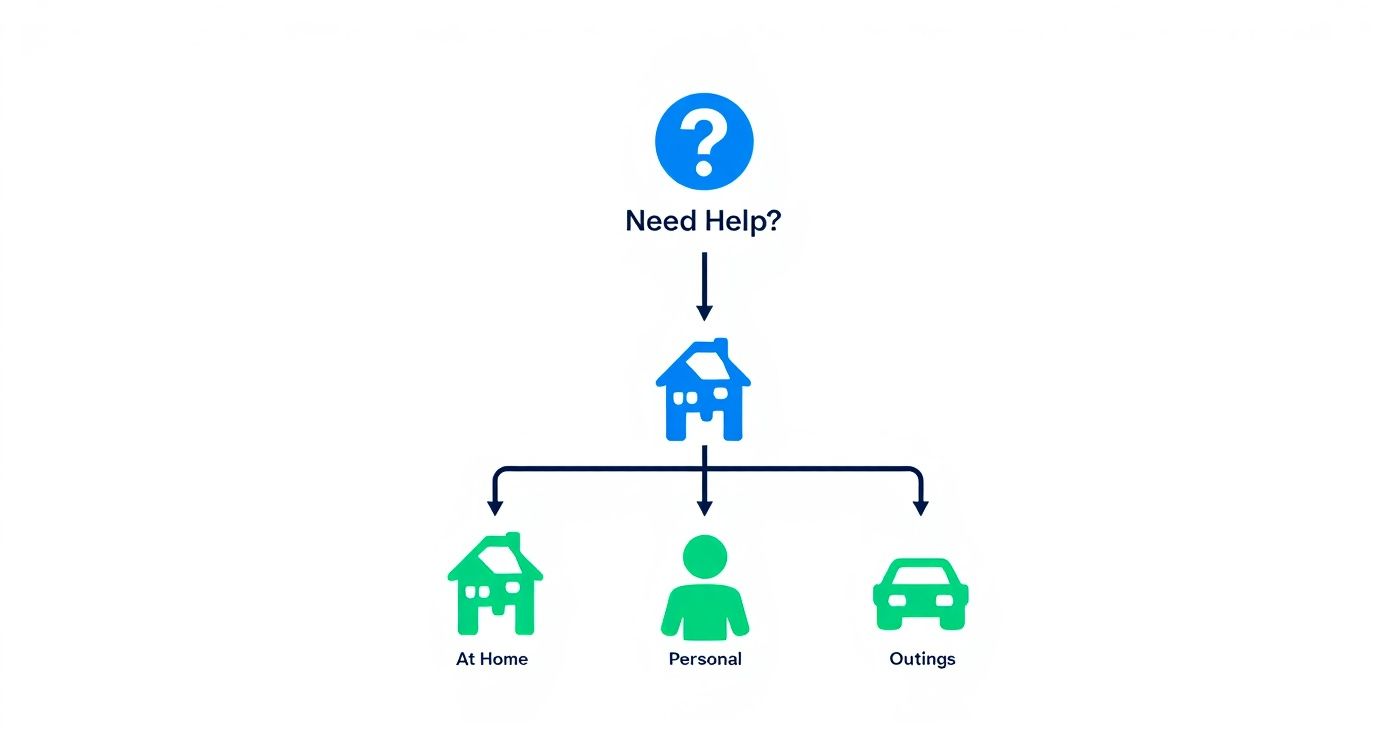
As you can see, a PCA’s duties are all about maintaining a person's lifestyle and well-being, helping them thrive both inside and outside the home.
Comparing In-Home Caregiver Roles
To make the choice even clearer, let's put these roles side-by-side. The table below breaks down what each professional focuses on and the level of medical assistance they're qualified to provide. This should help you line up your family's needs with the right caregiver.
| Role | Primary Focus | Medical Tasks Allowed | Required Certification |
|---|---|---|---|
| Personal Care Aide (PCA) | Non-medical personal care, companionship, and ADLs | Medication reminders only | Varies by state; often no formal license |
| Home Health Aide (HHA) | Basic health monitoring and personal care | Vitals, simple dressing changes, medication assistance | State-mandated training and certification |
| Certified Nursing Assistant (CNA) | Direct patient care under nurse supervision | Broader medical tasks, patient monitoring | State licensure and examination |
So, what does this all mean for you? If your loved one primarily needs a hand with daily living activities and someone to connect with, a PCA is the perfect fit. But if their needs involve medical monitoring or help with medications, an HHA or CNA is the more appropriate choice.
The Path to Becoming a Trusted Caregiver
Not just anyone can step into the role of a personal care aide. The journey is built on a solid foundation of specific training, tough screening, and a real passion for helping others. For families, understanding this process brings incredible peace of mind. It’s comforting to know the professional coming into your home is both qualified and completely trustworthy.
While the exact requirements for PCAs can differ from state to state, any agency worth its salt makes sure its caregivers are truly prepared for the realities of the job. This goes way beyond just knowing how to do basic tasks—it’s about creating a safe, supportive, and dignified environment for every single client.
Core Training and Essential Skills
Great training gives a personal care aide the practical skills and compassionate mindset they need to truly shine. A well-designed program will always cover several critical areas to make sure caregivers are ready for any situation they might walk into.
You can expect them to be competent in:
- Safety Protocols and Emergency Response: This covers everything from simple fall prevention techniques to recognizing the signs of a medical emergency and knowing exactly who to call and when.
- Basic First Aid and CPR: While PCAs don’t perform clinical medical tasks, having these skills is non-negotiable for responding immediately in a crisis.
- Effective Communication: Caregivers learn how to connect with clients who might have hearing loss, cognitive decline, or difficulty speaking. This ensures your loved one always feels heard and respected.
- Understanding Client Needs: This is all about training on how to respectfully help with personal hygiene, mobility, and other sensitive activities while always preserving a client's dignity.
If you’re curious about the details, exploring a comprehensive caregiver training program offers a closer look at the curriculum that builds these crucial skills.
The real goal of training isn't just to teach tasks; it's to build confidence. A well-prepared caregiver handles daily routines and unexpected challenges with a calm professionalism that’s reassuring for both the client and their family.
Ensuring Safety Through Vetting
Beyond skills training, the most non-negotiable part of the process is a thorough background check. No reputable agency will ever, ever skip this step. This vetting process is designed to protect clients and make sure every caregiver has a proven history of reliability and integrity.
This typically includes:
- Criminal Background Checks: A comprehensive screening for any history that would disqualify someone from working with vulnerable adults.
- Reference Verification: Actually speaking with previous employers to confirm work history, dependability, and overall character.
As you look into this world, it’s also helpful to know that the industry is very focused on keeping good people. You can find some interesting strategies for boosting staff retention in the healthcare industry that shed light on this. The best agencies always go beyond the state minimums, investing in ongoing education to keep their caregivers’ skills sharp. This commitment is what separates an adequate caregiver from an exceptional one.
Navigating Costs and Funding for In-Home Care
Let's talk about the financial side of things. It's a critical piece of the puzzle for any family considering in-home care. The cost of bringing a personal care aide into your home will naturally vary based on where you live, the specific level of care your loved one needs, and how many hours of support you're looking for. Here in Mercer County, New Jersey, you can expect competitive hourly rates that reflect the quality and professionalism you deserve.
It's also worth noting that demand for qualified aides is growing—and fast. The U.S. Bureau of Labor Statistics projects that employment for personal care aides will jump by about 21% between 2023 and 2033, which is much faster than the average for other jobs. This surge has a real impact on pricing. For instance, some states have seen the annual cost for full-time care rise by 10% in a single year, easily outpacing general inflation. If you want to dive deeper, you can get additional insights on home health care industry trends.
Exploring Your Payment Options
The good news is you have options. There are several ways to manage the expenses of in-home care, ensuring your loved one gets the support they need without creating an unsustainable financial strain. Most families use either private funds or government programs.
-
Private Pay: Many families choose to cover the costs directly out-of-pocket. This route offers the greatest flexibility, letting you hand-pick the agency and caregiver you feel most comfortable with and design a completely custom care schedule without being tied to program eligibility rules.
-
Long-Term Care Insurance: If your loved one has a long-term care insurance policy, it will likely cover personal care aide services. The key is to review the policy’s fine print to understand the specific coverage limits, daily maximums, and any requirements for triggering the benefits.
Using Medicaid for In-Home Care in New Jersey
For those who qualify, New Jersey's Medicaid programs are an incredible resource for funding in-home care. These programs were created specifically to help seniors and individuals with disabilities stay in their own homes and communities, rather than moving into a nursing facility.
At its heart, the goal of these programs is to empower people to live with dignity right where they are most comfortable. By covering the cost of a personal care aide, they make "aging in place" a truly realistic and affordable choice for countless families.
In New Jersey, there are two primary avenues to explore:
-
NJ FamilyCare: This is the state’s publicly funded health insurance program. It includes a crucial component called Managed Long-Term Services and Supports (MLTSS), which is specifically designed to provide comprehensive in-home support, including a personal care aide.
-
Eligibility: To qualify, a person has to meet criteria for both medical need and financial standing. An applicant will need to show they require help with daily activities while also meeting specific income and asset thresholds set by the state.
Navigating the application process can feel a bit overwhelming, we get it. A good home care agency can be your guide, helping you understand the requirements, pull together the right paperwork, and secure the funding your family needs to move forward with confidence.
How to Find the Right Personal Care Aide

Finding the right support for a loved one is a big step, but partnering with a professional agency can make the whole journey feel much clearer and more reassuring. It all starts with a detailed, no-obligation consultation where a care coordinator sits down with your family to really understand your unique situation.
This first meeting is all about digging into the details that truly matter. The coordinator will ask about your loved one's specific needs, daily routines, any health conditions, and even their personality and hobbies. The more they learn, the better they can pinpoint a caregiver who will be a genuinely great fit.
The Art of a Perfect Match
Once the agency has a full picture, the matching process begins. This is so much more than just ticking boxes for skills and availability. A top-notch agency knows that a personal connection is key, so they look to pair clients with a personal care aide who has a complementary personality.
The real goal is to foster a warm, positive relationship built on a foundation of trust and comfort. This careful, thoughtful approach is what elevates professional care into genuine companionship. When the match is right, the aide becomes a trusted, welcome part of your loved one's daily life, bringing both skilled support and friendship.
A successful caregiver match isn't just about fulfilling duties on a list; it's about connecting two people in a way that enriches the client's life, reduces stress for the family, and builds a lasting bond.
Taking the Next Steps with Confidence
Navigating this new territory can feel overwhelming, but you absolutely don't have to do it alone. The right agency will walk you through every stage, from that first conversation to introducing you to a caregiver who feels like the perfect addition to your family's support system. For families exploring a wider range of support, you might also look into options like virtual assistant services for the elderly for other needs.
To get started, we invite you to schedule a free consultation with our team. We'll listen to your family's needs and explain exactly how we can provide the ideal support right here in Mercer County. You can also explore our guide on how to find a caregiver for the elderly for more helpful tips.
Your Questions About Personal Care Aides, Answered
When you’re thinking about bringing a personal care aide into your home, it’s natural to have a few questions. We get it. Making this decision is a big step, so let's clear up some of the most common things families ask us.
Can a Personal Care Aide Give Medications?
The short answer is no. A personal care aide’s role is strictly non-medical, which is a crucial distinction.
While they are a fantastic help with medication reminders—gently nudging with a, "Hey, it's 10 a.m., time for your pill"—they can't legally administer the medication itself. That means no managing dosages, giving injections, or physically placing a pill in your loved one's mouth.
If direct medication help is what you need, you’ll want to look for a caregiver with more advanced training, like a Home Health Aide (HHA) or Certified Nursing Assistant (CNA), who always works under a nurse's supervision.
How Many Hours Can a PCA Work?
This is completely up to you. There's no rigid formula here; the schedule is built entirely around what your family needs to thrive.
The beauty of in-home care is its flexibility. You can arrange support for almost any scenario:
- Part-time help: Just a few hours a day can provide a much-needed break for a family caregiver.
- Full-time support: Having someone there during the workday ensures your loved one is safe and has company while you're away.
- 24/7 or live-in care: For those who need continuous supervision and round-the-clock assistance, this is the perfect solution.
A good agency will sit down with you to map out a care plan that delivers the right level of support, exactly when you need it.
The whole point of in-home care is to fit into your family's life, not disrupt it. A personal care aide’s schedule is designed to support your lifestyle.
What Happens If the Caregiver Is Not a Good Fit?
This is one of the most important questions, because the connection between your loved one and their caregiver is everything. A strong, trusting relationship is the absolute foundation of great care.
Any reputable agency knows this and puts a huge emphasis on making the right match from the start. But sometimes, personalities just don’t click. If you find the caregiver isn't a good fit for any reason, you should feel comfortable calling the agency right away.
A professional agency won’t make it awkward. They'll have a simple process for listening to your feedback, understanding what’s not working, and quickly finding a caregiver who is a better match. The goal is always the same: to make sure your loved one feels safe, comfortable, and truly happy with their companion.
At NJ Caregiving, we are dedicated to finding the perfect caregiver to support your family's needs in Mercer County. Contact us today for a free, no-obligation consultation to learn how we can help.
