
When someone you love starts to need a little extra help, the thought of them leaving their home can be heartbreaking. In home elder care is the service that bridges that gap, bringing professional, personalized assistance right to their front door. It’s a way to ensure they can live safely and with dignity, surrounded by the comfort of their own home.
This isn't just about convenience; it's about preserving a way of life. The service can range from a friendly face stopping by for a few hours of companionship to skilled nursing care for more complex health needs.
What Exactly Is In Home Elder Care?
At its heart, in home elder care is about bringing support directly to a senior, rather than moving them to a facility. Think of it like building a custom support system around the life they’ve already built—their routines, their neighbors, their favorite armchair. It’s an approach that puts their comfort and dignity first.
This is a world away from the one-size-fits-all model of a nursing home or assisted living facility. Instead of fitting into a predetermined schedule, the care plan is tailored to the individual. The focus is entirely on their unique needs, preferences, and lifestyle, ensuring help arrives exactly when and how it’s needed most.
The Philosophy of Aging in Place
The whole idea behind in home elder care is a concept called "aging in place." It’s a simple but powerful philosophy: people are happiest and healthiest when they can grow older in a familiar, comfortable setting. The research backs this up, with studies showing that nearly 90% of seniors want to stay in their own homes for as long as they possibly can.
This isn't just about the four walls of a house. It's about a deep emotional connection to a place filled with a lifetime of memories. A person's home is their sanctuary, and preserving that connection is a huge part of what makes home care so effective.
In home care isn't just about checking tasks off a list; it’s about enabling a life. It gives seniors the power to keep living on their own terms, with just the right amount of support to stay safe, healthy, and connected.
Building a Support System at Home
Putting this support system in place is a team effort. It’s a true partnership between the senior, their family, and a professional care provider. This collaboration ensures that care plans aren’t set in stone; they can adapt and evolve as needs change over time.
What might start as a need for companionship a few hours a week could later become a need for daily help with personal care or medical oversight. To get a better handle on all the pieces involved, you might find it helpful to explore a comprehensive guide to caring for elderly at home.
The Different Types of In Home Care Services
When you start looking into in home elder care, you’ll quickly see it isn't a one-size-fits-all solution. It’s really a spectrum of services that can be mixed and matched to fit your family’s unique situation. Think of it like building a custom support system, piece by piece. Understanding the different options helps you pinpoint exactly what kind of help will make the biggest difference for your loved one.
The services are layered, almost like building blocks. They start with basic companionship and can scale all the way up to specialized medical support. This flexibility means you can create a care plan that’s not just effective, but also smart and efficient.
This visual helps break down the main categories, showing how they all fit under the umbrella of in-home care.
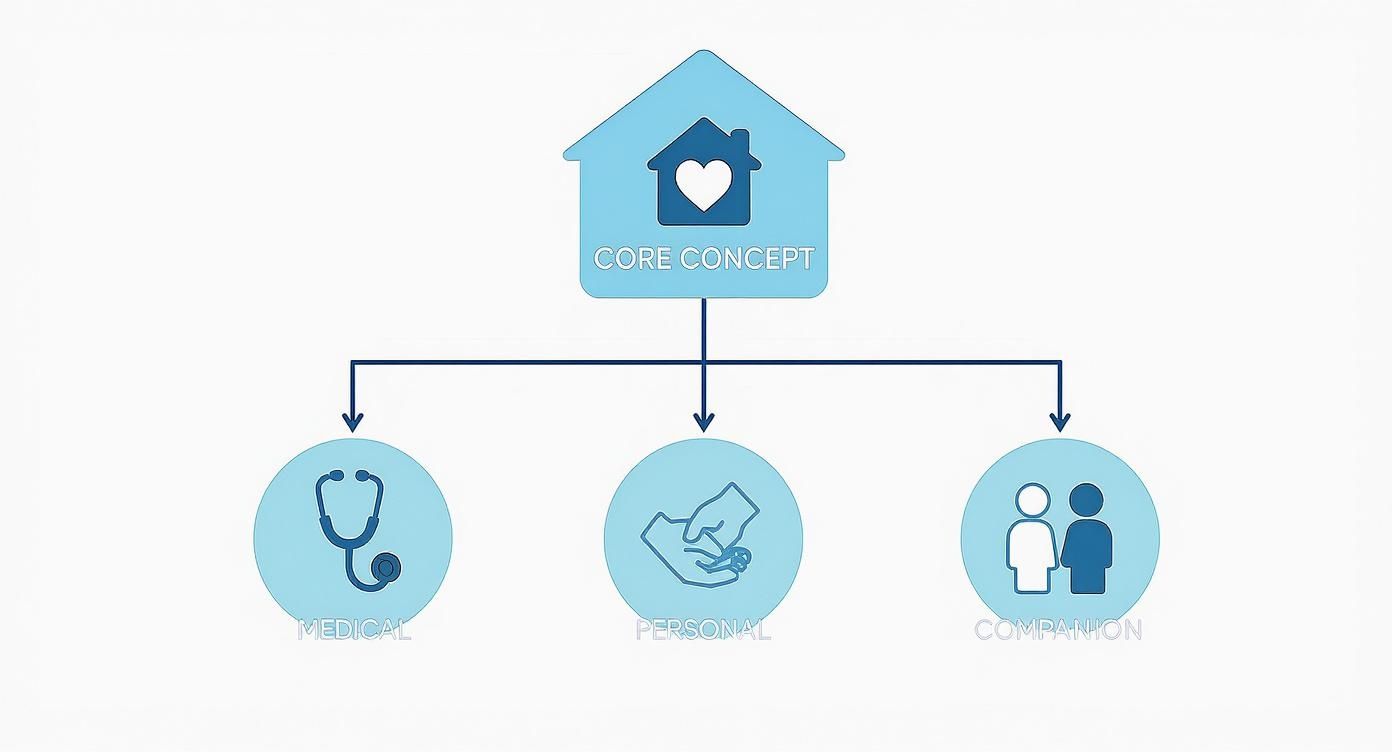
As you can see, these distinct services often work together, providing a holistic approach to keeping a loved one safe and well at home. To make it clearer, let’s compare what each service really focuses on.
Comparing In Home Elder Care Services
This table breaks down the four primary types of in-home elder care, outlining their main purpose, common tasks involved, and who typically provides the service.
| Service Type | Primary Focus | Example Tasks | Provided By |
|---|---|---|---|
| Companion Care | Social and emotional well-being; alleviating loneliness | Conversation, hobbies, light housekeeping, errands | Companion Aide |
| Personal Care | Hands-on help with daily self-care tasks (ADLs) | Bathing, dressing, grooming, mobility assistance | Certified Home Health Aide (CHHA) |
| Respite Care | Temporary relief for a primary family caregiver | Any tasks the family caregiver normally handles | Companion Aide or CHHA |
| Skilled Nursing Care | Medical tasks requiring a licensed professional | Wound care, injections, medication management | Registered Nurse (RN) or LPN |
Each level of care addresses a different set of needs, making it possible to build a truly personalized plan. Let's dig a little deeper into what each one looks like in practice.
Companion Care: The Foundation of Social Well-being
At its heart, home care is about human connection. We know that loneliness and isolation can be serious health risks for seniors—some studies show they’re as harmful as smoking. Companion care is the answer, focusing squarely on engagement and emotional support.
A companion caregiver is a friendly face, someone who provides company and helps with the little things. Their goal is to keep your loved one active, engaged, and connected to the world.
Activities often include:
- Chatting, playing cards, or working on a favorite hobby together.
- Driving to doctor's appointments, social events, or the grocery store.
- Helping with light chores like laundry, tidying up, or watering plants.
- Preparing a simple meal and enjoying it together.
Think of a companion as a supportive friend who helps a senior maintain their independence and social life. It's the perfect fit for someone who is still largely self-sufficient but could use some regular company and a hand with daily routines.
Personal Care: Assisting with Daily Life
When physical challenges start making daily routines a struggle, personal care is the next step up. This type of care provides hands-on assistance with what we call Activities of Daily Living (ADLs)—the basic tasks of self-care. It’s all about helping seniors manage these activities safely and with dignity.
Personal care is provided by professionals like a Certified Home Health Aide (CHHA). They have the training to offer physical support while always respecting a person's privacy and independence.
Personal care is what allows so many seniors to stay in their own homes, even when they’re dealing with mobility issues or other health problems. It closes the gap between wanting independence and needing hands-on help.
Common personal care services include help with:
- Bathing, dressing, and grooming.
- Getting out of bed, moving to a chair, or walking safely around the house.
- Toileting and incontinence care.
- Meal preparation and assistance with eating, if needed.
This kind of support is the backbone of many care plans. To get a better sense of this category, you can learn more about what non-medical home care entails and all the ways it helps seniors thrive.
Respite Care: Essential Support for Family Caregivers
Family caregivers are true heroes, but everyone needs a break. Respite care is designed to give primary caregivers that much-needed time off. It allows them to rest, run errands, or just recharge, all while knowing their loved one is in good hands.
This service is incredibly flexible—it can be for a few hours, a whole day, or even a couple of weeks. A professional caregiver simply steps in and takes over, ensuring care continues without a hitch. It’s a crucial service for preventing caregiver burnout, which impacts more than 30% of people providing long-term care.
Skilled Nursing Care: Medical Support at Home
For seniors managing complex health conditions, skilled nursing care brings medical expertise right to their doorstep. This is the most advanced level of in home elder care, provided by a Registered Nurse (RN) or a Licensed Practical Nurse (LPN), always under a doctor's orders.
This care is for medical tasks that non-medical aides are not legally allowed to perform.
Skilled nursing services may include:
- Administering medications, including injections.
- Wound care and changing dressings.
- Managing catheters or ostomies.
- Monitoring vital signs and overseeing chronic conditions like diabetes or COPD.
Skilled nursing is often used for short-term recovery after a hospital stay or for the ongoing management of a serious illness. It’s what makes it possible for people with significant medical needs to get the clinical care they require in the comfort of their own home.
The Real Benefits of Choosing In-Home Care
Deciding on the right care for a loved one is one of the most important, and often emotional, choices a family can make. While you have options, there’s a reason why in-home elder care has become the overwhelming preference for so many. The benefits go far beyond just convenience; they touch on the very core of what it means to live with dignity, comfort, and independence.
The most powerful advantage is simply the profound psychological comfort of being at home. A home isn't just four walls; it’s a living scrapbook of memories, routines, and personal treasures. For a senior, being surrounded by their own things, sleeping in their own bed, and looking out at a familiar view provides a sense of peace and stability that no facility can ever truly replicate.
This isn’t just a feeling—it’s a nationwide movement. The home care industry has seen incredible growth, with revenue expected to hit an estimated $155.9 billion in 2025. What’s driving this? The simple fact that nearly 90% of U.S. seniors want to age in their own homes, not in an institution. You can dig deeper into these trends in this in-depth industry report.
Personalized One-on-One Attention
In a nursing home or assisted living facility, caregivers are spread thin, dividing their attention among many residents. With in-home care, the focus is undivided. This one-on-one relationship means care is not just reactive but truly proactive. A dedicated caregiver gets to know your loved one personally—their needs, their preferences, and even the subtle changes in their health or mood that might otherwise go unnoticed.
This allows for a level of care that is deeply personal. If your mom has the most energy in the morning, her bathing and activity schedule can match that. If your dad loves listening to a certain kind of music while he eats, the caregiver can make that part of his daily routine. It's this attention to the little things that fosters a strong, trusting bond and makes a huge difference in their quality of life.
In-home care changes the whole dynamic. It’s not about making someone fit into a rigid facility schedule; it's about building a supportive routine that honors an individual's lifelong habits and preferences.
Strengthening Family Bonds and Reducing Stress
For many families, taking on the role of primary caregiver can put a serious strain on relationships. Adult children find themselves trying to juggle their own careers and families with the growing needs of a parent. This can quickly lead to burnout and stress, turning quality family time into a list of caregiving chores.
Bringing in a professional caregiver can completely transform this situation. It allows family members to step back from being task-managers and return to simply being sons, daughters, and grandchildren.
- Restored Roles: Instead of your visit revolving around medication reminders or helping with a shower, you can just sit down and have a real conversation. You can share a laugh.
- Peace of Mind: Knowing a trained and compassionate professional is there to handle the daily needs provides an immense sense of relief and reduces that constant, nagging worry.
- Quality Over Quantity: Visits become about connection, not chores. This shift strengthens family bonds and helps create more positive, lasting memories for everyone.
Ultimately, hiring professional help is an act of love—not just for your parent, but for yourself and your entire family. It ensures your loved one gets the best possible support while preserving everyone's well-being.
Promoting Independence and Safety
There's a common misconception that moving to a facility is the only way to keep a senior safe. In reality, in-home elder care often provides a better combination of both safety and independence. The home is already familiar territory, which naturally reduces the risk of confusion or falls that can happen when navigating a new, strange place.
A professional caregiver can also perform a safety assessment of the home, spotting and fixing potential hazards like loose rugs, poor lighting, or cluttered walkways. They provide that crucial supervision during activities like walking, bathing, and cooking that significantly lowers the risk of an accident.
At the same time, this support system empowers seniors to maintain their independence. They can continue to make their own choices, enjoy their hobbies, and live by their own schedule—all with a reliable safety net in place. This balance is key to preserving their sense of self-worth and dignity as they age.
Understanding the Costs of In Home Care
Figuring out the financial side of in home elder care can feel like the biggest hurdle. But once you understand the moving parts, it becomes much more approachable. The cost isn't one flat number; it's a flexible figure that shifts based on exactly what kind of support your loved one needs.
Think of it as putting together a custom service plan. The final price tag is shaped by a few key things: the level of care required (is it simple companionship or skilled nursing?), the number of hours per week, and even your specific town here in New Jersey. For the most part, services are priced by the hour, which puts you in the driver's seat when it comes to managing the budget.
Key Factors That Influence Cost
The biggest driver of the cost is, without a doubt, the complexity of care. A caregiver who's there for companionship and a bit of light housekeeping will naturally have a different hourly rate than a certified home health aide helping with bathing and dressing. And that rate will be different still from a registered nurse who is managing complex medical tasks.
Costs also have a local flavor. For example, rates in Mercer County might look a little different than in other parts of the state, just based on local economic factors. The most important thing is to get a crystal-clear, itemized breakdown from any provider you're considering. For a much deeper dive into the numbers, our guide on the cost of in-home care for the elderly has some great local insights.
Exploring Your Funding Options
Here’s the good news: you don't have to carry the financial weight all by yourself. There are quite a few paths you can take to make in home elder care affordable and sustainable for your family. Getting a handle on these options is the first step toward creating a solid financial plan for your loved one's future.
Let's break down the most common resources families can turn to.
- Long-Term Care Insurance: These are private policies specifically designed to cover services just like in-home care. If your loved one has a policy, the first thing to do is pull it out and review the terms to see what the coverage limits and eligibility rules are.
- Medicare and Medicaid: These government programs are huge sources of funding for many families, but they cover different things and have very specific eligibility requirements.
- Veterans Affairs (VA) Benefits: For anyone who served in the military, the VA has several programs that can help pay for care right at home.
Each one has its own set of hoops to jump through, so it's really helpful to know how they work.
Medicare and Medicaid Explained
People often mix up Medicare and Medicaid, but they play very different roles when it comes to home care. Medicare is the federal health insurance program for people 65 and older. It generally covers short-term, skilled home health care—think physical therapy after a hospital stay. It doesn't typically pay for long-term personal or companion care.
Medicaid, on the other hand, is a joint federal and state program designed to help people with limited income and resources pay for healthcare. Here in New Jersey, the Medicaid Managed Long-Term Services and Supports (MLTSS) program is a major source of funding for long-term in home elder care. It was created specifically to help eligible seniors get the support they need to stay in their own homes.
Navigating Medicaid eligibility can feel complex, but it's often the key that unlocks consistent, long-term support for seniors who need daily assistance to live safely at home.
The impact of these programs is massive. Every year, about 12 million Americans get home health care services, and Medicare is a primary funder, covering roughly 42% of these visits. It just goes to show how essential these programs are for millions of families. You can find more details on these home health care industry trends on globalonehomecare.com.
Other Financial Resources to Consider
Beyond the big government programs and private insurance, there are other resources that can help bridge the financial gap. For veterans, programs like Aid and Attendance or Housebound benefits can provide a monthly pension to help cover the cost of care.
Some families also explore options like reverse mortgages or converting life insurance policies to access funds. It’s always smart to have a conversation with a financial advisor to look at all the possibilities and map out the best strategy for your family’s unique situation. A little planning goes a long way in giving you peace of mind and making sure your loved one gets the absolute best care.
How to Find the Right In Home Care Provider
Choosing an in home elder care provider isn't like picking a service from a directory. It’s a deeply personal decision. You’re inviting someone into your home to care for a person you love, and that requires an incredible amount of trust.
Think of it this way: you’re not just hiring an agency, you’re looking for a partner. The right provider will feel like an extension of your family—someone who communicates openly, truly listens, and shares your commitment to your parent's comfort and dignity.
Doing Your Initial Research
Your search starts with some basic homework. Look for local agencies that specifically serve your community, whether that’s Princeton or another part of Mercer County. A great first step is to check online reviews, but don’t stop there. Ask for personal recommendations from doctors, friends, or local senior centers.
Once you have a shortlist of three to five promising agencies, it's time to dig a little deeper. Now you’ll move from just collecting names to really vetting their qualifications and making sure they’re a legitimate, professional organization that puts safety first.
Essential Questions to Ask Every Agency
When you start making calls, it helps to have a consistent set of questions ready. This is your first interview with the agency, and their answers will reveal a lot about their standards.
Here are the non-negotiables you should ask every single time:
- Licensing and Accreditation: Is the agency fully licensed by the state of New Jersey? Do they hold any other special certifications?
- Insurance and Bonding: Are all caregivers insured and bonded? This is crucial—it protects your family from liability if there’s ever an accident or theft.
- Caregiver Screening: What exactly does your background check involve? You want to hear about criminal record checks, credential verifications, and professional reference calls.
- Training and Supervision: What kind of training do your caregivers get when they start, and what about ongoing education? How are they supervised once they’re in my parent's home?
These questions aren't just about checking boxes. They get to the heart of an agency's commitment to providing safe, reliable in home elder care.
The In-Home Assessment and Care Plan
A reputable agency will never quote you a price or finalize a plan over the phone. They should insist on coming to the home for a thorough, in-person assessment. This meeting is absolutely vital for crafting a care plan that’s genuinely tailored to your loved one.
During this assessment, a care manager or nurse should:
- Evaluate Needs: This goes beyond just the medical chart. They need to understand physical abilities, cognitive function, and social and emotional well-being.
- Assess the Home: A good professional will look for safety hazards and suggest simple modifications, like installing grab bars or securing rugs that could be tripping hazards.
- Listen to Your Family: This is your chance to share what makes your parent tick—their personality, daily routines, what they love, and what they don’t. A great agency wants to know the whole person.
A personalized care plan is the roadmap for quality care. It should be a detailed, written document that outlines specific tasks, schedules, and goals, and it should be reviewed and updated regularly as needs change.
This hands-on process ensures the care is a perfect fit right from the start. For a deeper dive, our guide on how to choose a home care agency walks you through this entire evaluation stage in more detail.
Evaluating the Human Side of Care
While credentials and procedures are important, the human element is what truly makes or breaks the experience. You’re looking for an agency that communicates well, shows flexibility, and has a thoughtful process for matching caregivers with clients.
Pay close attention to how they treat you from that very first phone call. Are they patient? Do they listen more than they talk? A good agency gets the emotional weight of this decision and will treat you with empathy every step of the way.
Finally, ask them to walk you through their caregiver matching process. A successful match is about so much more than just skills and availability. The best agencies take personality, shared interests, and even communication styles into account to build a real, trusting relationship. That personal connection is the key ingredient for a successful in home elder care journey.
Why In-Home Elder Care Is More Important Than Ever
If you're starting to look into in-home elder care, you’re not alone. Far from it. Your family is part of a massive shift happening in our society. Several powerful trends are coming together that make personalized, home-based support more vital than ever for families here in Princeton, Mercer County, and all across the country.
The biggest driver is simple demographics. The baby boomer generation is aging, which means the number of older adults who need a helping hand is growing by the day. At the same time, families look different than they used to—they're often smaller and more spread out geographically. This creates a natural care gap that professional caregivers are stepping in to fill.
The Rise of Chronic Conditions
On top of that, we're seeing more and more seniors managing long-term health issues. Conditions like diabetes, heart disease, and arthritis aren't just one-off problems; they require steady, ongoing management. An occasional check-in just doesn't cut it anymore, and a one-size-fits-all facility often isn't the best fit for these specific needs.
This is where in-home elder care really shines. It provides the consistent, personalized oversight needed to manage these conditions well, helping seniors live a better quality of life and stay out of the hospital. That kind of tailored support is simply more effective for long-term health.
A Growing Recognition of Value
These converging factors have sparked a huge expansion in the professional care world. The proof is in the numbers: the global market for in-home senior care was valued at USD 430.12 billion in 2025 and is expected to skyrocket to USD 727.65 billion by 2032. That kind of explosive growth tells you just how much families value keeping their loved ones safe and comfortable at home. Discover more insights about this growing market on coherentmarketinsights.com.
Knowing this bigger picture can be reassuring. It confirms that what your family is going through is a shared experience. You're part of a generation looking for smarter, more compassionate ways to care for the people you love.
Common Questions About In Home Elder Care
When you first start looking into in home elder care, it's completely normal to have a ton of questions. Let’s be honest, this is a huge decision for any family. Getting clear, straightforward answers is the best way to feel confident you're on the right track.
Here are some of the most common questions we hear from families right here in the Princeton area.
Before diving in, it’s worth thinking about the big picture. This process isn’t just about logistics; it’s about creating a sustainable plan for your family's future. For a great resource on mapping out health and financial needs, check out A Complete Guide To Your Family Care Plan. It’s a fantastic starting point for structuring your approach.
How Is In Home Care Different From Assisted Living?
The biggest difference comes down to two things: the environment and the level of one-on-one attention. In-home care happens right in your loved one’s own home, which allows for a truly personalized care plan that fits into their existing life and routines. Think of it as building a support system around them, not uprooting them from everything they know.
Assisted living facilities, on the other hand, are community settings where residents get care from a shared staff. While these places offer wonderful social opportunities, the care is naturally less individualized. It also requires the senior to move out of their home, a transition that can be really tough for everyone involved.
How Do Agencies Ensure Caregivers Are Safe and Reliable?
This is a critical question, and the answer should be non-negotiable. A reputable agency will have a multi-layered screening process to guarantee both client safety and top-notch care. This isn't just a suggestion; it's a core responsibility.
The process should always include:
- Rigorous background checks: This must include national criminal record searches.
- Verification of credentials: Agencies have to confirm that certifications like a Certified Home Health Aide (CHHA) are valid and in good standing.
- Checking professional references: Actually speaking with previous employers gives you real insight into a caregiver's reliability, work ethic, and character.
But it doesn't stop there. A truly professional agency must also be fully bonded and insured to protect your family. They handle all the scheduling headaches, provide backup caregivers when someone is sick, and conduct ongoing supervision to make sure the highest standards of care are always being met.
What Should I Do if My Parent Resists Getting a Caregiver?
First, know that this is a completely normal and understandable reaction. Resistance almost always comes from a fear of losing independence. The key is to approach the conversation with empathy, not as an authority figure.
Try framing the caregiver as a support system to help them maintain their independence, not take it away.
It often helps to suggest starting small. Maybe begin with just a few hours a week for companionship or help with grocery shopping. Involving your parent in the interview and selection process is also huge. Giving them a voice in the decision and a sense of control can help build trust right from the very beginning.
At NJ Caregiving, we get it—these conversations are tough, and we're here to help you navigate them. If you're in Mercer County and want to learn more about how our compassionate caregivers can support your family, contact us today for a no-obligation consultation at https://njcaregiving.com.
