

Yes, Medicare can cover some home health care for a person with dementia, but it's crucial to understand what this really means. This is often where families face one of the biggest and most heartbreaking misunderstandings about the program.
The coverage isn't for 24/7 supervision or help with daily personal tasks. Instead, Medicare pays only for medically necessary, part-time skilled care that a doctor prescribes to treat a specific health issue. It's not designed to cover the day-to-day custodial support that dementia so often demands.
Clarifying Medicare's Role in Dementia Home Care

When families ask, "Does Medicare cover home health care for dementia?" they’re usually hoping for a hand with daily living activities. But Original Medicare draws a very firm line between two distinct types of care:
- Skilled Care: These are medical services that must be performed by a licensed professional, like a registered nurse or a physical therapist. Think of wound care, injections, or physical therapy.
- Custodial Care: This is non-medical, personal help with everyday needs like bathing, dressing, eating, or just being there for safety and supervision.
Medicare was built to pay for the first one—skilled care. It was never intended to be a long-term solution for custodial support. Think of it like this: Medicare might pay for a physical therapist to visit a few times a week to help your mom improve her balance and prevent falls. It will not, however, pay for an aide to stay all day to make sure she doesn't wander or forget to eat.
The Financial Reality of Home Health
Grasping this difference is so important because home health is a massive part of elder care in the U.S. Each year, roughly 12 million Americans get some form of care at home. As the single largest payer, Medicare foots the bill for about 42% of services from certified agencies.
The core principle to remember is that a dementia diagnosis, by itself, does not automatically unlock home health benefits. The focus is always on a specific, treatable medical need that requires a skilled professional on an intermittent basis.
This single idea shapes every rule and requirement for getting coverage. For a broader look at the general rules, you can learn more about what Medicare covers for home care in our detailed guide.
Next, we’ll break down exactly what “skilled care” looks like for someone with dementia and the strict criteria you'll need to meet.
Medicare Home Health Coverage for Dementia At a Glance
Here’s a quick summary to help you see the difference between what Medicare will and won't typically cover for in-home dementia care.
| Service Type | Generally Covered by Original Medicare? | Key Conditions |
|---|---|---|
| Skilled Nursing Care | Yes | Part-time or intermittent; must be medically necessary. (e.g., wound care, injections) |
| Physical Therapy | Yes | To improve mobility, strength, or prevent falls; must be prescribed by a doctor. |
| Occupational Therapy | Yes | To help with daily activities (e.g., relearning to dress); requires a skilled plan. |
| Speech-Language Therapy | Yes | To address swallowing problems or communication issues resulting from a medical event. |
| Home Health Aide Services | Yes, but limited | Only covered if the patient is also receiving skilled care; services are part-time. |
| 24/7 In-Home Care | No | Medicare does not cover round-the-clock care or supervision. |
| Custodial Care Only | No | Help with bathing, dressing, eating, or housekeeping is not covered if it's the only need. |
| Meal Delivery | No | Original Medicare does not cover services like Meals on Wheels. |
This table shows that while some vital services are covered, Medicare leaves a significant gap when it comes to the long-term, non-medical support that families caring for someone with dementia often need most.
Understanding the Skilled Care vs. Custodial Care Rule
To really get a handle on how Medicare looks at home health care for dementia, there's one core idea you have to wrap your head around: the difference between skilled care and custodial care.
Getting this right from the start sets realistic expectations. It also helps you avoid the immense frustration so many families feel when they first try to navigate the system and hit a wall.
Think of it this way: skilled care is like calling in a licensed electrician to fix a dangerous wiring issue in your house. It's a specific, technical job that requires formal training and certification. On the other hand, custodial care is like having a compassionate, reliable friend come over to help with cooking, cleaning, and just making sure things run smoothly. Both are incredibly valuable, but they are viewed very differently by Medicare.
What Is Skilled Care in Dementia Home Health?
Skilled care covers medical services that, for safety and effectiveness, must be performed by a licensed professional like a nurse or a therapist, or at least under their direct supervision. These aren't just general "helping out" tasks. They are specific medical treatments ordered by a doctor to address an illness or injury.
For someone living with dementia, these needs often pop up after a hospital stay for something else, or because of another health condition they're managing alongside the dementia.
Examples of Skilled Care:
- A registered nurse coming to the home to give injections, manage a catheter, or treat a complex wound like a pressure sore.
- A physical therapist working with your loved one to rebuild strength and improve balance after a fall—a common and dangerous risk for those with cognitive decline.
- A speech-language pathologist helping with swallowing problems (dysphagia), which can become a serious issue in the later stages of dementia.
- An occupational therapist teaching new, safer ways to handle daily activities like getting dressed or bathing, helping them hold onto their independence for as long as possible.
These services are targeted, have clear medical goals, and are provided on a part-time or intermittent basis. They were never intended to be a round-the-clock solution.
Defining Custodial Care and Its Limits
Now, let's look at the other side of the coin. Custodial care is all about non-medical help with what experts call Activities of Daily Living (ADLs). Frankly, this is the hands-on support that people with moderate to advanced dementia often need the most. It’s about personal care, keeping them safe, and providing companionship.
Custodial care is help with things like:
- Bathing and grooming
- Getting dressed
- Eating and preparing meals
- Using the toilet and managing incontinence
- Moving from a bed to a chair (what professionals call "transferring")
- General supervision to prevent wandering or other accidents
While these tasks are absolutely critical to a person's safety and well-being, Original Medicare was not designed to pay for them if that's the only kind of help someone needs.
The Golden Rule of Medicare Coverage: Original Medicare will only help pay for custodial care if it's delivered by a home health aide at the same time as necessary skilled care from a nurse or therapist, and it's all part of a single, doctor-approved plan.
This is the part that trips up so many families. If your mom only needs someone to help her get dressed and make lunch, Medicare won't cover it. But if she also needs a nurse to manage her diabetes and change a surgical dressing, then Medicare may also cover an aide for a short time to help with bathing as part of that bigger plan.
A Real-World Scenario
Let's look at two different situations to see how this plays out. Imagine two seniors, both living with dementia.
- Mrs. Davis: Her dementia has progressed, and her main challenges are needing help with her meals, getting dressed, and getting reminders to take her pills. She doesn't have any other pressing medical issues. In this scenario, Medicare will not cover a home health aide because her needs are purely custodial.
- Mr. Chen: He also has dementia, but he recently suffered a stroke. His doctor orders home-based physical therapy to help him regain mobility and skilled nursing visits to monitor his blood pressure. Because Mr. Chen has a documented need for these skilled services, Medicare may also cover an aide to help him with bathing and dressing on the days the therapist or nurse visits.
This distinction is precisely why a doctor's detailed assessment is so important. It's not the dementia diagnosis itself that opens the door to Medicare home health benefits, but the co-existing medical needs that require a skilled professional's intervention.
Meeting Medicare's Strict Eligibility Checklist
Getting Medicare to cover home health care for a loved one with dementia isn't a given. It feels less like an open invitation and more like navigating a specific set of requirements that have to be met in the right order. Think of it as a checklist—each item must be ticked off, and your doctor’s detailed notes are what unlock each step.
For families trying to figure this all out, understanding these rules is the single most important part of securing the benefits you need.
The Doctor's Critical Role
Everything starts with the doctor. A physician must officially determine that your loved one requires skilled medical care in the home and then create a formal plan of care. This isn't just a simple prescription; it's a signed, detailed game plan outlining exactly what services are needed, how often, and what the goals are.
This plan isn't a one-and-done document, either. The doctor has to review and recertify it at least every 60 days. This regular check-in confirms that the medical need for care is ongoing, which is absolutely essential for Medicare to continue paying.
Proving the Need for Skilled Care
As we've discussed, the entire benefit hinges on a need for intermittent skilled care. The doctor's orders must explicitly call for services from at least one of these licensed professionals:
- Skilled Nursing
- Physical Therapy
- Speech-Language Pathology
Once a need for one of these is established, Medicare may also cover occupational therapy and assistance from a home health aide. But without that initial skilled care foundation, the other services won't be approved.
What Does Homebound Really Mean?
The term "homebound" is probably one of the most misunderstood pieces of the puzzle. It doesn't mean the person has to be confined to a bed or unable to leave the house at all. What it really means is that leaving home takes a considerable and taxing effort.
A person can still be considered homebound even if they leave for doctor's appointments, religious services, or the occasional short trip. The deciding factor is that leaving the house is a major challenge because of their illness or injury.
For someone with dementia, this could be because of physical weakness, but it's often due to severe cognitive issues that make being out in the world unsafe. It could also stem from the extreme anxiety and confusion they experience when they leave a familiar space. The doctor must certify this homebound status in the plan of care. To get into the nitty-gritty, take a look at our detailed guide on Medicare's home health requirements.
Using a Medicare-Certified Agency
Finally, all care must come from a home health agency that is officially certified by Medicare. You have the right to choose any certified agency in your area, and Medicare’s "Care Compare" tool online is the best place to find and research qualified providers.
This flowchart helps visualize the two main paths for dementia care.
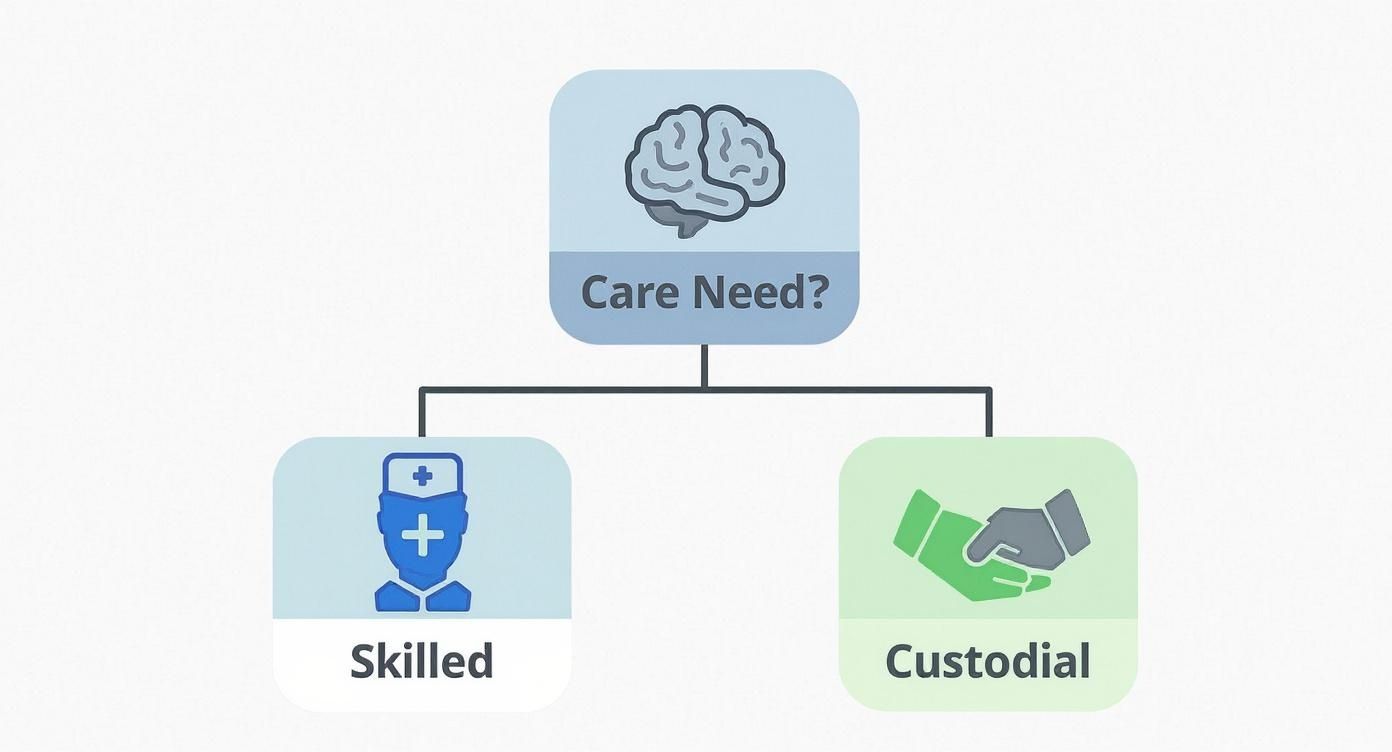
As you can see, care needs split into two distinct categories: skilled services, which Medicare might cover, and custodial support, which it usually doesn't cover by itself.
What Home Health Services Medicare Actually Covers
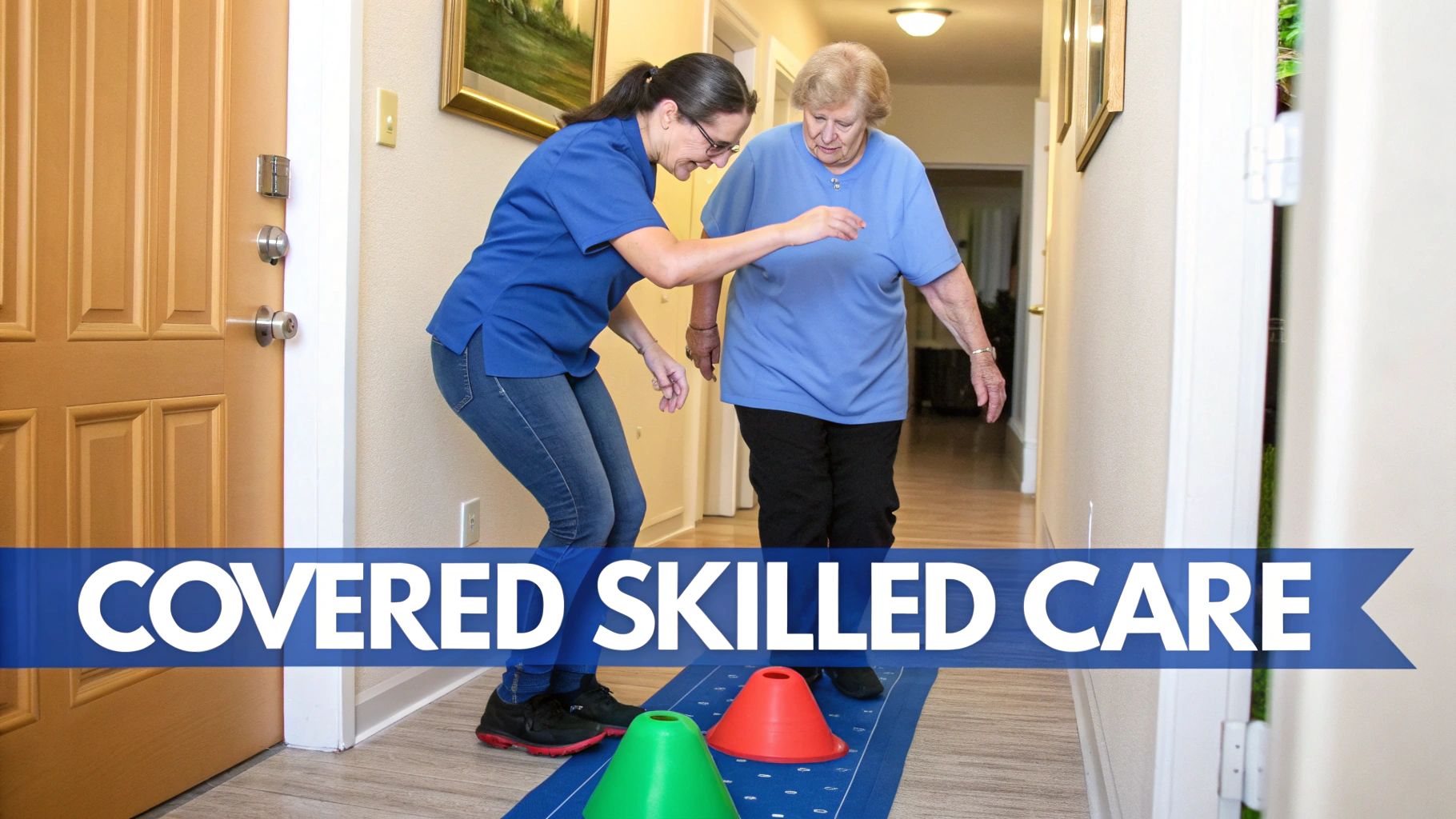
So, once your loved one has jumped through the hoops and met Medicare’s strict criteria, the big question is: what help can you actually get at home? It's a critical point to understand because the services are specific and medically focused, not the kind of general daily support most people picture.
Knowing what's on the table helps you set realistic expectations for what day-to-day care will look like. Think less about 24/7 supervision and more about a team of skilled professionals visiting to tackle specific health goals laid out by a doctor.
The Cornerstone: Skilled Nursing Care
The most common service, and the one that often unlocks everything else, is part-time or intermittent skilled nursing care. This isn't just any nursing—it's hands-on medical care provided by a registered nurse (RN) or a licensed practical nurse (LPN) who is following the doctor's plan to the letter.
For someone living with dementia, this could mean:
- Administering injections for a co-existing condition like diabetes.
- Dressing complex wounds, like pressure sores that can develop from being less mobile.
- Monitoring vital signs and symptoms of another illness, like congestive heart failure.
- Teaching family members how to manage complicated medication schedules or spot new symptoms.
Without a documented medical need for skilled nursing (or therapy), it's very unlikely any other home health services will be approved. It's the foundation of the benefit.
Rehabilitative Therapies to Maintain Safety and Function
Along with nursing, Medicare covers therapies that are absolutely essential for helping someone with dementia stay safe and functional. These aren't just for recovering from a fall or a stroke; they're about proactively managing the progressive challenges of the disease.
The real goal here is to improve or at least maintain your loved one's current abilities and prevent any further decline. For someone with dementia, that focus on safety and day-to-day independence is invaluable.
The therapies are broken down into a few key areas, each with a unique role in dementia care. To make it clearer, here’s a look at the most common services and how they apply in the real world for a person with dementia.
Covered Skilled Services and Their Role in Dementia Care
| Skilled Service | Description | Example for a Dementia Patient |
|---|---|---|
| Physical Therapy (PT) | Focuses on improving strength, balance, and mobility to prevent falls and maintain physical function. | A physical therapist creates a simple, safe exercise routine to improve leg strength and balance, reducing the high risk of falls in the home. |
| Occupational Therapy (OT) | Helps individuals perform daily activities safely and independently by adapting the task or the environment. | An occupational therapist might label drawers and cabinets, install grab bars in the bathroom, or teach a safer way to get dressed. |
| Speech-Language Pathology | Addresses communication and swallowing difficulties, which are common in mid-to-late-stage dementia. | A speech therapist works on strategies to make eating and drinking safer, helping prevent choking or aspiration pneumonia. |
These therapies work together to help a person with dementia live as safely and independently as possible, adapting to the changes the condition brings.
What About Home Health Aides?
This is where things often get tricky for families. Yes, Medicare can cover a home health aide who provides personal care like help with bathing or dressing. But there's a big catch.
An aide is only covered if the person is also receiving skilled nursing or therapy. The aide's job is to support the medical plan, not to provide standalone custodial care. They're part of the team, but they can't be the only player on the field. You can dive deeper into the specifics by reading our guide on when Medicare will pay for a home health aide.
Ultimately, these services create a medical safety net at home, targeting specific health problems prescribed by a doctor—not the broad, constant supervision that many with dementia eventually need.
How Medicare Advantage Plans Can Change the Equation
While Original Medicare (Parts A and B) provides a baseline for coverage across the country, the rules can look completely different if your loved one is enrolled in a Medicare Advantage (MA) plan, also known as Part C.
These plans are offered by private insurance companies and are required to cover everything Original Medicare does. But that’s where the similarities often end. They operate more like the health insurance you might be used to, with specific networks, different cost structures, and—most importantly for families managing dementia—the potential for supplemental benefits.
For many families, these extra benefits can be a real game-changer.
Unlocking Supplemental Benefits for Dementia Care
Because Medicare Advantage plans are run by private companies, they have the flexibility to offer perks that Original Medicare simply doesn't cover. This is especially true for helping people manage chronic conditions like dementia right at home.
While not every plan offers them, many are starting to include limited coverage for services that Medicare traditionally rejects.
You might find plans that include:
- In-Home Support Services: Some plans provide a set number of hours for an aide to help with personal care, like bathing and dressing, even if there’s no skilled medical need.
- Meal Delivery: It's common to see a benefit for post-hospitalization meal delivery from services like Mom's Meals.
- Transportation: Coverage for non-emergency rides to doctor’s appointments is another frequent extra.
- Respite Care: A few plans even offer benefits designed to give family caregivers a well-deserved break.
These extras can help plug the frustrating custodial care gaps left by Original Medicare. And this trend is only growing. By 2025, experts estimate that up to $265 billion in care could shift from facilities into home settings. With more than half of all Medicare beneficiaries expected to be in MA plans by then, these supplemental benefits are becoming more critical than ever.
Navigating the Trade-Offs of MA Plans
The promise of extra benefits is tempting, but it’s vital to understand what you’re trading for them. Medicare Advantage plans aren’t a blank check for unlimited services, and they come with their own set of rules and limitations.
If your loved one has a Medicare Advantage plan, the most important document you can have is the "Evidence of Coverage" (EOC). Think of it as the official rulebook for the plan—it spells out exactly what’s covered, what you’ll pay, and the procedures you have to follow.
Here are the key things you need to look out for:
- Network Restrictions: Original Medicare lets you see any doctor or use any home health agency that accepts Medicare. Most MA plans, on the other hand, operate with a defined network (like an HMO or PPO). Going outside that network can lead to sky-high bills or the plan refusing to pay at all.
- Prior Authorization: This is a big one. MA plans often require prior authorization before they’ll agree to cover services like home health care. This means the plan’s staff has to review and approve the care as medically necessary before it can start, which can sometimes create frustrating delays.
- Copayments and Coinsurance: While Original Medicare covers approved home health care at 100%, MA plans are allowed to charge copayments for each home health visit. These costs can add up quickly, so you need to check the EOC to know exactly what to expect.
When you're weighing your options, it's also helpful to look at the bigger picture of financing care. This can mean exploring various insurance options and understanding how to balance different coverage types. Ultimately, a Medicare Advantage plan can be a powerful tool for dementia care, but it requires you to be an informed and proactive advocate for your loved one.
Your Action Plan for Securing Home Health Care
Knowing the rules is one thing, but putting them into practice is a whole different ballgame. Trying to line up home health care for a loved one with dementia can feel like a maze, but breaking it down into clear steps makes it far more manageable.
Think of this as your roadmap. We’ll walk through how to go from understanding the system to actually getting the care your family needs. Your first and most important stop? Your loved one's doctor.
Start with a Comprehensive Medical Assessment
The key that unlocks Medicare-covered home health care is the doctor's official sign-off. You'll need to schedule a specific face-to-face appointment to discuss the need for in-home skilled care. This isn't just a routine check-up; it's the meeting where the doctor evaluates and certifies that these services are medically necessary.
Come to the appointment prepared. You'll want to talk about specific health issues beyond the dementia diagnosis itself. Have there been recent falls? Is there difficulty swallowing? Are other conditions like diabetes or heart failure getting worse? These are the kinds of problems that truly justify skilled nursing or therapy. The doctor’s detailed notes from this visit become the official record Medicare uses to approve services.
Find and Vet Certified Home Health Agencies
With a doctor's order in hand, your next move is to find a Medicare-certified home health agency. You have the right to choose any certified agency in your area, and the best place to start your search is Medicare's official Care Compare website.
This free online tool is a huge help. It lets you:
- Search for certified agencies right in your zip code.
- Compare different agencies using patient survey results and quality ratings.
- Check which services each one offers, like nursing, physical therapy, or occupational therapy.
Taking the time to use the Care Compare tool really empowers you to make a solid choice. Look for agencies with high star ratings and positive feedback from other families. Good communication and reliable care are what you're after, and this research helps you find a partner you can trust.
Look Beyond Medicare to Fill the Gaps
It's so important to understand that Medicare is often just one piece of the care puzzle. The program is built for specific, short-term medical needs, which leaves a big gap when it comes to the day-to-day, non-medical support that so many people with dementia need. This is where you have to look at other resources.
One of the first places to investigate is Medicaid. If your loved one has limited income and assets, they might be "dual-eligible" for both programs. This can be a complete game-changer because Medicaid often covers the long-term custodial care that Medicare simply won't touch.
Here in New Jersey, a critical program to know about is Managed Long Term Services and Supports (MLTSS). This is a Medicaid program designed specifically to help people live at home instead of in a facility. It provides a wide range of support, from personal care assistance and caregiver respite to home modifications. When Medicare's skilled care benefits aren't enough, looking into MLTSS eligibility is the logical and necessary next step for your family.
Common Questions About Dementia Home Care
Trying to figure out Medicare can feel overwhelming, and it's normal to have a few lingering questions. Let's walk through some of the most common things families ask when they're looking for home health care for a loved one with dementia.
Does a Dementia Diagnosis Automatically Qualify Someone?
This is a big one, and the short answer is no. A dementia diagnosis by itself doesn't automatically open the door to Medicare's home health benefit. It's less about the diagnosis and more about the specific kind of care a person needs.
To get coverage, a doctor has to certify that the patient requires intermittent skilled care—think nursing services or physical therapy—to manage an illness or injury. On top of that, the patient must be considered homebound, meaning it takes a huge, taxing effort for them to leave the house.
How Long Can My Loved One Receive Home Health Services?
There isn't a hard-and-fast time limit on Medicare-covered home care. As long as your loved one continues to meet all the eligibility rules, the services can continue.
The real key here is consistent medical oversight. A doctor has to review and sign off on the plan of care at least once every 60 days, recertifying that skilled services are still medically necessary. If that happens, the benefits can keep going.
This regular check-in ensures the care plan is always in tune with the patient's evolving health needs.
What if My Parent Only Needs Help with Meals and Bathing?
This is one of the toughest realities for families to navigate. If the only help needed is with daily personal tasks like getting dressed, making meals, or bathing (what's known as custodial care), Original Medicare won't cover it.
Medicare will only pay for custodial care if it's needed alongside skilled nursing or therapy as part of a complete care plan. For situations where only custodial help is required, families typically have to look into other options like private pay, long-term care insurance, or state-based Medicaid programs.
Can We Choose Our Own Home Health Agency?
Absolutely. You have the right to pick any home health agency you're comfortable with, as long as it's Medicare-certified. This gives you the freedom to find a provider that truly feels like the right fit for your family.
But there's a catch. If your loved one is in a Medicare Advantage (Part C) plan, your choices are more limited. You'll almost always need to pick an agency that is in-network with that specific insurance plan. Going out-of-network can lead to steep out-of-pocket costs, or the plan might deny coverage entirely. It's always a good idea to call the insurance plan first to confirm an agency's status before you start services.
Understanding the rules is the first step, but finding the right partner to provide that care is just as important. For families in Mercer County, NJ Caregiving offers compassionate, professional in-home support tailored to the unique needs of individuals with dementia. To learn how our skilled caregivers and nurses can enhance your loved one's safety and quality of life at home, visit us at https://njcaregiving.com.