

Caring for a loved one is a profound act of devotion, but it often comes with significant, and frequently unspoken, financial sacrifices. Many family members reduce their work hours or leave their jobs entirely, leading to lost income, depleted savings, and mounting personal stress. The immense value you provide shouldn't force you into financial instability.
The good news is you don't have to carry this burden alone. A wide array of programs exists specifically to provide financial assistance for caregivers, offering everything from direct monthly stipends and veterans' benefits to crucial tax credits and grants for respite care. This guide demystifies the complex landscape of caregiver aid. We have compiled and analyzed 12 essential platforms and government resources, breaking down their specific eligibility rules, application processes, and practical benefits. Each entry includes direct links to help you get started immediately.
Whether you are exploring self-directed Medicaid waivers, investigating support through the Department of Veterans Affairs, or seeking local non-profit funds, this list will equip you with the knowledge to access the financial relief you need and deserve. Let's explore the avenues that can help you sustain your own well-being while providing the best possible care for your family member.
1. Your Guide to Medicaid Respite Care
Best for: New Jersey residents seeking detailed guidance on state-specific Medicaid waivers for caregiver relief.
For family caregivers in New Jersey, understanding how to leverage state-specific programs is a critical step toward securing financial assistance. NJ Caregiving’s guide to Medicaid Respite Care is an exceptional resource that demystifies this often complex process. It provides a clear, actionable roadmap for accessing Home and Community-Based Services (HCBS) waivers, which directly fund temporary caregiving services. This allows primary caregivers to take essential breaks without compromising the quality of care their loved one receives.
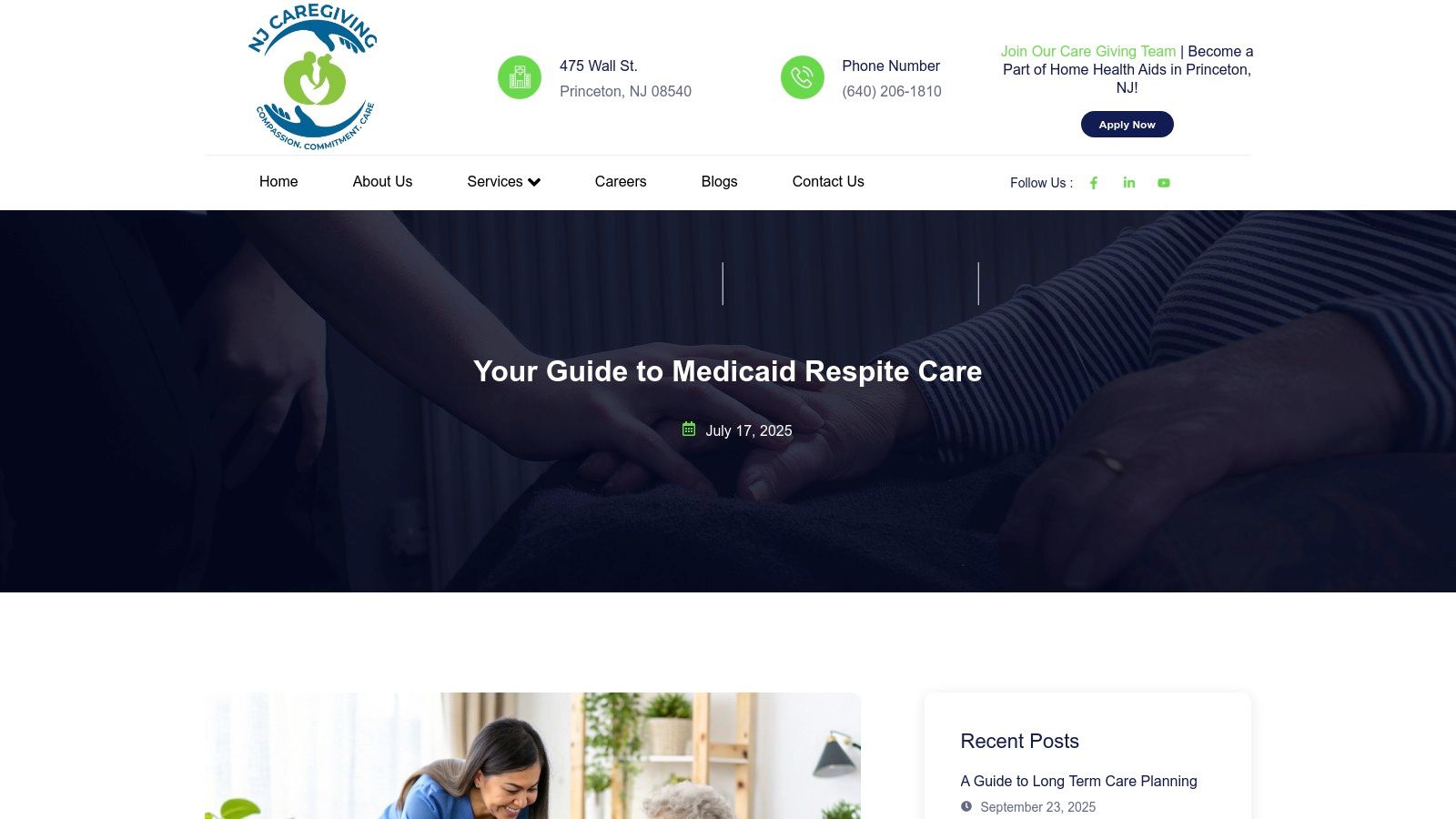
What makes this resource stand out is its specialized focus and practical application. Instead of offering generic advice, it delivers a step-by-step application guide tailored specifically to New Jersey’s system. It translates complex eligibility requirements into easy-to-understand language, empowering families to confidently navigate the system. The platform is hosted by NJ Caregiving, a trusted in-home care provider with deep expertise in the Mercer County area, ensuring the information is both accurate and locally relevant. This guide is an invaluable tool for preventing caregiver burnout by making financial relief more accessible.
Key Strengths & Considerations
- State-Specific Expertise: The guide offers a deep dive into New Jersey's HCBS waivers, a level of detail not found in national-level resources.
- Actionable Guidance: Provides a clear, step-by-step process for applying, turning information into a practical plan.
- Trusted Source: Backed by the local experience of NJ Caregiving, it offers credible and reliable information.
- Geographic Limitation: The content is most relevant for residents of Mercer County and surrounding New Jersey areas.
- Variable Eligibility: Access to HCBS waivers depends on specific state criteria, which can be complex and subject to change.
For those exploring broader state-run financial aid, it is also beneficial to read their overview of Medicaid long-term care on njcaregiving.com.
Website: Your Guide to Medicaid Respite Care
2. USA.gov – Benefits and "Get paid as a caregiver" hub
USA.gov serves as the official federal government gateway for finding financial assistance for caregivers. Instead of being a direct provider of funds, it acts as a central, authoritative directory, guiding users through the complex landscape of government benefits. Its primary function is to consolidate information on programs that allow family members to get paid for their caregiving work.
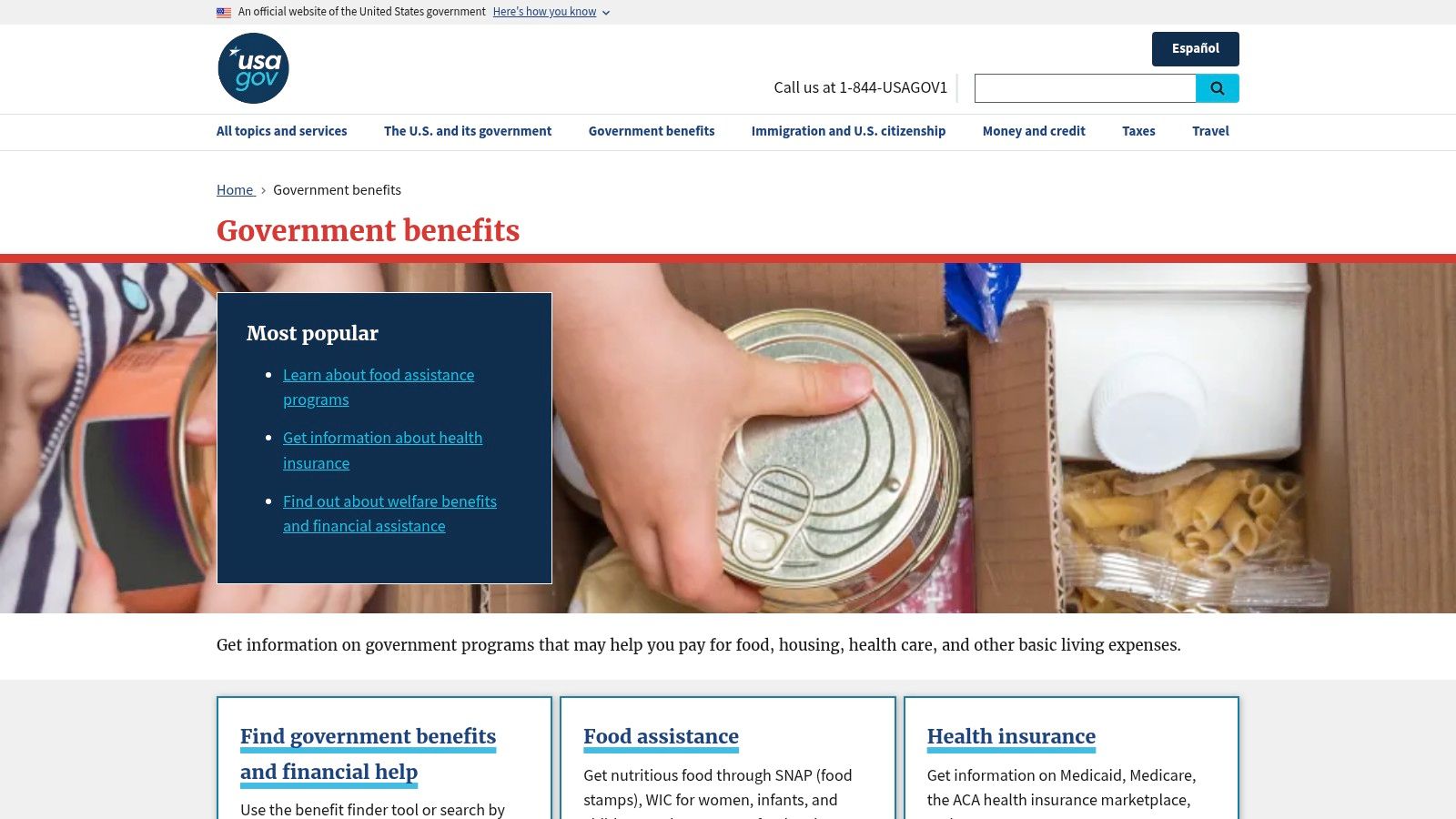
The platform’s strength lies in its Benefits Finder, an online questionnaire that helps you identify potential eligibility for over 1,000 programs. It directs users to key resources, including Medicaid self-directed services, VA programs for veterans' caregivers, and information on the Family and Medical Leave Act (FMLA).
Navigating the Platform
To use USA.gov effectively, start with the Benefits Finder tool. Answer the questions honestly to receive a tailored list of potential programs. From there, the site provides direct links and contact information for the specific state or federal agencies that manage those applications. While the platform itself doesn't process applications, it ensures you are using official, secure government portals.
Key Features:
- Official Gateway: Provides trustworthy, up-to-date links and information directly from the U.S. government.
- Bilingual Access: All content is available in both English and Spanish, making it accessible to a wider audience.
- Broad Scope: Covers everything from Medicaid and VA benefits to long-term care insurance and tax credits.
Website: https://www.usa.gov/benefits
3. Medicaid.gov – Self-Directed Services and Home & Community-Based Services (HCBS)
Medicaid.gov is the official U.S. government source for understanding how state Medicaid programs can offer financial assistance for caregivers. It is an authoritative resource, not a direct application portal, that explains the policies behind programs like Home and Community-Based Services (HCBS) waivers and Self-Directed Services. These programs allow certain Medicaid beneficiaries to hire and pay family members or friends for their personal care.
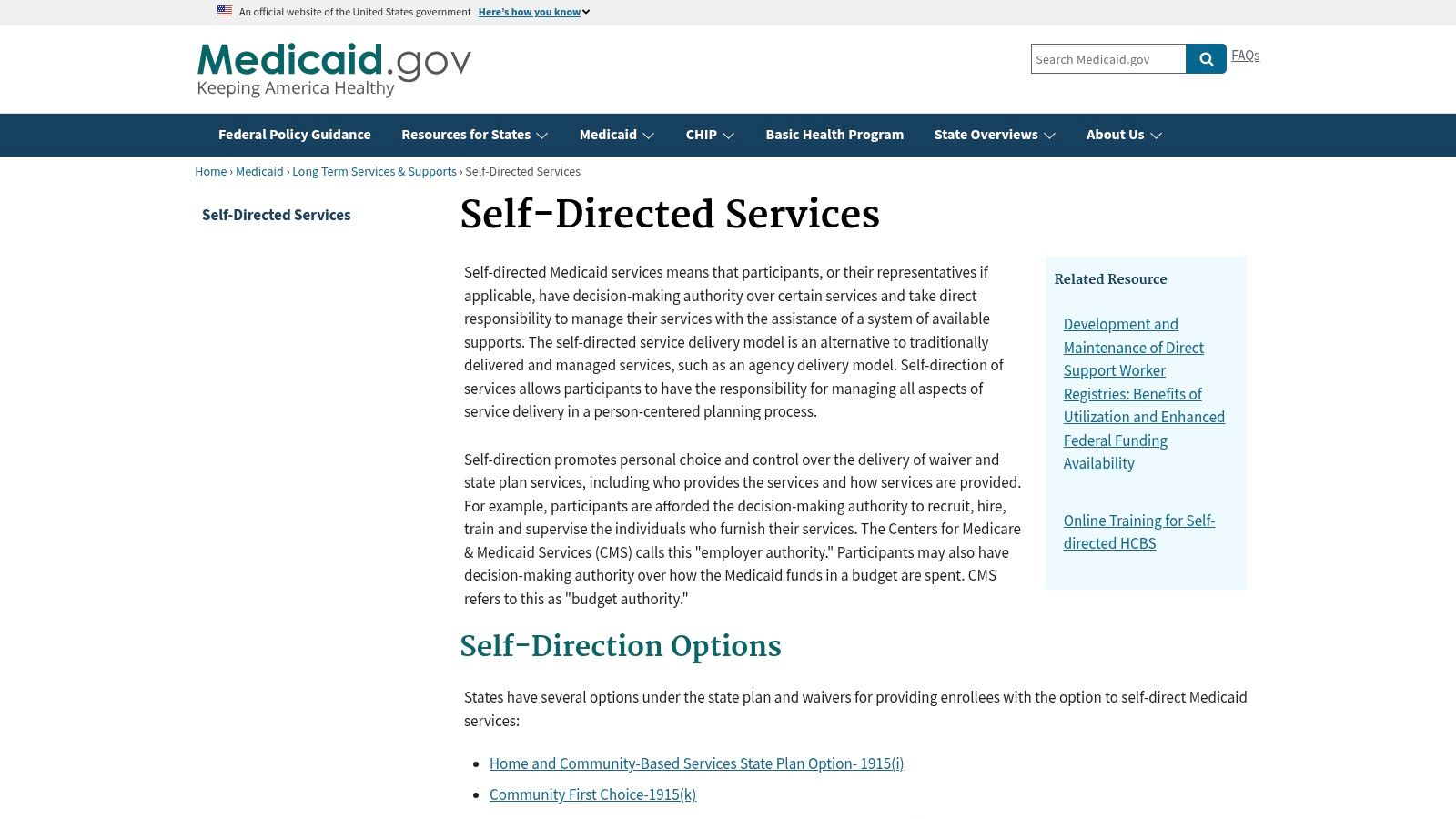
The website’s primary value is in its detailed policy summaries, which help users understand complex terminology before contacting their state agency. It breaks down concepts like "employer authority" and "budget authority" within self-directed plans, empowering families to make informed choices. By learning the federal framework, caregivers can better navigate their state's specific application process.
Navigating the Platform
To use Medicaid.gov, start by reading the overviews on Self-Directed Services and HCBS. This will provide the foundational knowledge needed to understand how these programs provide financial assistance for caregivers. The site links to the relevant sections of the Social Security Act, offering legal context. While the platform details federal guidelines, you must apply through your state's Medicaid office, as program availability, names, and eligibility rules vary significantly. You can learn more about how state-level senior care financial assistance works to see how these federal programs are implemented.
Key Features:
- Authoritative Information: Provides official policy details directly from the Centers for Medicare & Medicaid Services.
- Program Clarity: Explains how HCBS waivers and self-direction allow beneficiaries to pay family caregivers.
- Legal Framework: Links to the specific laws authorizing these caregiver payment structures.
Website: https://www.medicaid.gov/medicaid/long-term-services-supports/self-directed-services/
4. U.S. Department of Veterans Affairs – Caregiver Support (PCAFC/PGCSS)
The U.S. Department of Veterans Affairs (VA) provides one of the most substantial forms of financial assistance for caregivers through its Program of Comprehensive Assistance for Family Caregivers (PCAFC). This program is specifically designed to support eligible family members who care for veterans with a serious service-connected disability. It offers a direct monthly stipend, along with access to crucial health insurance, mental health services, and caregiver training.
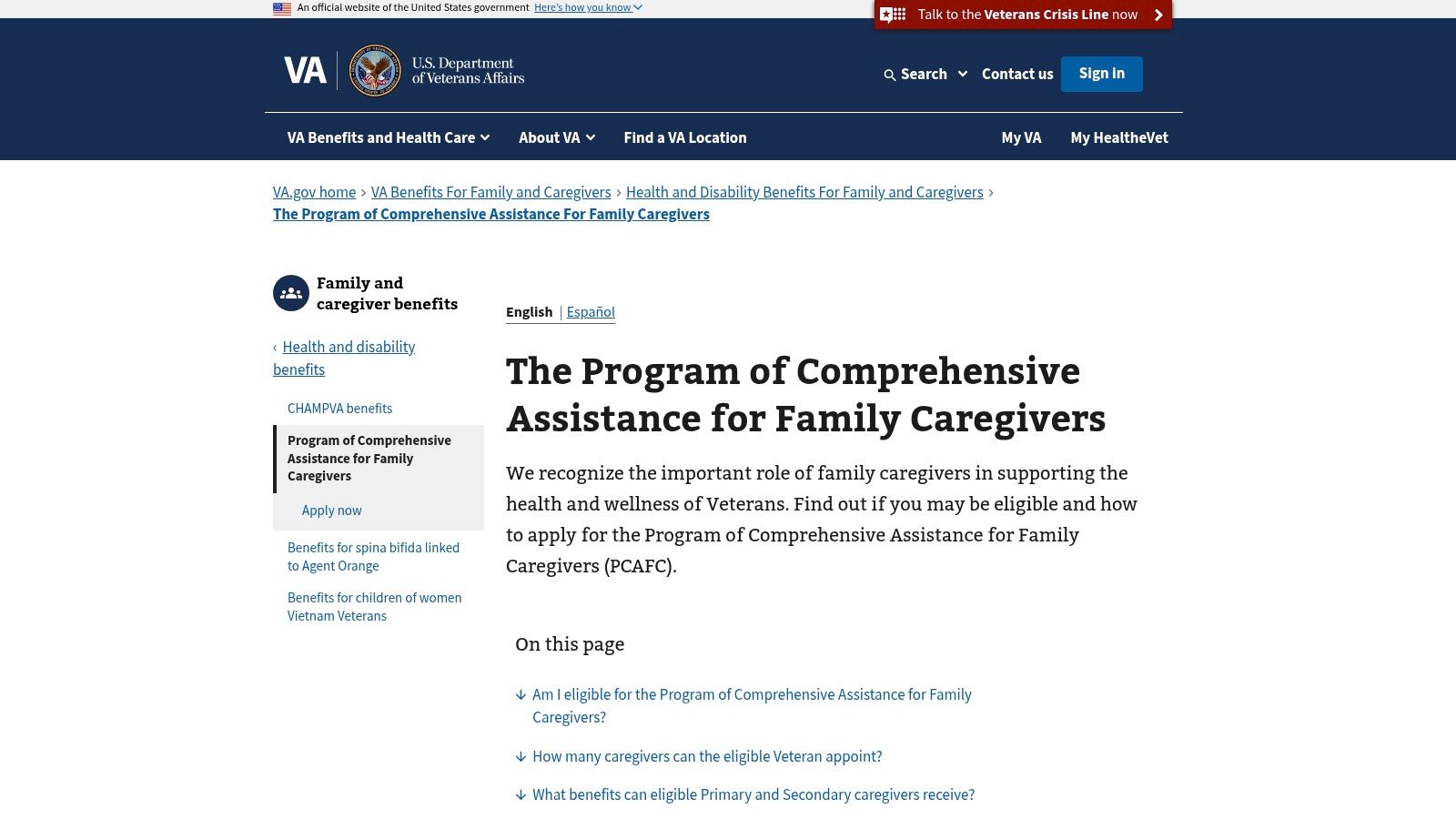
This platform stands out because it offers direct payment to family caregivers, a rare benefit in federal programs. The site also details the Program of General Caregiver Support Services (PGCSS), which offers a broader range of resources like education and peer support to any caregiver of a veteran enrolled in VA health care, regardless of their disability rating.
Navigating the Platform
To begin, visit the VA's caregiver benefits page and review the strict eligibility criteria for PCAFC, which typically requires the veteran to have a VA disability rating of 70% or higher. The application can be completed online through a joint form filled out by both the veteran and the caregiver. The website clearly outlines the required documentation and next steps, which involve a clinical assessment to determine the veteran’s need for care.
Key Features:
- Direct Monthly Stipend: Provides a significant, direct payment to the primary family caregiver.
- Comprehensive Support: Includes health coverage via CHAMPVA, mental health counseling, and 30 days of annual respite care.
- Dedicated Support Teams: Offers access to Caregiver Support Coordinators at every VA medical center.
5. NCOA BenefitsCheckUp – National Council on Aging
The National Council on Aging’s (NCOA) BenefitsCheckUp is a free, confidential screening tool that helps caregivers find programs to reduce costs for their loved ones. While not providing direct cash, it offers powerful indirect financial assistance for caregivers by connecting seniors with benefits that lower their expenses for food, medicine, utilities, and healthcare. This frees up resources that would otherwise come from the caregiver's pocket.
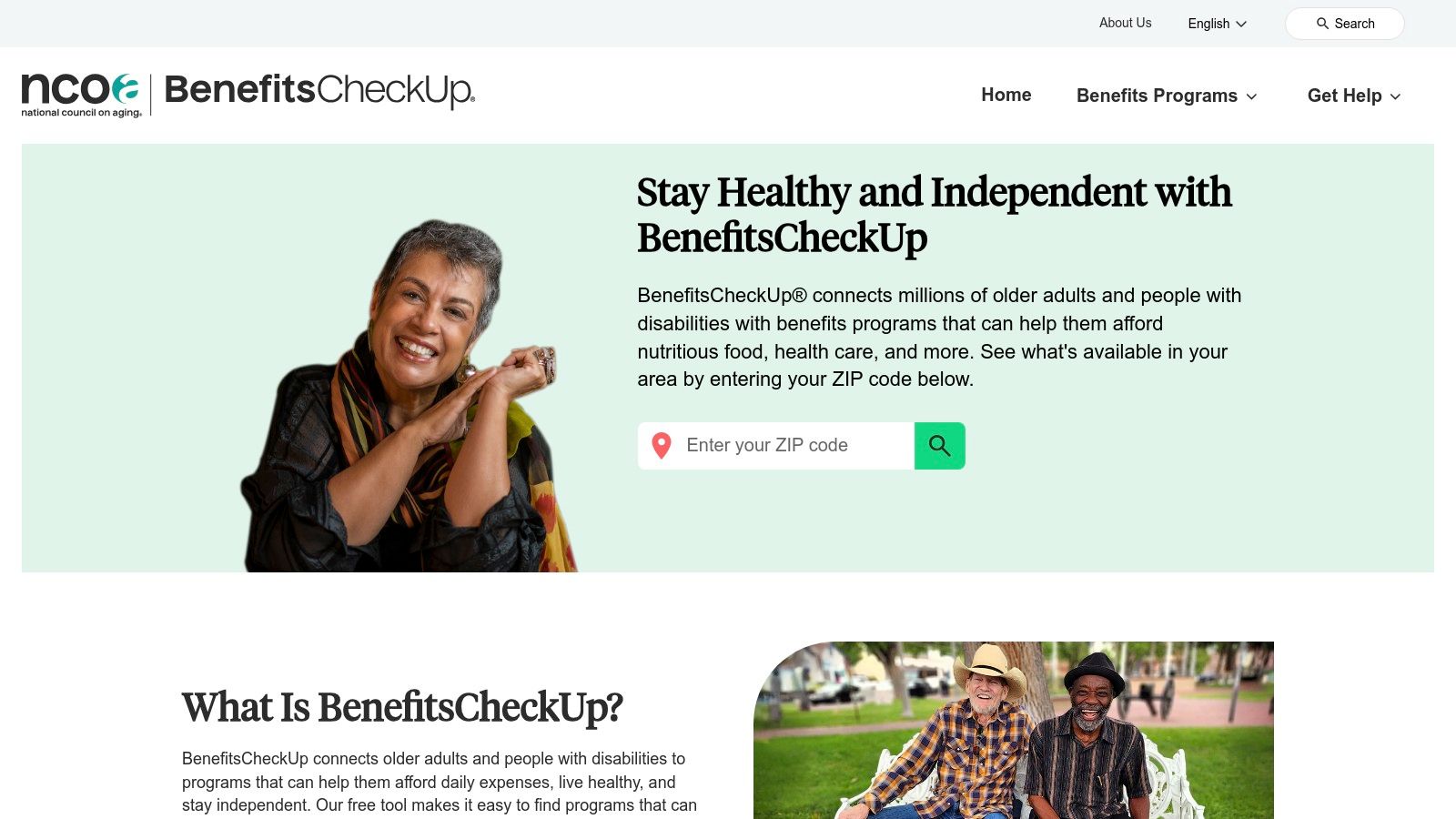
Its core strength is the user-friendly questionnaire. By answering a few simple questions based on the care recipient’s zip code, the platform instantly generates a customized report of eligible federal, state, and local programs. This streamlined process saves caregivers countless hours of research and helps them uncover benefits they might not have known existed. The focus is on maximizing the care recipient's income to ease the overall financial strain on the family.
Navigating the Platform
Using BenefitsCheckUp is straightforward. Start by entering the care recipient's zip code on the homepage and follow the prompts to complete the questionnaire. Once submitted, you'll receive a detailed, printable report with descriptions of each program, eligibility requirements, and direct links to applications. For those needing extra help, the site offers a helpline and referrals to local Benefits Enrollment Centers for one-on-one assistance.
Key Features:
- Comprehensive Screening: Scans over 2,500 benefit programs in one simple search.
- Personalized Reports: Generates a tailored list of eligible programs based on individual circumstances.
- Direct Support: Offers live chat, a helpline, and local in-person support for application guidance.
Website: https://benefitscheckup.org
6. Eldercare Locator – Administration for Community Living (ACL)
The Eldercare Locator is a public service of the U.S. Administration on Aging, connecting you to services for older adults and their families. Instead of offering direct funds, it serves as a critical first step in finding local support networks that provide financial assistance for caregivers, including grants, vouchers, and subsidized services. It excels at bridging the national-to-local gap, pointing users to the specific Area Agency on Aging (AAA) in their community.
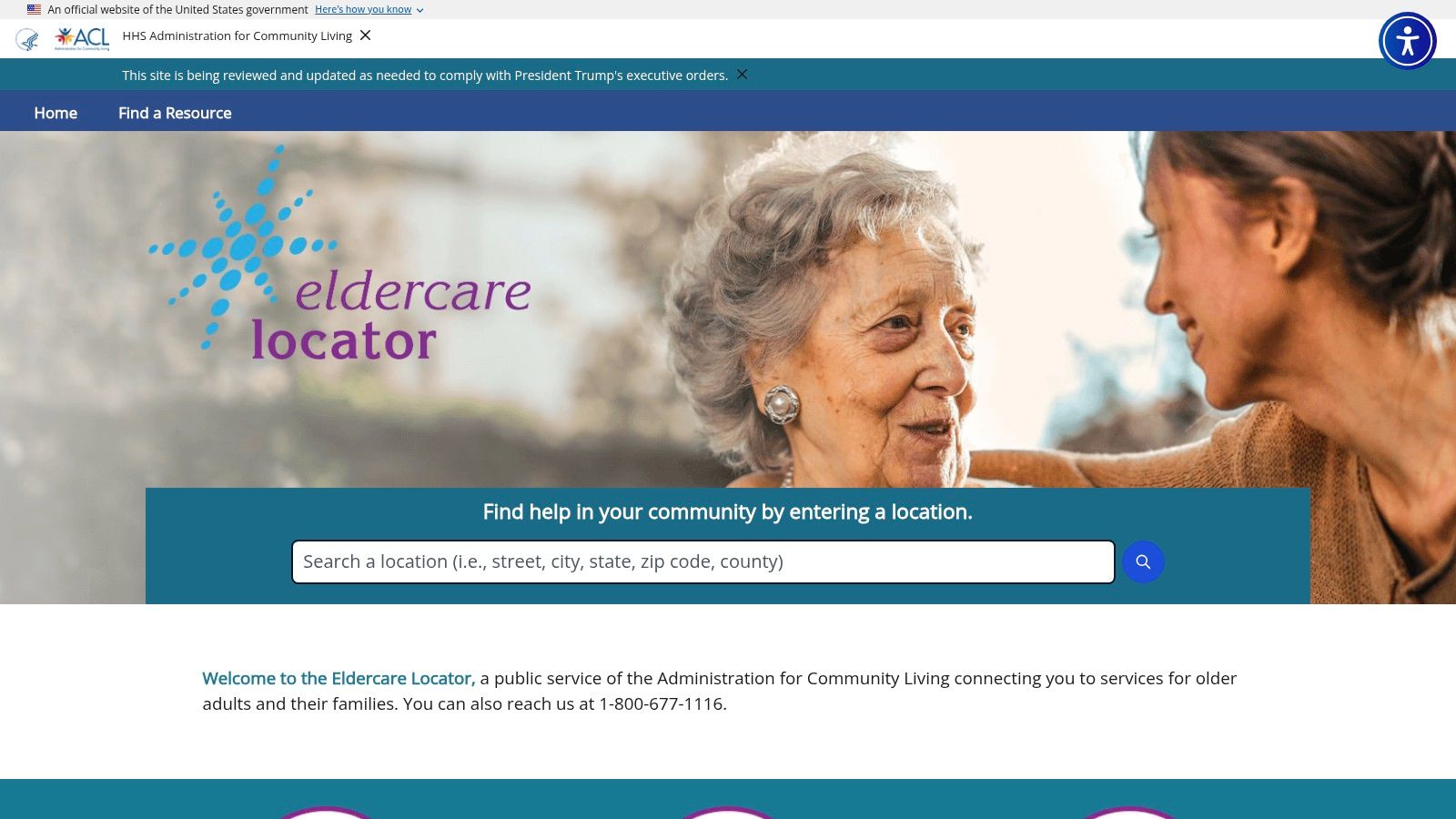
This platform is invaluable for finding resources like the National Family Caregiver Support Program (NFCSP), which offers counseling, training, and financial relief for services like respite care. The strength of Eldercare Locator lies in its simplicity; by entering a ZIP code, you get a direct line to the people and programs designed to help in your immediate area. The availability of these funds can vary significantly by state and county, making this hyper-local approach essential.
Navigating the Platform
To get started, use the main search bar on the homepage by entering a ZIP code, city, or county. This will generate a list of local agencies with contact information and a summary of their services. For more targeted help, visit the "Caregiver Corner" section, which provides guides, fact sheets, and direct contact options via phone, online chat, or email for personalized assistance.
Key Features:
- Hyper-Local Search: Connects users directly to their local Area Agency on Aging and other community-based organizations.
- Comprehensive Support: Provides access to a wide range of services including respite care, counseling, and caregiver training. If you are interested in this topic, you can learn more about the benefits of respite care for caregivers.
- Multiple Contact Methods: Offers live assistance through a toll-free number, online chat, and email support.
Website: https://eldercare.acl.gov
7. AARP Family Caregiving (including AARP Foundation’s Paid4Care Hub)
AARP’s Family Caregiving section is a premier resource hub offering clear, practical guides on how family caregivers can get paid. Rather than being a direct funding source, it excels as an educational and advisory platform, translating complex information about Medicaid, VA benefits, and private programs into easy-to-understand, actionable steps. It's an essential starting point for anyone seeking to understand their financial assistance options.
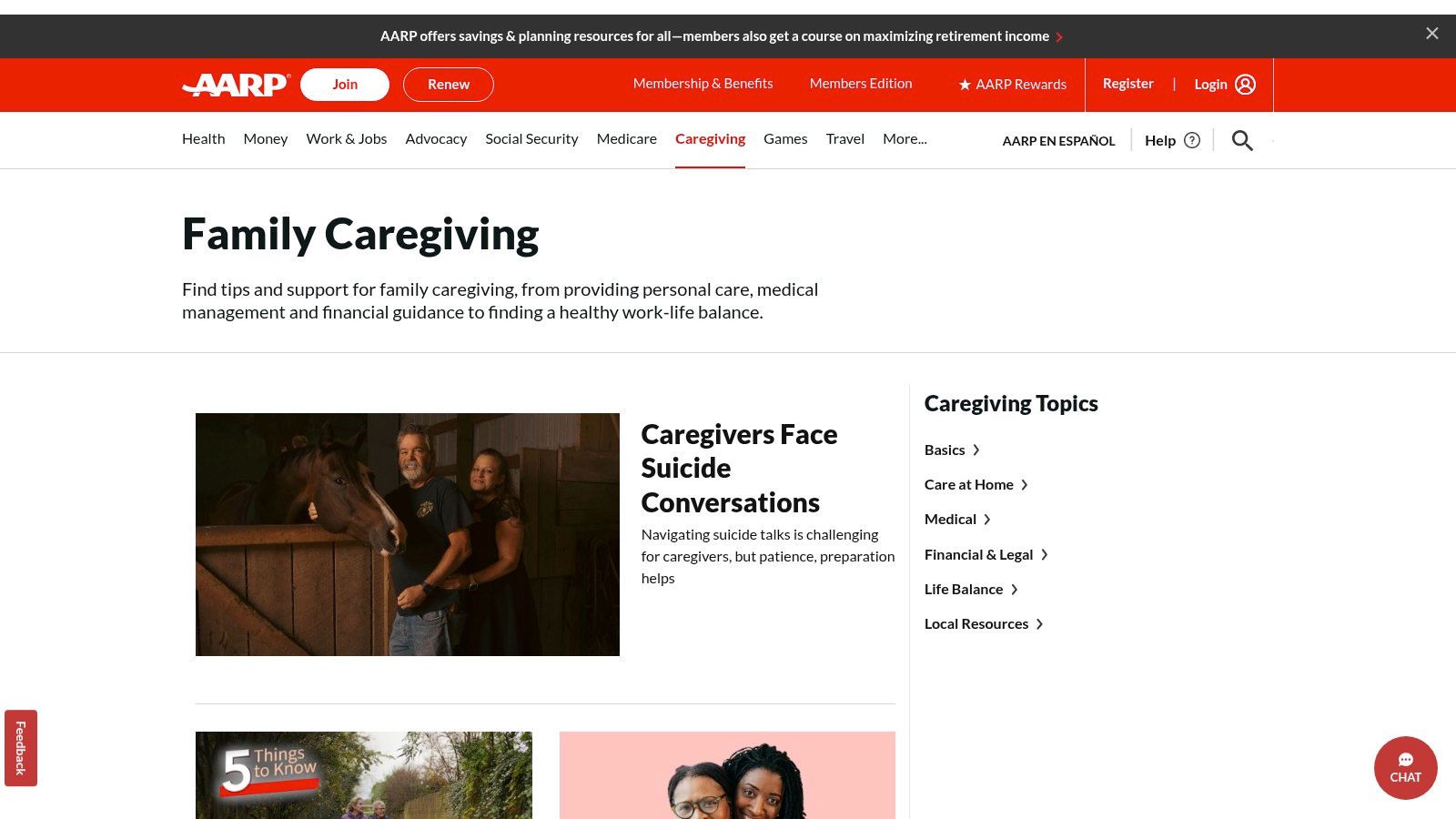
The platform’s strength is its user-friendly approach, especially through the AARP Foundation’s Paid4Care hub, which helps caregivers evaluate paid options. Its state-by-state guides and financial checklists provide a structured path for families navigating the often-confusing landscape of caregiver compensation and support.
Navigating the Platform
Begin by exploring the main "Money & Legal" section within AARP Family Caregiving to find articles and guides on getting paid. Use the Paid4Care hub to specifically locate programs in your area and weigh your options. While AARP provides the information and directs you, remember that all applications must be completed through the respective state or federal agencies it links to.
Key Features:
- State-Specific Guides: Offers detailed information on caregiving financial options tailored to each state.
- Paid4Care Hub: A dedicated tool to help caregivers evaluate payment options and locate local programs.
- Plain-Language Content: Breaks down complex financial and legal topics with actionable checklists and advice.
Website: https://www.aarp.org/caregiving/
8. Family Caregiver Alliance (FCA)
The Family Caregiver Alliance (FCA) is a trusted nonprofit that serves as a clearinghouse for information and resources, making it a vital starting point for anyone seeking financial assistance for caregivers. Rather than providing direct funding, its strength is in its comprehensive, state-by-state directory that connects users with local programs, respite care services, and various forms of financial aid. It demystifies complex topics like Medicaid and VA benefits through detailed, practical articles.
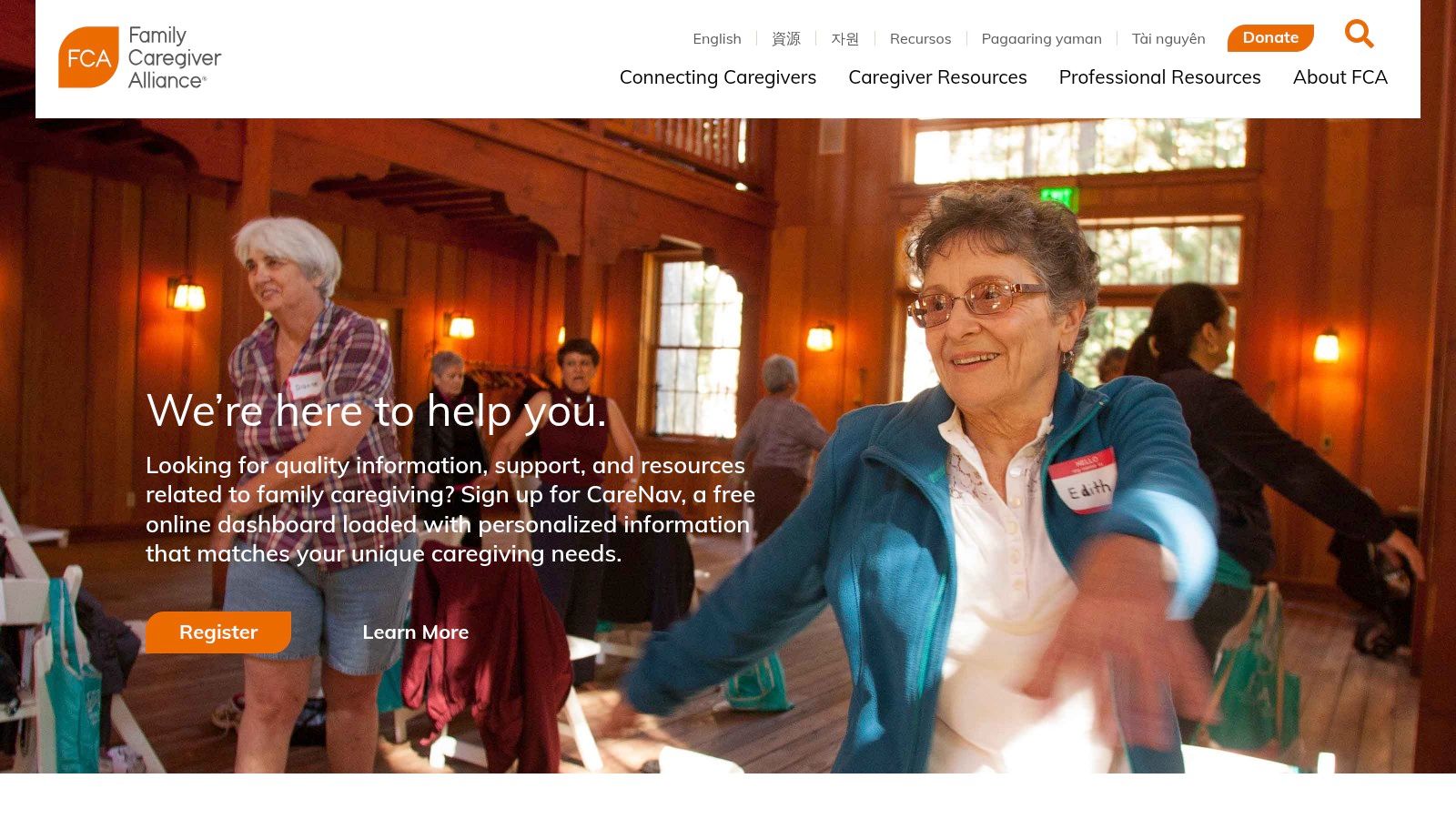
The platform’s standout feature is CareNav, a free and secure online tool that delivers a personalized dashboard of resources. By answering a few questions about your situation, CareNav tailors a list of relevant local services, support groups, and potential funding sources, saving you countless hours of research and helping you build a targeted action plan.
Navigating the Platform
To get the most out of the FCA website, begin by exploring the "State-by-State Resources" section to find programs in your area. For a more guided experience, register for the free CareNav tool to receive personalized recommendations. The site's extensive library of articles and webinars is also invaluable for understanding the different pathways to getting paid as a family caregiver.
Key Features:
- CareNav Tool: Provides a personalized dashboard of local resources and support after a brief assessment.
- State-Level Directory: Offers curated lists of financial aid, respite care, and support services specific to each U.S. state.
- Educational Resources: Features in-depth articles, webinars, and a helpline for direct caregiver support and education.
Website: https://www.caregiver.org
9. U.S. Department of Labor – Paid Family & Medical Leave and FMLA
The U.S. Department of Labor (DOL) website is the definitive source for understanding job protection rights under the Family and Medical Leave Act (FMLA). While FMLA itself is unpaid, this resource is a critical first step in securing your position while you take time off to care for a loved one. It also serves as a hub for information on state-specific paid family leave programs, which provide direct wage replacement.
This platform's primary value lies in its authoritative guidance. It clarifies employee eligibility, outlines employer responsibilities, and provides the necessary forms to request leave. For caregivers seeking financial assistance, the DOL site directs them to explore whether their state offers a paid leave benefit, which can be an invaluable income source during caregiving periods.
Navigating the Platform
Start by reviewing the "Employer Guide to the FMLA" to understand your rights and the correct procedures for requesting leave. From there, navigate to the section on state paid family leave laws to see if your state offers a program. The site provides links to these individual state portals, where you can find eligibility requirements and application details. This information is crucial for coordinating leave with your employer’s HR department.
Key Features:
- Authoritative Source: Provides official, legally accurate information on federal FMLA and links to state paid leave programs.
- Clear Guidance: Offers detailed guides and fact sheets for both employees and employers to ensure compliance.
- State Program Directory: Acts as a portal to find and understand the paid leave benefits available at the state level.
Website: https://www.dol.gov/agencies/whd/fmla/employer-guide
10. IRS – Child and Dependent Care Tax Credit (CDCTC)
The Internal Revenue Service (IRS) offers direct financial assistance for caregivers through the Child and Dependent Care Tax Credit (CDCTC). This federal credit helps working caregivers offset the costs of necessary care for a qualifying dependent, such as a spouse or parent who is physically or mentally incapable of self-care. It directly reduces your federal tax liability, making it a powerful tool for managing caregiving expenses.
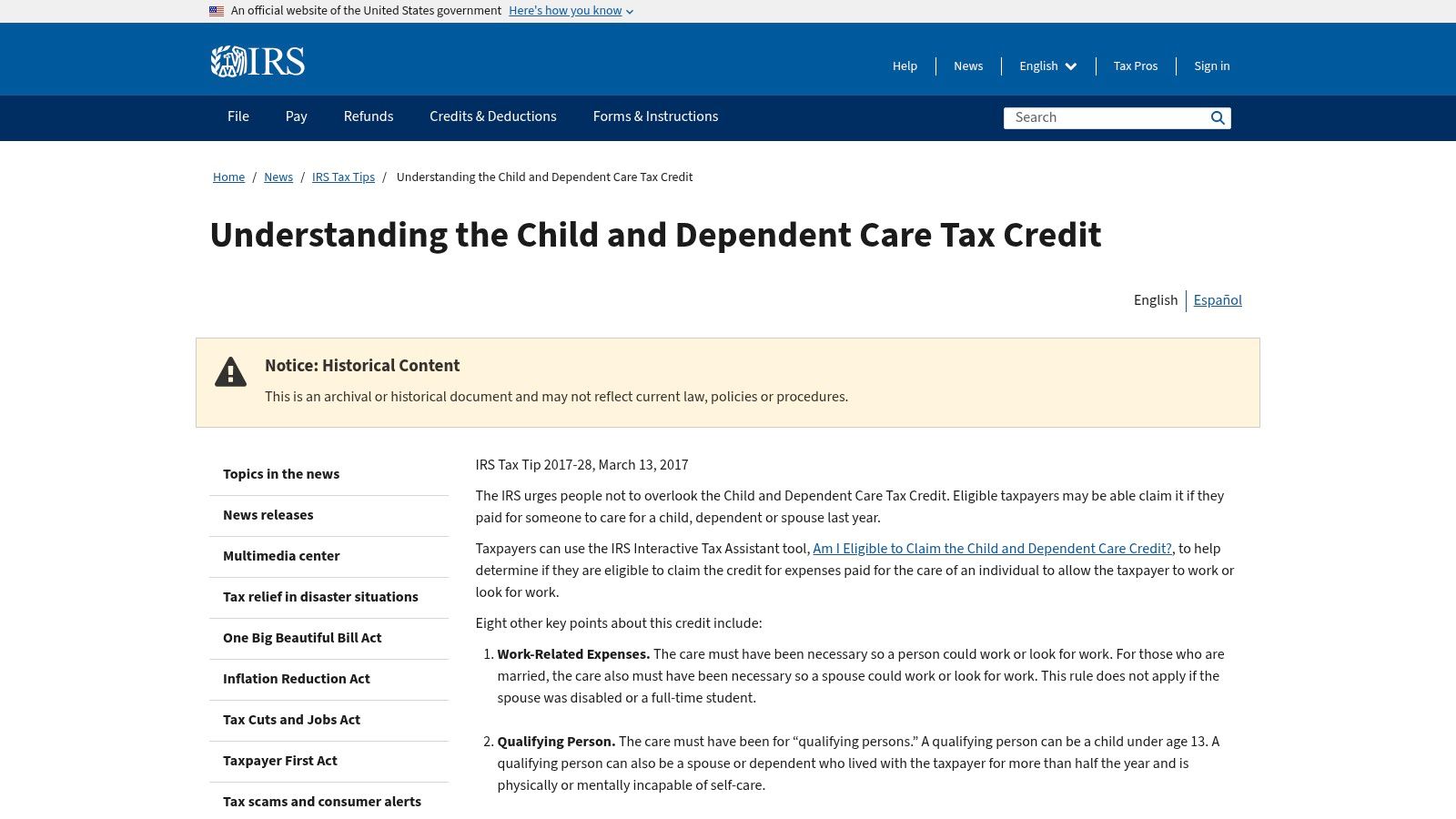
The credit is calculated as a percentage (20–35%) of your care-related expenses, with a maximum claim of $3,000 for one dependent or $6,000 for two or more. The IRS website provides the official forms, detailed instructions, and eligibility rules, ensuring you have authoritative guidance. This resource is essential for any caregiver who pays for services like adult day care or in-home assistance in order to work or look for work.
Navigating the Platform
To utilize this benefit, visit the IRS website and locate Form 2441, "Child and Dependent Care Expenses." The instructions for this form will guide you through the process of calculating the credit. It is crucial to maintain meticulous records of all care-related payments, including the provider's name, address, and taxpayer identification number. The IRS site offers publications and FAQs to clarify any questions about qualifying dependents or eligible expenses.
Key Features:
- Direct Tax Reduction: The credit directly lowers the amount of federal income tax you owe.
- Official Guidance: Provides reliable, up-to-date rules, forms, and instructions directly from the source.
- Broad Eligibility: Covers care expenses for children under 13 and spouses or other dependents unable to care for themselves.
Website: https://www.irs.gov/newsroom/understanding-the-child-and-dependent-care-tax-credit
11. United Way 211 – Caregiver Resources
United Way’s 211 service is a free, confidential national helpline and website that connects individuals with local community services, including critical financial assistance for caregivers. Instead of providing funds directly, it acts as a personalized referral system, linking caregivers to often-overlooked local resources like respite care vouchers, utility assistance, transportation aid, and food support programs.
The platform’s standout feature is its human-centric approach. By dialing 211 or using the online search, you can connect with a specialist who provides tailored referrals based on your specific location and needs. This local focus is invaluable for uncovering city- or county-level subsidies and non-profit grants that are not listed on national databases.
Navigating the Platform
To find help, you can either dial 211 to speak with a trained specialist or visit the website and enter your ZIP code. The online portal directs you to your local 211 provider, where you can browse categories like "Caregiver Resources." For the most comprehensive support, calling is often more effective, as a specialist can navigate multiple databases and ask clarifying questions to find the best-fit programs for your situation.
Key Features:
- Hyper-Local Focus: Connects users with geographically specific funds and services, including county-level caregiver subsidies.
- Personalized Assistance: Live specialists offer tailored guidance and referrals via a 24/7 helpline.
- Broad Support Network: Provides access to a wide range of supports beyond direct payments, such as food, housing, and transportation aid.
Website: https://www.211.org/get-help/caregiver-resources
12. ARCH National Respite Network & Resource Center – National Respite Locator
The ARCH National Respite Network and Resource Center provides an essential service for caregivers seeking a break, which is a critical form of financial assistance. Instead of directly offering funds, ARCH connects caregivers with local respite care providers, many of which are subsidized through state and federal programs. This makes temporary care affordable, allowing family caregivers to work, rest, or attend to personal needs without incurring high costs.

Its core feature, the National Respite Locator, is the most comprehensive directory of its kind. The platform is dedicated to helping caregivers find and pay for respite, guiding them to resources like Lifespan Respite grants and the National Family Caregiver Support Program, which may offer vouchers or direct payment for services.
Navigating the Platform
To find help, use the National Respite Locator tool and search by state. The search results will provide a list of organizations, state respite coalitions, and specific programs. You will need to contact these listed agencies directly to inquire about their eligibility requirements and application process for subsidized care. ARCH equips you with the starting point for accessing this vital support.
Key Features:
- National Respite Locator: A searchable, state-by-state directory to find local respite care providers.
- Funding Information: Details on how to pay for respite, including state-specific programs and vouchers.
- Advocacy Resources: Policy updates and training materials related to respite funding and caregiver support initiatives.
Website: https://archrespite.org
Financial Assistance Resources for Caregivers Comparison
| Resource | Core Features / Services | User Experience / Quality ★ | Value Proposition 💰 | Target Audience 👥 | Unique Selling Points ✨ | Price Point 💰 |
|---|---|---|---|---|---|---|
| Your Guide to Medicaid Respite Care | NJ-tailored Medicaid respite info & application | ★★★★ Local expert, clear guidance | ★★★★ Direct financial relief for families | Families in Mercer County & NJ | Step-by-step NJ-specific Medicaid help ✨ | Free resource |
| USA.gov – Benefits & "Get paid as a caregiver" | Federal benefits finder, caregiver pay overview | ★★★★ Official, bilingual content | ★★★ General federal benefit access | National caregivers & families | Central federal resource, English/Spanish ✨ | Free |
| Medicaid.gov – Self-Directed & HCBS | Policy details on Medicaid caregiver payments | ★★★★ Authoritative federal info | ★★★ Policy clarity, eligibility help | Medicaid applicants nationwide | Detailed self-direction program info ✨ | Free |
| U.S. Dept. Veterans Affairs – PCAFC/PGCSS | Monthly stipends, training, VA caregiver support | ★★★★ Exclusive VA caregiver payments | ★★★★ Direct payment to veteran caregivers | Caregivers of eligible veterans | Stipends plus mental health & benefits ✨ | Stipend-based |
| NCOA BenefitsCheckUp | Benefit screening tool, personalized report | ★★★★ Trusted, easy to use | ★★★ Access to many programs | Older adults & caregivers | Live help & local enrollment referrals ✨ | Free |
| Eldercare Locator – ACL | Connects to local aging agencies & respite | ★★★★ Multiple contact methods | ★★★ Localized resource access | Seniors & caregivers nationally | Local agency connections & materials ✨ | Free |
| AARP Family Caregiving & Paid4Care | State-by-state guides, payment resource hubs | ★★★★ User-friendly, plain language | ★★★ Advisory, advocacy, paid options | National unpaid caregivers | Paid4Care hub to find payment programs ✨ | Free |
| Family Caregiver Alliance | State directories, CareNav navigation tool | ★★★★ Trusted nonprofit resources | ★★★ Saves time finding assistance | Family caregivers nationwide | CareNav personalized resource navigation ✨ | Free |
| U.S. Dept. Labor – Paid Family & Medical Leave | FMLA rules, state paid leave overviews | ★★★★ Authoritative job protection info | ★★ Overview, no federal payment | Employees & employers | Employer/employee guides & state links ✨ | Free |
| IRS – Child & Dependent Care Tax Credit (CDCTC) | Tax credit for work-related caregiving expenses | ★★★★ Official tax guidelines | ★★★ Tax relief on caregiving costs | Working caregivers | Federal tax credit, up to $6k expenses ✨ | Tax credit (savings) |
| United Way 211 – Caregiver Resources | 24/7 helpline, local caregiver supports | ★★★★ Personalized human assistance | ★★★ Connects to local subsidies | Caregivers needing immediate help | Local subsidies often hidden elsewhere ✨ | Free |
| ARCH National Respite Network & Resource Center | National respite care directory | ★★★★ Centralized respite locator | ★★★ Identifies subsidized programs | Caregivers seeking respite care | National respite search with policy updates✨ | Free |
Your Next Steps to Securing Financial Stability
Navigating the landscape of caregiver support can feel like an overwhelming task, but this guide has equipped you with a comprehensive map. You now have a detailed list of the most impactful sources of financial assistance for caregivers, from broad federal programs like Medicaid and VA stipends to targeted resources like the National Respite Locator and the NCOA's BenefitsCheckUp. The key takeaway is that you are not alone, and tangible support is available.
The financial strain of caregiving is a valid and significant challenge, but it is not one you must face without aid. Each tool and program detailed in this article, whether it's a tax credit from the IRS or a local grant discovered through United Way 211, represents a pathway toward greater stability. Recognizing and pursuing these opportunities is a crucial act of self-preservation that enables you to continue providing the best possible care.
How to Move Forward: A Practical Action Plan
The journey from information to implementation requires a strategic approach. Avoid the paralysis that can come from having too many options by breaking down your next steps into manageable tasks.
-
Identify Your Top 3 Resources: Review the list and select the two or three programs that most closely align with your specific situation.
- For veterans' families, start immediately with the VA's Caregiver Support Program (PCAFC/PGCSS).
- If you are employed, investigate your eligibility for Paid Family & Medical Leave through the Department of Labor.
- For low-income households, Medicaid's Self-Directed Services and Home & Community-Based Services (HCBS) should be your first priority.
- If you're unsure where to begin, use the Eldercare Locator or BenefitsCheckUp as your starting point to find local resources.
-
Create a Documentation Checklist: Nearly every application for financial assistance for caregivers will require similar documentation. Gather these items now to streamline the process later. Common requirements include proof of income, the care recipient's medical diagnoses, proof of residency, and identification for both you and your loved one.
-
Commit to One Application This Week: Choose one program from your shortlist and begin the application process. Set a small, achievable goal, such as completing the initial online form or making the first phone call. Small, consistent actions build momentum and lead to significant results.
Securing this support is about more than just money; it’s about acknowledging the immense value of your labor. It is a strategic step to build a sustainable caregiving environment where both you and your loved one can thrive. By taking these deliberate steps, you are investing in your own well-being, ensuring you have the resources to continue your vital work for the long term.
For caregivers in New Jersey, navigating state-specific programs like Medicaid can be complex. NJ Caregiving specializes in helping families understand and access these benefits, ensuring you maximize the financial assistance available for in-home care. Contact us today for a free consultation to simplify your journey and unlock the support you deserve.