

Respite care is a short-term, temporary lifeline for family caregivers. It’s a planned break that ensures your loved one continues receiving professional support while you get a much-needed chance to rest and recharge, heading off the all-too-common problem of caregiver burnout.
A Lifeline for Dedicated Caregivers
Think of it like a relief pitcher stepping onto the mound so the starter can rest, or a substitute teacher taking over a class for the day. That’s the heart of what respite care really is—a planned break for the family members who pour their energy into caregiving. It's an essential support system designed to give you, the primary caregiver, a well-deserved opportunity to step back without ever worrying about your loved one’s well-being.
This temporary care can last anywhere from a few hours to several weeks. The exact arrangement is completely up to your family's needs. The goal is simple: provide a safe, compassionate environment for your loved one so you can tend to your own health, run errands, take a vacation, or just catch your breath.
Understanding Its Core Purpose
At its core, respite care is built on a simple truth: caregiving is an incredibly demanding role. Over time, the constant physical, emotional, and mental strain can lead to caregiver burnout, a state of exhaustion that impacts both your health and the quality of care you can provide. Recognizing you need a break isn't a sign of weakness; it’s a smart, crucial strategy for providing healthy care over the long haul.
This service acts as a vital support system by:
- Preventing Burnout: Scheduled breaks help you sidestep exhaustion and protect your own physical and mental health.
- Ensuring Continuous Care: Your loved one receives professional, uninterrupted support from trained caregivers in a safe setting.
- Offering Flexibility: Services can be set up for just a few hours during the day, overnight, or for longer stretches like a weekend or a few weeks.
By providing this temporary relief, respite care strengthens the entire family. It ensures caregivers can return to their roles feeling refreshed and re-energized, leading to a more positive and sustainable caregiving relationship. It’s a proactive step toward maintaining balance.
Ultimately, respite care is a partnership. It supports the senior by offering new social interactions and expert attention, and it supports you by providing peace of mind and the invaluable gift of time.
To make it even clearer, here’s a quick summary of what respite care is all about.
Respite Care At a Glance
| Aspect | Description |
|---|---|
| Who It's For | Primary family caregivers who need a temporary break from their responsibilities. |
| Main Purpose | To prevent caregiver burnout, reduce stress, and allow caregivers to rest and recharge. |
| Where It's Provided | Can be in the senior's own home, at an adult day care center, or in a residential facility. |
| Typical Duration | Highly flexible, ranging from a few hours to several days or even a few weeks. |
This table shows just how adaptable respite care can be, fitting into the unique rhythm of your family’s life while providing a much-needed safety net.
The Growing Need for Respite Care in Modern Families

The conversation around respite care has shifted in a big way. What used to feel like a niche service is now an urgent, fundamental need for countless households across the country. The reason is simple, but the impact is profound: our world has changed.
People are living longer than ever, which is a wonderful thing. But with that extra time often comes the complexities of managing chronic health conditions.
This new reality puts immense pressure on family caregivers. Many are part of the "sandwich generation"—juggling their own kids, managing careers, and caring for aging parents all at once. It’s an exhausting balancing act, and it’s often completely unsustainable without a safety net. This makes the question of "what is respite care for elderly" more critical than ever.
The Impact of Global Aging
This isn't just a personal challenge; it's a global one. As populations age worldwide, the number of families facing these exact responsibilities is skyrocketing. It’s a major demographic shift that puts the need for respite care into sharp focus.
The World Health Organization found that the global population of people aged 60 and over was around 900 million back in 2015. But that number is expected to more than double, hitting a staggering 2 billion by 2050. This surge puts incredible strain on both family caregivers and healthcare systems, highlighting just how vital support structures like respite care really are. You can dig into more data on the global elderly care market to see these trends firsthand.
This shift means that planning for elder care is no longer an afterthought. It has become a core component of modern family life, requiring proactive solutions that support everyone's well-being.
Why Respite Is No Longer a Luxury
In this new reality, respite care is no longer a "nice-to-have" option. It's an essential tool for family resilience and a smart, adaptive solution for modern life. Without it, caregivers run a very real risk of burnout, which takes a toll on their health, their relationships, and ultimately, their ability to provide the best care.
Just think about the pressures today's caregivers are under:
- Balancing Work and Life: So many caregivers are also holding down full-time jobs. Trying to manage a loved one’s needs on top of professional duties can feel impossible.
- The Physical and Emotional Toll: The day-to-day work of caregiving—from helping with mobility to managing medications—is physically draining and emotionally taxing.
- No Time for Yourself: Caregivers often give up their own hobbies, time with friends, and even basic self-care. It's a fast track to feeling isolated and completely exhausted.
Respite care directly tackles these challenges by giving you a structured, reliable break. It’s built on the understanding that for a caregiver to stay healthy and effective, they simply can't do it all alone. This support system ensures that both the senior and their caregiver can not only cope but truly thrive for the long haul.
Finding the Right Fit with Different Types of Respite Care
Choosing respite care isn't a one-size-fits-all decision. It's about finding a solution that fits seamlessly into your family’s unique rhythm and meets everyone's needs. Think of it like a toolkit—you wouldn't use a hammer to turn a screw, and the right type of care depends entirely on your specific situation.
The first step is figuring out where the care will take place. Thankfully, the options are flexible, ranging from the familiar comfort of your own home to specialized community centers. Each type of respite care offers a different environment and level of support. Let's break them down.
In-Home Respite Care
For so many seniors, there's truly no place like home. In-home respite care brings a qualified caregiver right to their doorstep, allowing them to stay in the surroundings they know and love. This is often the best choice for anyone who feels anxious in new places or has mobility challenges that make getting out and about difficult.
A professional can come for just a few hours, a full day, or even stay overnight. Their support can include:
- Personal Care: Helping with daily activities like bathing, dressing, and grooming.
- Companionship: Simply being a friendly presence, chatting, or playing a game of cards.
- Meal Preparation: Making sure your loved one enjoys nutritious meals.
- Medication Reminders: Keeping them on track with their prescribed medication schedule.
This option offers incredible convenience and minimal disruption to your loved one’s routine, giving you complete peace of mind.
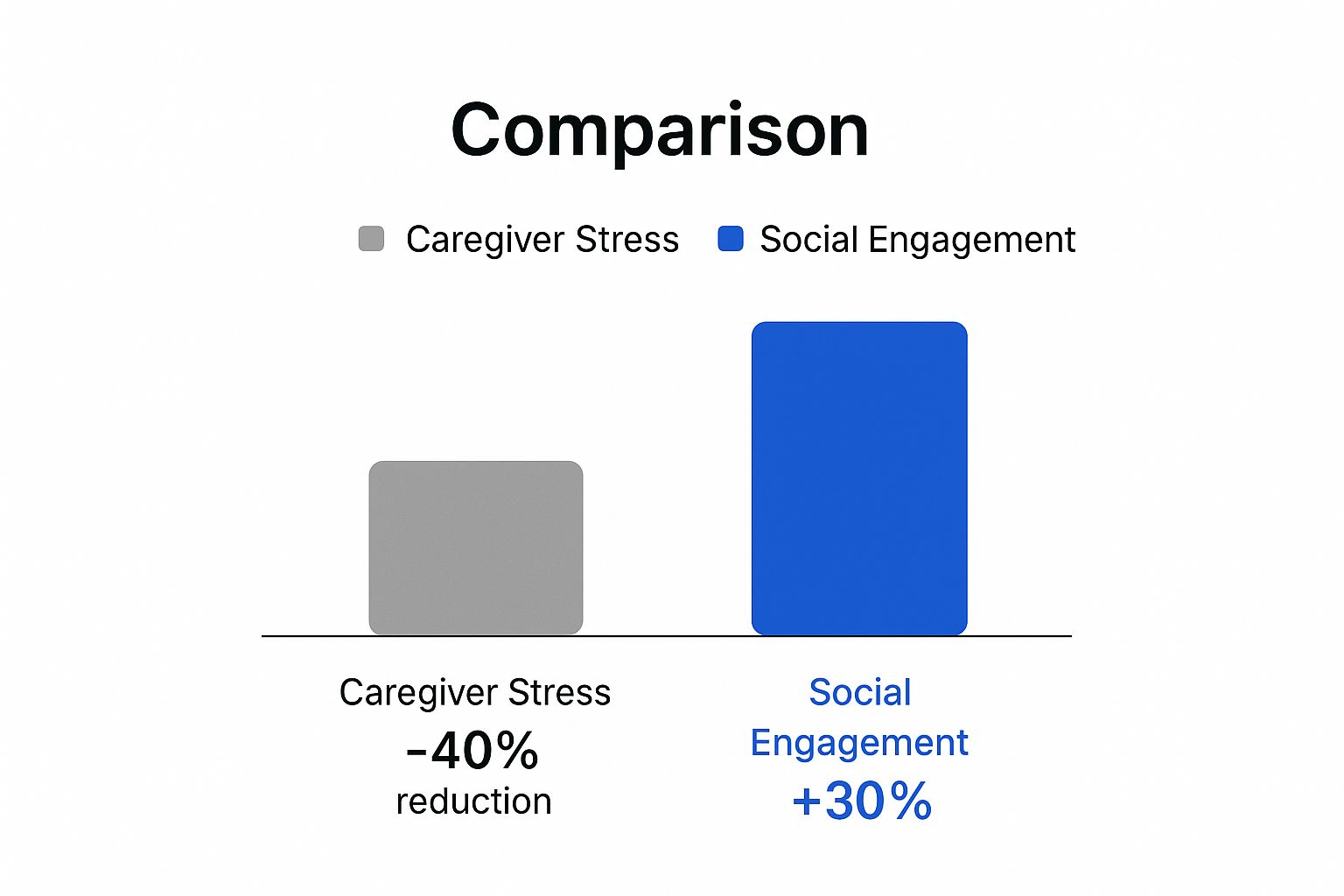
As you can see, the data shows a huge drop in caregiver stress while giving a real boost to a senior's social life. It's a true win-win.
Adult Day Centers
Does your loved one thrive on social interaction and structured activities? An adult day center could be the perfect solution. These centers provide a safe, supervised place for seniors to connect with their peers, join in engaging activities, and receive health services. It’s like a day club for older adults.
Most centers operate during standard business hours, giving caregivers a solid block of time to work, run errands, or just recharge their batteries. Services usually include therapeutic activities, meals, and health monitoring, making them a fantastic option for seniors who are mostly independent but would benefit from more socialization.
Choosing the right setting is all about balancing your loved one’s personality with your own need for a break. A social butterfly might flourish in an adult day center, while someone who treasures quiet would probably prefer in-home support.
Short-Term Residential Stays
Sometimes, you just need a longer break. Whether it's for a family vacation, a work trip, or to recover from your own illness, a short-term stay in a residential facility is an excellent option. This could be an assisted living community, a memory care unit, or a nursing home that offers dedicated respite beds.
During their stay, your loved one receives 24/7 care from a team of professionals. They also get to enjoy all the amenities and social events the facility has to offer, turning it into a mini-vacation of their own. This option provides the highest level of care and is ideal for seniors with more complex medical needs.
To help you see how these options stack up, here’s a quick comparison.
Comparing Respite Care Options
| Type of Care | Best For | Key Benefit |
|---|---|---|
| In-Home Care | Seniors who prefer familiar surroundings or have mobility issues. | Minimal Disruption – Your loved one's daily routine stays the same. |
| Adult Day Center | Social seniors who would benefit from structured activities and peer interaction. | Social Engagement – Provides a fun, stimulating, and community-focused environment. |
| Residential Stay | Caregivers needing a longer break (days or weeks) or for seniors with complex medical needs. | Comprehensive Support – Offers 24/7 professional care and a secure environment. |
Ultimately, the best choice depends on your loved one’s comfort, your needs as a caregiver, and the level of support required. Each of these paths offers a valuable lifeline, ensuring both of you get the support you deserve.
The Mutual Benefits of Taking a Well-Deserved Break

When we talk about respite care, it's easy to picture it as just a break for the caregiver. But it’s so much more than a simple pause. Think of it as a powerful tool that sends positive ripples through the entire family, revitalizing the caregiver while offering a refreshing change of pace for the senior.
For the caregiver, the benefits are immediate and deeply felt. Stepping away—even for just a few hours—is one of the best defenses against the emotional and physical drain of burnout. The constant demands can wear you down, but respite care gives you the space to be you again.
This is your chance to focus on your own well-being. You can finally make it to your own doctor’s appointments, catch up with friends over lunch, or just soak up the silence at home with a good book. It’s all about recharging your own battery so you can come back to your role with fresh energy and patience.
A Fresh Perspective for Your Loved One
For the senior in your life, respite care is far from a passive experience. It's an opportunity for enrichment. A new face or a change of scenery can be incredibly stimulating, breaking up the monotony of a daily routine.
Whether it’s a new in-home companion or a short stay at a residential facility, this change introduces them to:
- New Social Interactions: Meeting different caregivers or peers at an adult day center is a fantastic way to fight off loneliness and isolation.
- Engaging Activities: Professional respite providers often bring new hobbies, games, or gentle exercises into the mix, providing great mental and physical stimulation.
- A Sense of Novelty: Let's be honest, we all love a break from the everyday. For a senior, this can feel like a mini-vacation, giving them something new and enjoyable to look forward to.
Respite care isn’t just about filling a gap. It's about enhancing the quality of life for both the caregiver and the person they support, leading to a healthier and more sustainable long-term relationship.
Think of it this way: even the strongest, most loving relationships need a little breathing room. A short break can reset the dynamic, allowing both you and your loved one to appreciate each other even more when you reunite. It helps keep the relationship rooted in love and compassion, rather than letting it feel like a chore.
Supporting the Entire Family Unit
Ultimately, the goal is to build a care plan that works for everyone. When a caregiver is rested and mentally sound, the quality of care they provide naturally gets better. They're more present, more patient, and better equipped to handle daily challenges with a clear head.
The emotional toll of caregiving is very real, and protecting your own mental health isn't selfish—it's essential. By recognizing the signs of burnout and using resources like respite care, you’re being a responsible and effective caregiver. To learn more, you can explore resources for improving caregiver mental health and find strategies to stay resilient. This proactive approach strengthens the entire family, creating a positive environment where everyone can truly thrive.
How to Navigate Costs and Financial Aid for Respite Care
Let's talk about the elephant in the room: cost. The thought of paying for respite care can be a major source of stress, but it shouldn't stop you from getting the support you and your loved one desperately need. Understanding what goes into the final price is the first step to finding a solution that fits your budget.
The final bill depends on a few key things. Your location, the type of care you choose (in-home help versus a stay at a facility), and the level of support required all play a role. For example, a few hours of companionship at home will naturally cost less than a full week in a residential setting that offers 24/7 medical supervision.
Uncovering Financial Support Options
Here’s the good news: you don't have to go it alone. There are plenty of financial assistance options out there designed to make these services affordable. Many families successfully piece together funding from a mix of federal, state, and private programs.
Here are some of the most common pathways to explore:
- Medicare and Medicaid: Medicare's coverage for respite care is pretty limited. It usually only kicks in for short-term stays in a skilled nursing facility after a hospital visit. Medicaid, on the other hand, often provides much broader support. Many states have Medicaid waiver programs specifically designed to cover respite care and help seniors stay in their own homes.
- Veterans' Benefits: The Department of Veterans Affairs (VA) includes respite care in its standard medical benefits package for eligible veterans. This can cover up to 30 days of care each year.
- Long-Term Care Insurance: If your loved one has a long-term care insurance policy, there's a good chance it covers respite services. You'll want to pull out the policy and review the details to see exactly what’s included.
- State and Non-Profit Programs: Don't overlook local resources. Many states and non-profit organizations offer grants or have sliding-scale payment systems to help families manage the cost. The National Family Caregiver Support Program is another fantastic resource to check out.
Knowing your options is empowering. When you start digging into these programs, you can build a financial plan that makes high-quality respite care a real possibility for your family.
The demand for these services is growing, and the market is expanding to meet it. The global elderly care market, which includes respite care, was valued at around USD 49 billion and is expected to hit nearly USD 98 billion by 2032. You can learn more about the growth of the elderly care market on Fortune Business Insights.
Navigating systems like Medicaid can feel like a full-time job. But knowing what to ask and who to turn to makes all the difference. For a deeper dive, check out our guide on how Medicaid can cover respite care to see how you can get this crucial support. Taking the time to explore your financial options means you can get the break you deserve without adding more stress to your plate.
A Practical Checklist for Finding Quality Respite Care
Taking that first step toward finding respite care can feel like the hardest part. You're faced with so many options, and it's natural to wonder, "How can I be sure I'm choosing a provider who is trustworthy, compassionate, and a great fit for my loved one?" This practical roadmap is designed to replace that uncertainty with confidence.
Before you even start your search, it helps to get clear on your family’s specific needs. Think about the level of care required, how long of a break you need, and your loved one’s personality. Do they thrive in social settings, or would they be more comfortable with one-on-one care at home? Answering these questions first will narrow your focus and make the whole process much less overwhelming.
Key Questions to Ask Potential Providers
Once you have a shortlist of providers, it's time to start asking questions. A reputable agency will welcome your inquiries and be transparent with their answers. Your peace of mind is what matters most, so don't hesitate to dig into the details.
Here are some essential questions to guide your conversations:
- Staffing and Training: What qualifications, certifications, and background checks are required for your caregivers? Do they receive ongoing training, especially for conditions like dementia or mobility support?
- Emergency Protocols: What is your procedure in case of a medical emergency? How do you communicate with families when an incident occurs?
- Daily Activities and Routines: Can you provide a sample schedule of daily activities? How do you tailor activities to individual interests and abilities?
- Communication: How will the caregiver or facility keep me updated on my loved one’s well-being during their stay?
Choosing the right provider is about more than just qualifications; it's about finding a partner in care. Look for an agency that demonstrates empathy, actively listens to your concerns, and makes you feel comfortable and respected throughout the process.
Vetting Your Options and Making a Choice
After you've interviewed providers, take the time to check references and read online reviews. Hearing directly from other families who have used their services can provide invaluable insight you won't find anywhere else. For those looking for local options, a detailed guide can help you find trusted respite care near you and simplify the search process.
Finally, trust your intuition. The right choice will not only meet all the practical requirements on your checklist but will also just feel right. Selecting a quality respite care solution means securing excellent care for your loved one and, just as importantly, granting yourself the restorative break you truly deserve.
Common Questions About Respite Care

When you first start looking into respite care, a lot of practical questions naturally come to mind. Getting straight answers is the best way to feel confident you’re making the right choice for your family. Let’s walk through some of the most common things caregivers wonder about when they start exploring this kind of support.
One of the first questions is always, "How long can my loved one use respite care?" The good news is that it’s incredibly flexible. You can arrange for just a few hours during the day, a full weekend away, or even several weeks if you need a longer break. It’s all based on what works for you.
Another big one we hear a lot about is guilt. So many caregivers feel that asking for help is somehow a sign of failure, but that couldn't be further from the truth.
Think of it this way: flight attendants always tell you to put on your own oxygen mask before helping others. Respite care is your oxygen mask. Taking a break is a responsible, necessary action that allows you to provide better, more sustainable care in the long run.
Answering Your Practical Questions
To give you an even clearer picture, here are a few more questions we get asked all the time about respite care for the elderly.
-
Will my loved one feel abandoned? This is a huge concern, but quality respite providers are experts at making seniors feel welcome and engaged. Often, they end up enjoying the change of pace, the new social opportunities, and the different activities. Many see it as a mini-vacation! Talking openly with your loved one beforehand can also go a long way in easing any worries.
-
How do I know the care will be high quality? Reputable agencies have very strict screening processes for their teams, including comprehensive background checks and ongoing training. Never hesitate to ask them about their hiring standards, what they do in an emergency, or their staff-to-client ratios. That information is key to your peace of mind.
-
Can respite care handle specific medical needs? Absolutely. Most providers are well-equipped to manage a wide variety of health conditions. Whether it’s medication management, help with mobility, or specialized memory care support, you can find a service that fits your loved one’s exact needs. Just be sure to discuss everything in detail upfront.
At the end of the day, respite care is designed to support the entire family. It creates a safe, enriching environment for your loved one while giving you the essential time you need to rest and recharge your own batteries.
At NJ Caregiving, we understand that finding the right support is crucial for your family's well-being. Our compassionate and professional team is here to provide the high-quality respite care your loved one deserves. Learn more about our personalized care plans and find peace of mind today.