

Navigating Senior Care: Beyond Home Care vs Nursing Home
Choosing the right care setting for a senior is a significant decision, often simplified to "home care vs nursing home." However, the landscape of senior care offers a wider range of possibilities. This listicle explores 8 distinct care models, moving beyond the common dichotomy. We will compare traditional in-home care, nursing homes, assisted living, adult day services, CCRCs, supported family caregiving, PACE, and technology-enhanced options. Understanding the key differences, costs, and benefits of each is essential for making an informed choice that best suits individual needs and preferences in 2025. This guide provides clarity to help you navigate beyond the basic home care vs nursing home comparison.
1. Traditional In-Home Care
When considering the complex decision between home care vs nursing home, traditional in-home care emerges as a prominent and often preferred choice for many individuals and families. This approach centers on providing professional care services directly within the individual's own residence. Essentially, it involves qualified caregivers visiting the home on a predetermined schedule to assist with a wide range of needs, allowing seniors or those with disabilities to remain in their familiar, comfortable surroundings while receiving the support necessary for their well-being and safety.
How Traditional In-Home Care Works:
The process typically begins with an assessment of the individual's needs, preferences, and home environment. Based on this assessment, a personalized care plan is developed. Professional caregivers, who may be certified nursing assistants (CNAs), home health aides (HHAs), or registered nurses (RNs) depending on the required level of care, then visit the home to execute this plan. Services can range broadly:
- Activities of Daily Living (ADLs): Assistance with bathing, dressing, grooming, toileting, transferring, and eating.
- Instrumental Activities of Daily Living (IADLs): Help with meal preparation, light housekeeping, laundry, medication reminders, shopping, transportation, and managing finances.
- Companionship: Providing social interaction, engaging in hobbies, and offering emotional support.
- Skilled Nursing Care: More complex medical tasks like wound care, injections, IV therapy, and health monitoring, typically provided by licensed nurses.
Scheduling is highly flexible, adapting to the specific requirements of the care recipient – from just a few hours per week for respite or specific tasks, up to comprehensive 24/7 live-in or shift-based care for those with significant needs.
Why Choose Traditional In-Home Care?
This option stands out in the home care vs nursing home comparison primarily because it allows individuals to "age in place." It's often the preferred route when:
- The individual strongly desires to remain in their own home and community.
- Their care needs can be safely and effectively met within the home environment.
- Maintaining independence, familiar routines, and existing social connections is a high priority.
- One-on-one attention and a highly personalized care approach are desired.
- The home environment is, or can be made, safe and suitable for care delivery.
- It serves as a transitional step after hospital discharge before full recovery.
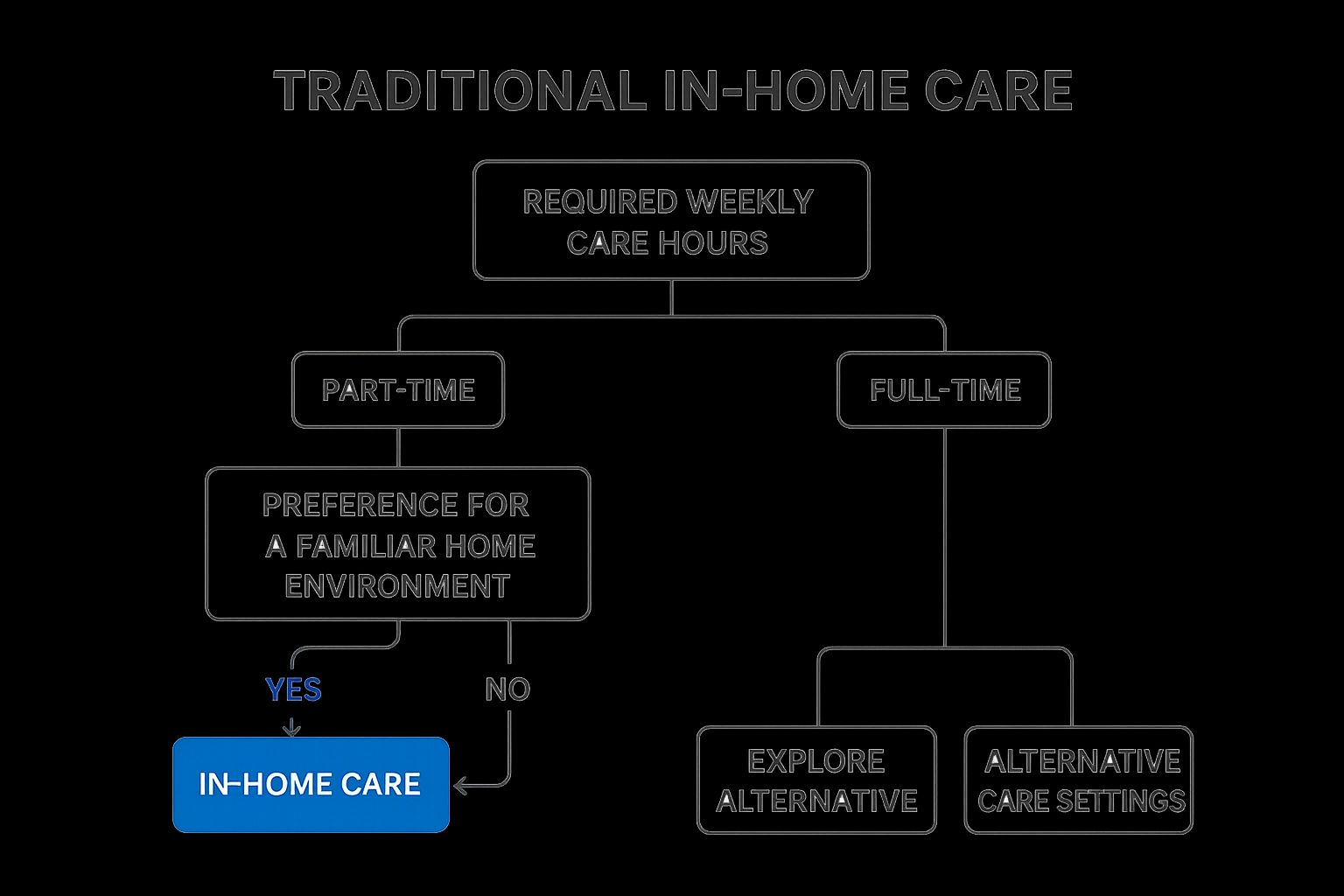
Deciding if traditional in-home care is the right fit involves weighing various personal factors. The following decision tree infographic illustrates key questions to consider in this process, helping guide you through assessing needs, preferences, and home suitability.
This decision tree highlights that factors such as the level of care required (ADL assistance vs. complex medical needs), the safety of the home environment, the individual's desire for independence versus social interaction, and budget constraints are critical points in determining if in-home care is the most suitable path compared to alternatives like a nursing home.
Features and Benefits (Pros):
Traditional in-home care offers distinct advantages:
- Familiar Environment: Care is delivered in the comfort and security of home, reducing stress and anxiety often associated with moving.
- Personalized Care: Services are tailored specifically to the individual's needs, preferences, and routines, offering truly one-on-one attention.
- Independence & Autonomy: Allows the care recipient to maintain a greater degree of control over their daily life and decisions.
- Flexibility: Scheduling can be adjusted as needs change, offering scalability from minimal support to round-the-clock care.
- Community Connection: Facilitates staying connected with neighbours, local groups, and familiar social networks.
- Cost-Effectiveness (Potentially): Depending on the hours and level of care needed, it can be less expensive than the 24/7 residency costs of a nursing home, especially for individuals who don't require constant supervision or intensive medical care.
Considerations and Challenges (Cons):
Despite its benefits, potential drawbacks exist:
- Limited Social Interaction: Can be isolating compared to the communal environment of a nursing home, especially if the individual lives alone and has limited mobility.
- Caregiver Reliability: Finding and retaining consistent, trustworthy, and skilled caregivers can sometimes be challenging.
- Home Modifications: The home may require modifications (e.g., ramps, grab bars, stairlifts) to ensure safety and accessibility, adding extra cost and effort.
- Care Coordination: Family members often still play a significant role in overseeing care, coordinating schedules, and communicating with the agency or caregivers.
- Home Maintenance: The responsibilities and costs of maintaining the home continue.
- Cost for Extensive Care: 24/7 in-home care can become very expensive, potentially exceeding the cost of a nursing home in some cases.
Examples of Providers:
Several well-known organizations specialize in traditional in-home care, illustrating the range of services available:
- Home Instead Senior Care: Often focuses on companionship, personal care, and non-medical assistance to help seniors age in place.
- Visiting Angels: Known for offering specialized care programs, including dementia and Alzheimer's care, within the home setting.
- BrightStar Care: Provides a spectrum of care, including companion services, personal care, and skilled nursing care delivered by licensed professionals at home.
Actionable Tips for Success:
If considering traditional in-home care:
- Thorough Vetting: Conduct comprehensive background checks, reference checks, and interviews for any potential caregiver or agency.
- Detailed Care Plan: Work with the agency and care recipient to create a clear, written care plan outlining specific tasks, schedules, emergency contacts, and protocols.
- Home Safety Assessment: Evaluate the home for potential hazards and consider necessary modifications before care begins. Install grab bars, improve lighting, remove tripping hazards, and potentially invest in a medical alert system.
- Regular Reassessment: Needs change over time. Schedule regular reviews (e.g., quarterly or semi-annually) with the care provider to adjust the care plan accordingly.
- Open Communication: Maintain clear and open lines of communication with the caregiver(s) and agency management. Address concerns promptly.
- Utilize Technology: Explore tools like medical alert systems, remote monitoring devices, or shared digital calendars to enhance safety and coordination.
Why It's #1 on the List:
Traditional in-home care often represents the first and most desired option for long-term care when families grapple with the home care vs nursing home dilemma. Its emphasis on maintaining independence, preserving dignity, and providing care in a familiar setting aligns strongly with the preferences of many older adults and their families. Championed by organizations like the National Association for Home Care & Hospice (NAHC), promoted through AARP's aging in place initiatives, and delivered by numerous reputable agencies like Home Instead, Visiting Angels, and Comfort Keepers, it has become a foundational pillar of modern senior care strategy. While not suitable for every situation, its person-centered approach makes it a vital and highly sought-after alternative to institutional care.
2. Nursing Home Care
When evaluating home care vs nursing home options, nursing home care represents a significant choice, particularly for individuals whose care needs extend beyond what can typically be managed at home. Nursing homes, also known as skilled nursing facilities (SNFs), are residential institutions providing 24/7 care for individuals requiring continuous medical supervision and significant assistance with activities of daily living (ADLs). These facilities offer a comprehensive suite of services within a structured environment, overseen by licensed healthcare professionals.

Nursing homes operate by providing round-the-clock skilled nursing care, regular physician oversight, complex medication management, and various therapies under one roof. This model ensures that residents with significant health challenges, chronic illnesses, or post-hospitalization recovery needs receive consistent, high-level medical attention and support. For families exploring the home care vs nursing home decision, understanding the specific features and structure of nursing home care is crucial.
Features:
- Round-the-clock Professional Nursing Care: Licensed nurses (RNs, LPNs) and certified nursing assistants (CNAs) are available 24/7.
- Regular Physician Visits and Oversight: Medical doctors oversee care plans and visit residents regularly.
- Comprehensive Medication Management: Staff administer medications, monitor effects, and coordinate prescriptions.
- Rehabilitation Services: On-site physical, occupational, and speech therapy are typically available to aid recovery and maintain function.
- Structured Daily Activities and Social Programs: Organized events, outings, and activities promote engagement and social interaction.
- Specialized Memory Care Units: Many facilities have secure units designed for residents with Alzheimer's disease or other forms of dementia.
- Full Meal Service and Nutrition Monitoring: Residents receive prepared meals, and dietary needs are monitored and managed.
Why Nursing Home Care Deserves Its Place:
Nursing home care is a vital component of the long-term care continuum. It addresses a level of need that often surpasses the capabilities of intermittent home care services or standard assisted living. It provides an essential solution when safety, complex medical requirements, and the need for constant supervision are paramount.
Pros:
- Constant Supervision and Immediate Medical Response: Staff are always present to handle emergencies or changing health conditions.
- Comprehensive Care for Complex Medical Needs: Equipped to manage serious health issues, post-surgical recovery, and chronic illnesses requiring skilled intervention.
- No Home Maintenance Responsibilities: Residents and their families are relieved of the burdens of maintaining a private residence.
- Social Interaction: Opportunities to interact with peers can combat loneliness, common among seniors living alone.
- Structured Environment: Predictable routines and organized activities can be beneficial, especially for individuals with cognitive impairment.
- Relief from Caregiving Burden: Offers significant relief for family members who may be struggling to provide adequate care at home.
- Specialized Equipment and Trained Staff: Access to medical equipment (lifts, hospital beds) and staff trained in specific care techniques.
Cons:
- Loss of Privacy and Independence: Residents live in a shared or institutional setting with less personal space and autonomy than at home.
- Less Personalized Attention: While care is comprehensive, staff attend to multiple residents, meaning less one-on-one time compared to dedicated home care.
- Higher Cost: Often more expensive than many home care arrangements, though costs vary widely.
- Adjustment Difficulties: Moving to a new, unfamiliar environment can be emotionally challenging.
- Risk of Institutional Feel: Some facilities can feel impersonal, lacking the warmth and familiarity of home.
- Potential Quality of Care Issues: Quality can vary significantly between facilities; thorough research is essential.
- Limited Personalization of Living Space: Rules may restrict how much residents can personalize their rooms.
When and Why to Use Nursing Home Care:
Nursing home care is often the most appropriate choice when:
- An individual has complex medical needs requiring 24/7 skilled nursing supervision (e.g., wound care, IV therapy, ventilator support).
- Safety is a major concern due to severe mobility limitations, high fall risk, or advanced dementia where wandering is an issue.
- The level of care required exceeds what family caregivers or home care agencies can realistically provide, even with extensive support.
- An individual requires intensive short-term rehabilitation after a hospital stay (though some rehab can be done at home).
- The family caregiver is experiencing significant burnout or is unable to continue providing care due to their own health or other responsibilities.
- For individuals needing specialized dementia care in a secure environment.
For families weighing home care vs nursing home, particularly those dealing with Medicaid eligibility or transitioning from hospital settings, nursing homes offer a structured path to receiving necessary, intensive care.
Examples of Implementation:
- The Green House Project: An innovative model creating small-house nursing homes focused on resident-centered care, aiming for a more homelike, less institutional feel.
- Signature HealthCARE: Known for initiatives aimed at cultural transformation within traditional nursing home settings, emphasizing quality of life.
- Genesis HealthCare: A large provider offering specialized rehabilitation programs within their skilled nursing facilities.
Actionable Tips for Readers:
- Visit Multiple Facilities: Tour several nursing homes to compare environments, staff interactions, and overall atmosphere.
- Check Official Ratings: Utilize Medicare's Nursing Home Compare website (medicare.gov/care-compare/) for quality ratings and survey results.
- Review Inspection Reports: Examine state inspection reports for any citations or areas of concern.
- Observe Interactions: During tours, pay close attention to how staff members interact with residents. Look for kindness, respect, and responsiveness.
- Inquire About Staffing: Ask about staff-to-resident ratios (especially nurse and CNA ratios) and staff turnover rates, as these impact care quality.
- Personalize the Space: If admission occurs, bring familiar items like photos, blankets, and décor to make the room feel more like home.
- Stay Involved: Participate in care planning meetings, visit regularly at different times of day, and advocate for your loved one's needs.
Popularized By / Key Players:
The framework and regulation of nursing homes are heavily influenced by organizations like the Centers for Medicare & Medicaid Services (CMS), which sets standards and provides ratings. Industry groups like the American Health Care Association (AHCA) represent many providers. Major providers include companies like Genesis HealthCare and ProMedica Senior Care (formerly HCR ManorCare). Philosophies like The Eden Alternative, pioneered by Dr. Bill Thomas, have also influenced efforts to improve the quality of life in nursing homes by combating loneliness, helplessness, and boredom.
3. Assisted Living Facilities
Assisted Living Facilities (ALFs) represent a significant option in the senior care landscape, offering a compelling middle ground in the home care vs nursing home debate. They provide a residential setting that combines housing, personalized supportive services, and some healthcare assistance, all designed to meet the needs of adults who require help with activities of daily living (ADLs) while still promoting independence. Unlike the 24/7 skilled medical care found in nursing homes, or the fully independent environment supported by home care, assisted living strikes a balance, offering community living with tailored support.
How Assisted Living Works
Residents typically live in private or semi-private apartments or rooms, fostering a sense of personal space, while also having access to shared communal areas like dining rooms, lounges, and activity centers. The core idea is to provide support where needed, allowing residents to maintain as much autonomy as possible. Staff are available to help with tasks like bathing, dressing, grooming, and mobility. Medication reminders or direct medication management are common services. Meals are usually served in a central dining area, promoting social interaction, though some facilities may offer kitchenettes in apartments.
Why Assisted Living Deserves Its Place
In the spectrum of senior care, comparing home care vs nursing home often leaves a gap for those who need more support than can easily be provided at home but don't require the intensive medical oversight of a nursing facility. Assisted living fills this crucial niche. It provides a structured, safe environment with built-in social opportunities, addressing potential isolation often faced by seniors living alone, while offering a less institutional and often less costly alternative to a nursing home.
Features and Benefits:
- Housing: Private or semi-private rooms/apartments with safety features.
- Personal Care: Assistance with ADLs (bathing, dressing, toileting, transferring).
- Medication Management: Reminders or administration of medications.
- Dining Services: Communal meals, often restaurant-style, catering to dietary needs.
- Support Services: Housekeeping, laundry, and often transportation to appointments or errands.
- Social & Recreational Activities: Planned events, outings, fitness classes, hobbies.
- Safety & Security: 24-hour staffing and emergency call systems.
- Community: Opportunities for social engagement and companionship.
Pros:
- Balanced Care: Offers a blend of independence and necessary support.
- Social Environment: Provides built-in community and activities, combating loneliness.
- Reduced Responsibility: Eliminates the burden of home maintenance, cooking, and cleaning.
- Safety Features: Designed with senior safety in mind (grab bars, emergency alerts).
- Homelike Atmosphere: Generally less clinical and institutional than nursing homes.
- Cost Factor: Typically less expensive than comprehensive nursing home care.
- Scalable Services: Many facilities allow residents to add services as their needs change over time.
Cons:
- Limited Medical Care: Does not provide the extensive, 24/7 skilled nursing care found in nursing homes. May not suit individuals with complex or rapidly changing medical conditions.
- Cost Variability: While often cheaper than nursing homes, the base cost can increase significantly as more services are added. Not all services are included in the monthly fee.
- Potential for Relocation: If a resident's care needs exceed the facility's capabilities, they may need to move to a higher level of care (like a nursing home).
- Less Privacy than Home: Communal living means less absolute privacy compared to receiving care in one's own home.
- Quality Differences: The quality of care, staffing ratios, and amenities can vary widely between facilities.
- Less Personalized than Home Care: While care is tailored, it's not the dedicated one-on-one attention provided by an in-home caregiver.
When and Why to Choose Assisted Living:
Assisted living is often the right choice when:
- A senior needs regular help with ADLs but does not require constant medical supervision.
- Maintaining a private home becomes burdensome (physically or financially).
- Social isolation is a concern, and the individual would benefit from a community environment.
- Safety at home is becoming compromised due to mobility issues or forgetfulness.
- The level of care needed surpasses what family caregivers or intermittent home care can realistically provide, but full nursing home care is not yet necessary.
- Families are seeking a structured environment that offers peace of mind regarding their loved one's well-being and access to support.
Examples of Successful Implementation:
Several large providers exemplify the assisted living model:
- Sunrise Senior Living: Known for combining comfortable, often hotel-like amenities with personalized care plans.
- Brookdale Senior Living: Often features campuses offering multiple levels of care, allowing residents to potentially transition to higher care levels (like memory care or skilled nursing) within the same community if needed.
- Atria Senior Living: Frequently emphasizes active, engaged lifestyles, offering robust social calendars alongside necessary support services.
Actionable Tips for Readers:
If considering assisted living as an alternative in the home care vs nursing home decision:
- Clarify Costs: Understand exactly what the base monthly fee covers and get a detailed list of charges for additional services (e.g., higher levels of care, incontinence supplies, specialized diets).
- Inquire about Staffing: Ask about staff-to-resident ratios (especially at night), turnover rates, and specific training, particularly for conditions like dementia or Parkinson's if relevant.
- Assess Care Progression: Determine if the facility can accommodate increasing care needs over time or if a move would be required. Check their assessment process for changing needs.
- Visit During Meals: Sample the food and observe the dining room atmosphere and social interaction among residents.
- Review Activities: Look at the social and recreational calendar. Does it offer activities that genuinely interest the potential resident?
- Read the Contract Carefully: Pay close attention to clauses regarding fee increases, reasons for discharge or transfer, and resident rights. Consider having an elder law attorney review it.
Choosing the right care setting is a complex decision. Assisted living facilities provide a valuable option for many seniors and their families, bridging the gap between living independently at home with support and requiring the comprehensive medical care of a nursing home.
Okay, here is the detailed section for Adult Day Services, formatted in Markdown and tailored to the specified guidelines and target audience.
4. Adult Day Services
Adult Day Services offer a unique and valuable option within the spectrum of senior care, presenting a middle ground in the home care vs nursing home discussion. These services provide structured, community-based programs for older adults or individuals with disabilities who need daytime supervision, social interaction, or specific health services but do not require 24-hour institutional care. Participants attend a center during daytime hours, typically weekdays, and return to their own homes or a caregiver's home in the evenings and on weekends. This model allows individuals to maintain independence and continue living in a familiar environment while receiving necessary support and engagement.
How It Works:
Adult Day Services operate out of dedicated centers designed to be safe, supportive, and stimulating. Participants typically attend on a scheduled basis, ranging from one day a week to five days a week. The core idea is to provide a comprehensive daytime program that addresses social, physical, and health-related needs. This often involves a blend of planned activities, therapeutic services, health monitoring, and personal assistance within a supervised group setting. For many families, particularly those where caregivers work or need regular breaks, Adult Day Services serve as a vital component of a larger care plan, often complementing in-home care services used during evenings or weekends.
Features and Benefits:
Adult Day Service centers offer a range of features designed to benefit both the participant and their family caregivers:
- Structured Daily Activities and Socialization: Programs offer planned activities like exercise classes, music therapy, arts and crafts, games, and group discussions, combating isolation and promoting engagement.
- Health Monitoring and Medication Management: Trained staff can monitor vital signs, manage chronic conditions, and administer medications as prescribed, providing peace of mind for caregivers.
- Nutritious Meals and Snacks: Centers typically provide at least one hot meal (usually lunch) and snacks, ensuring participants receive proper nutrition during the day.
- Personal Care Assistance: Staff can assist with activities of daily living (ADLs) such as toileting, eating, and mobility during program hours.
- Transportation Services: Many centers offer door-to-door transportation, alleviating logistical challenges for families.
- Safe, Supervised Environment: Participants are cared for in a secure setting, reducing risks associated with being left alone at home.
- Specialized Programs: Many centers offer specialized tracks for individuals with cognitive impairments like dementia or Alzheimer's, providing tailored activities and support.
- Caregiver Respite: A primary benefit is providing family caregivers with reliable, scheduled daytime respite, reducing stress and preventing burnout.
Pros and Cons:
When weighing home care vs nursing home options, consider the specific advantages and disadvantages of Adult Day Services:
Pros:
- Allows individuals to continue living at home, promoting independence and comfort ("aging in place").
- Provides essential, regular respite for family caregivers during daytime hours.
- Offers structured socialization and mental stimulation, improving quality of life.
- Ensures professional health oversight and assistance during the day.
- Often significantly more affordable than full-time in-home care or residential nursing home care.
- Can help delay or prevent the need for more intensive, full-time institutional care.
- Access to specialized therapeutic programming (e.g., physical therapy, dementia care).
Cons:
- Care is limited to daytime hours, requiring alternative arrangements for evenings, weekends, and holidays.
- May not be suitable for individuals with highly complex medical needs requiring round-the-clock skilled nursing.
- Transportation logistics can sometimes be a barrier if not provided or if routes are inconvenient.
- Availability may be limited depending on the community.
- Participants may experience an adjustment period when starting a new program.
- Requires coordination with other care services (like evening home care) for comprehensive support if needed.
When and Why to Use Adult Day Services:
This approach is particularly beneficial when:
- An older adult lives with family caregivers who work during the day or need regular respite.
- The individual is experiencing social isolation and would benefit from structured interaction and activities.
- The person needs daytime supervision due to cognitive impairment (like mild to moderate dementia) but does not require 24/7 care.
- Families are seeking a more affordable care solution compared to full-time home care or nursing facility placement.
- The goal is to support "aging in place" for as long as possible, supplementing family or part-time home care.
- Discharge planners or healthcare professionals identify a need for daytime support post-hospitalization or rehab, facilitating a safe return home.
- Medicaid beneficiaries might access these services through specific waiver programs or integrated care models like PACE.
Examples of Successful Implementation:
- PACE (Program of All-inclusive Care for the Elderly): This model integrates Adult Day Health Care with comprehensive medical and social services for frail, nursing-home-eligible seniors, often funded by Medicare and Medicaid, allowing them to live at home.
- Easter Seals: Offers adult day programs across various locations, often providing specialized services for individuals with disabilities or specific health conditions.
- Jewish Community Centers (JCCs) & Other Faith/Community-Based Organizations: Many offer culturally sensitive adult day programs tailored to the needs and interests of their communities.
Actionable Tips for Readers:
If considering Adult Day Services for yourself or a loved one:
- Visit Multiple Centers: Schedule tours during peak activity times to observe staff interactions, participant engagement, and the overall atmosphere.
- Ask About Staffing: Inquire about staff-to-participant ratios, staff qualifications, training (especially for dementia care), and background check procedures.
- Discuss Emergency Procedures: Understand how the center handles medical emergencies, communicates with families, and coordinates with healthcare providers.
- Inquire About Activities: Ask for an activity calendar and discuss how programs are tailored to different cognitive and physical abilities or personal interests.
- Test Transportation: If transportation is needed, inquire about routes, schedules, costs, and vehicle accessibility. Consider a trial run if possible.
- Consider a Gradual Start: Begin with just one or two days per week to ease the transition before committing to a full schedule.
- Check Licensing and Certification: Ensure the center meets state licensing requirements.
Why This Belongs in the List:
Adult Day Services deserve a prominent place in the home care vs nursing home comparison because they offer a vital, flexible alternative that bridges the gap between minimal support and full-time institutionalization. They empower seniors to remain in their homes longer, provide critical respite for caregivers, offer cost efficiencies, and deliver targeted social and health benefits. For many families navigating care decisions, Adult Day Services provide a balanced solution that addresses multiple needs simultaneously.
5. Continuing Care Retirement Communities (CCRCs)
When evaluating the spectrum of senior living options, the discussion often centers on home care vs nursing home care. However, Continuing Care Retirement Communities (CCRCs) represent a distinct and comprehensive alternative that blends elements of both independent living and institutional care, meriting a significant place in this comparison. They offer a unique proposition: a single residential location designed to accommodate residents' changing needs over many years.
What is a CCRC and How Does it Work?
A CCRC, sometimes known as a Life Plan Community, is a residential campus offering a tiered approach to the aging process. It provides a continuum of care, encompassing independent living, assisted living, and skilled nursing care facilities, all typically located within one community or campus. The fundamental concept is "aging in place" on a larger scale. Residents usually enter when they are independent and capable of living on their own but want the security of knowing future care is available. As their health needs change, they can transition seamlessly between levels of care (e.g., from an independent apartment to an assisted living unit or the skilled nursing center) without the stress and disruption of relocating to an entirely new facility.
These communities are age-restricted and focus on providing not just housing and healthcare, but also a robust lifestyle with extensive amenities and social engagement opportunities, fostering long-term security and well-being.
Features and Benefits:
CCRCs offer a unique bundle of features leading to significant benefits:
- Multiple Levels of Care: The core feature is the on-campus availability of independent living, assisted living, and skilled nursing care, ensuring residents have access to appropriate support as needed.
- Seamless Transitions: Moving between care levels is managed internally, reducing logistical and emotional stress during potentially difficult times.
- Extensive Amenities: Often include restaurant-style dining, fitness centers, swimming pools, libraries, activity rooms, housekeeping, transportation, and security services.
- Maintenance-Free Living: Exterior and often interior maintenance is handled by the community, freeing residents from home upkeep burdens.
- Social & Recreational Programming: A full calendar of activities, classes, outings, and social events promotes engagement and community connection.
- Predictable Long-Term Costs (Certain Contracts): Type A (Life Care) contracts often guarantee care at predictable rates, regardless of future health changes, offering financial peace of mind. Other contract types (Type B/Modified, Type C/Fee-for-Service) offer different financial structures with varying levels of cost predictability.
- Spouses Remain Close: If one spouse requires a higher level of care than the other, they can live in different sections of the same community, facilitating visits and maintaining closeness.
- Peace of Mind: Residents and their families often feel secure knowing that future care needs are planned for and readily accessible within a familiar environment.
Pros:
- Aging in place within one community minimizes disruptive moves.
- Potential for predictable long-term care costs (especially with Type A contracts).
- Keeps spouses together on the same campus even with differing care needs.
- Built-in social network and community environment with peers.
- Access to amenities and activities enhances quality of life.
- Reduces future decision-making stress regarding care transitions.
- Provides long-term security and peace of mind.
Cons:
- Very high entrance fees (can range from $100,000 to over $1 million).
- Substantial ongoing monthly fees in addition to the entrance fee.
- Contracts are complex and require thorough legal and financial review.
- Entrance fees may only be partially refundable (or not at all) if a resident moves out or passes away.
- Less flexibility to change care providers if dissatisfied compared to arranging home care.
- Potential financial risk if the CCRC organization faces instability.
- Can feel less "homelike" than remaining in one's long-term personal residence. Primarily private pay, making them inaccessible for many relying solely on Medicaid for long-term care.
When and Why Consider a CCRC?
CCRCs are best suited for individuals or couples who:
- Are relatively healthy and independent upon entry.
- Are planners who want to secure future care proactively.
- Have significant financial resources to cover the entrance and monthly fees.
- Desire a community environment with ample social opportunities and amenities.
- Want to avoid burdening family members with future care decisions or arrangements.
- Prefer the security of knowing care transitions can happen within the same community.
In the home care vs nursing home decision matrix, CCRCs serve proactive individuals who want more certainty and amenities than home care might offer long-term, and a more graduated, lifestyle-oriented approach than immediately entering a nursing home. They essentially pre-pay and plan for potential nursing home level care down the line, while enjoying independent or assisted living in the interim.
Examples of CCRCs:
Several organizations operate well-known CCRCs across the country:
- Erickson Senior Living: Known for large campuses with extensive amenities and often offering their own version of lifetime care guarantees. (e.g., Riderwood, Charlestown)
- Vi Senior Living: Focuses on luxury accommodations combined with comprehensive care options. (e.g., Vi at Palo Alto, Vi at The Glen)
- Kendal Corporation: Operates CCRCs often based on Quaker values, emphasizing community, simplicity, and resident involvement. (e.g., Kendal at Hanover, Kendal at Oberlin)
- Acts Retirement-Life Communities: One of the largest not-for-profit CCRC providers, emphasizing life care contracts.
Actionable Tips for Readers:
If considering a CCRC, rigorous due diligence is essential:
- Assess Financial Viability: Request and review the CCRC's audited financial statements and occupancy rates. Consult with a financial advisor.
- Understand Contract Types: Carefully learn the differences between Type A (Life Care), Type B (Modified), and Type C (Fee-for-Service) contracts regarding services covered and future cost implications.
- Seek Professional Review: Have an elder law attorney and a financial advisor thoroughly review any contract before signing. Understand the entrance fee refund policy and what happens if you deplete your assets.
- Visit and Experience: Spend significant time at the community. Eat meals there, participate in activities, and talk to current residents about their satisfaction and experiences. Ask about staff turnover and resident input in governance. Consider an overnight stay if offered.
- Clarify Care Transitions: Understand the exact process and potential costs associated with moving between care levels. Confirm staffing ratios and the quality of care in the assisted living and skilled nursing sections.
- Medicaid Implications: Understand the CCRC's policy regarding Medicaid. Most are private pay, but some may have provisions or benevolent funds; clarify what happens if a resident exhausts their funds. This is crucial information, especially for family caregivers planning long-term finances.
CCRCs offer a comprehensive, albeit expensive, solution in the senior living landscape. They stand apart from solely relying on home care vs nursing home admission by providing an integrated, long-term plan within a single community setting.
Okay, here is the detailed section for Item #6, "Family Caregiving with Support Services," formatted in Markdown and incorporating the provided details, SEO optimization, and target audience considerations.
6. Family Caregiving with Support Services
When facing the often challenging decision between home care vs nursing home options, many families find a compelling middle ground: Family Caregiving supplemented with professional support services. This hybrid approach recognizes the immense value and personal touch of family involvement while acknowledging the need for specialized skills, respite, and structured assistance to ensure high-quality, sustainable care.
What is Family Caregiving with Support Services?
This model involves one or more family members acting as the primary caregivers for their loved one living at home. However, unlike purely informal caregiving, it strategically integrates professional services to fill gaps, provide specialized care, prevent caregiver burnout, and enhance the overall quality of life for both the care recipient and the family caregiver. It's a flexible framework designed to leverage the strengths of familial bonds alongside the expertise of trained professionals.
How it Works:
The core idea is collaboration and customization. Family members handle aspects of care they are comfortable and capable of providing – perhaps companionship, meal preparation, medication reminders, transportation, and coordinating appointments. Professional services are then brought in as needed. This could include:
- Home Health Aides: Assisting with personal care like bathing, dressing, and toileting.
- Skilled Nursing Care: Providing medical tasks like wound care, injections, or managing complex health conditions.
- Respite Care: Offering temporary relief for family caregivers, ranging from a few hours a week to short overnight stays.
- Adult Day Programs: Providing supervised care, social activities, and therapeutic services in a community setting during the day.
- Therapy Services: Physical, occupational, or speech therapy delivered in the home.
The specific mix of family and professional support is tailored to the individual's needs, the family's capacity, and available resources, often evolving as the care recipient's condition changes.
Features and Benefits:
This approach offers a unique blend of advantages, making it a strong contender in the home care vs nursing home evaluation:
- Primary Care by Loved Ones: Care is provided by those who know the person best, fostering comfort, trust, and familiarity.
- Professional Expertise: Access to trained professionals for specialized tasks ensures medical and personal care needs are met appropriately.
- Cost-Effectiveness: Often significantly more affordable than full-time agency-based home care or the comprehensive costs of a nursing home facility.
- Flexibility and Customization: Care plans can be highly personalized and adapted over time.
- Maintaining Family Bonds: Keeps the loved one integrated within the family structure and home environment.
- Caregiver Support: Built-in mechanisms like respite care and training help prevent family caregiver burnout.
- Potential for Compensation: Some programs (like CDPAP or VA benefits) allow family members to be paid for their caregiving hours, easing financial strain.
- Access to Resources: Often connects families with valuable community resources, training, and support groups facilitated by organizations like the AARP, Family Caregiver Alliance, and local Area Agencies on Aging.
Pros:
- Care provided in a familiar, comfortable home setting by trusted individuals.
- Generally more cost-effective compared to institutional care or full-time professional home care.
- Highly flexible arrangement that can evolve with changing needs.
- Strengthens family connections and relationships.
- Often the preferred option for the care recipient ("aging in place").
- Combines the emotional benefits of family care with the practical support of professionals.
- May grant access to specific benefits or programs (e.g., paid family leave, caregiver stipends) not available otherwise.
Cons:
- High risk of family caregiver burnout if support services are insufficient or not utilized effectively.
- Potential for strain on family dynamics and relationships.
- Family caregivers may lack specialized medical training for complex conditions.
- Caregiving responsibilities can significantly impact the family caregiver's employment and personal life.
- Can still pose a financial strain on the family, even with support.
- Coordinating care among multiple family members and professionals can be challenging.
- Potential for gaps in care if family caregiver availability suddenly changes (e.g., due to illness).
When and Why Choose This Approach?
This model is often ideal when:
- The care recipient strongly desires to remain at home.
- One or more family members are willing and able to take on primary caregiving roles.
- Care needs are moderate to significant but manageable with a combination of family effort and targeted professional help.
- The cost of full-time professional home care or a nursing home is prohibitive.
- The family seeks a balance between personal involvement and ensuring quality, safe care.
- Programs exist (like state Medicaid waivers or VA benefits) that can support and potentially compensate family caregivers.
It represents a practical and compassionate choice for families navigating the home care vs nursing home decision, aiming to keep their loved one at home while ensuring caregivers receive the support they need.
Examples of Implementation:
- Consumer Directed Personal Assistance Program (CDPAP): Available in states like New York, this Medicaid program allows recipients to hire, train, and manage their own caregivers, including eligible family members, providing payment for their services.
- Veterans Administration (VA) Program of Comprehensive Assistance for Family Caregivers (PCAFC): Offers stipends, training, respite care, and health insurance options to qualifying family caregivers of eligible veterans.
- AARP's "Prepare to Care" Guide: While not a service itself, this resource helps families proactively plan for caregiving, including how to integrate support services effectively.
- General Scenario: A daughter manages her mother's medications, meals, and appointments, while a home health aide visits three times a week for bathing and dressing assistance, funded through a Medicaid waiver or private pay.
Actionable Tips for Success:
- Develop a Detailed Care Plan: Clearly outline who is responsible for which tasks (family members, professionals) and when.
- Hold Regular Family Meetings: Maintain open communication to discuss the care recipient's status, adjust the plan, and address caregiver stress.
- Investigate Financial Support: Research state and federal programs (Medicaid waivers, VA benefits, state-paid family leave/caregiver programs) that might offer financial assistance or compensation. Consult resources like your local Area Agency on Aging.
- Utilize Training: Take advantage of caregiver training programs offered by organizations like the Alzheimer's Association, AARP, or local hospitals to build skills and confidence.
- Leverage Technology: Use shared digital calendars (like Google Calendar), medication reminder apps, or care coordination platforms to keep everyone informed.
- Prioritize Respite Care: Schedule regular breaks for the primary family caregiver(s) before burnout sets in. Treat it as an essential part of the care plan.
- Connect with Support Groups: Joining groups (in-person or online) provides emotional support, practical advice, and a sense of community with others facing similar challenges. Resources like the Caregiver Action Network or Family Caregiver Alliance can help locate groups.
By thoughtfully combining the dedication of family with the skills of professionals, this approach offers a powerful and personalized solution in the spectrum of senior care options, standing as a vital alternative when considering home care vs nursing home pathways. Organizations like the National Alliance for Caregiving and the Rosalynn Carter Institute for Caregiving continue to advocate for resources and policies that support this crucial care model.
7. PACE (Program of All-inclusive Care for the Elderly)
When exploring the complex landscape of home care vs nursing home options, the Program of All-inclusive Care for the Elderly (PACE) emerges as a unique and comprehensive alternative designed specifically for frail seniors who qualify for nursing home level care but wish to remain living in their community. PACE is a Medicare and Medicaid program that integrates and directly provides a full spectrum of preventive, primary, acute, and long-term care services, enabling participants to live safely at home for as long as possible.
How PACE Works:
PACE programs operate on a capitated model, meaning they receive a fixed monthly payment per participant from Medicare and/or Medicaid to cover all necessary healthcare services. The core of the PACE model is its Interdisciplinary Team (IDT). This team typically includes physicians, nurse practitioners, social workers, therapists (physical, occupational, speech), dietitians, home care coordinators, transportation providers, and others. They work collaboratively to develop and implement a personalized care plan for each participant.
Services are often centered around an Adult Day Health Center, where participants can receive medical care, therapy, meals, social engagement, and recreational activities. However, PACE is not solely center-based; it includes necessary in-home care, specialist visits, hospitalizations, prescription drug coverage, and even nursing home care when required, all coordinated and covered by the program. Transportation to the PACE center and all medical appointments is a standard, crucial feature.
Why PACE Deserves a Place in the Discussion:
PACE directly addresses the dilemma of home care vs nursing home by providing a managed care solution that offers the comprehensiveness often associated with nursing facilities but delivered primarily within the participant's home and community. It's specifically designed for individuals with significant health needs who meet their state's criteria for nursing home admission.
Features and Benefits:
- Comprehensive Care: Integrates medical, social, emotional, and practical support under one umbrella.
- Coordinated Services: The IDT manages all aspects of care, reducing fragmentation and improving communication between providers.
- Aging in Place: A primary goal is to support seniors in remaining in their own homes and communities.
- Preventive Focus: Emphasizes keeping participants healthy and preventing unnecessary hospitalizations or decline.
- Simplified Finances: For most participants, especially those dually eligible for Medicare and Medicaid, there are no deductibles or co-payments for services approved by the care team.
- Transportation Included: Removes a significant barrier to accessing care by providing transport to the PACE center and medical appointments.
- Medication Management: Includes pharmacy services and careful oversight of all medications.
Pros:
- Allows seniors who qualify for nursing home care to continue living at home.
- Provides highly coordinated, holistic care from a dedicated team.
- Streamlines billing and eliminates most out-of-pocket costs for approved services.
- Strong emphasis on preventive care and maintaining functional independence.
- Services are flexible and adapt to the participant's changing needs over time.
- Potentially lower overall cost to the healthcare system (Medicare/Medicaid) compared to institutional care.
Cons:
- Limited Availability: PACE programs are not available in all geographic areas.
- Provider Lock-in: Participants must use PACE-affiliated doctors and specialists, meaning they have to leave their existing providers.
- Strict Eligibility: Requires meeting state-specific criteria for nursing home level of care and residing within the PACE service area.
- Day Center Attendance: Regular attendance (often multiple days per week) at the adult day health center is typically expected.
- Not Ideal for All Preferences: May not suit individuals who strongly prefer only receiving services within their own home, without the day center component.
When and Why to Consider PACE:
PACE is an excellent option to consider when:
- An older adult meets the state's criteria for nursing home care.
- The individual strongly desires to remain living at home or in the community.
- Their care needs are complex, requiring coordination across multiple medical and social domains.
- The individual is eligible for Medicare, Medicaid, or both, or can pay privately.
- They live within the specific geographic service area of a PACE program.
- The senior and their family value a team-based, highly managed approach to care and are comfortable changing healthcare providers to the PACE network.
In the home care vs nursing home decision process, PACE offers a structured, supportive middle ground for those with high care needs.
Examples of Successful Implementation:
- On Lok Senior Health Services (San Francisco, CA): The pioneering program that developed the model in the 1970s, demonstrating its viability and becoming the prototype for national replication.
- InnovAge PACE: Operates multiple PACE centers across several states, showcasing the model's scalability.
- Providence ElderPlace: Integrates the PACE model within a faith-based healthcare system, offering services in states like Washington and Oregon.
Actionable Tips for Readers:
- Check Availability: Contact your local Area Agency on Aging or visit the National PACE Association website (www.npaonline.org) or the Medicare website (www.medicare.gov) to see if there are PACE programs serving your specific zip code.
- Verify Eligibility: Understand the specific nursing home level of care criteria required in your state.
- Visit the Center: Before enrolling, tour the PACE Adult Day Health Center. Assess the environment, staff interaction, and activities to ensure it's a good fit.
- Understand Provider Changes: Be fully aware that joining PACE means receiving all healthcare (except emergency services) through the PACE organization and its contracted providers.
- Consider Logistics: Evaluate the transportation arrangements and the time commitment involved in attending the day center.
- Involve Family: Discuss PACE with family members, as their understanding and support can be vital complements to the program's services.
- Review Enrollment/Disenrollment: Understand the process for enrolling and, importantly, the process for disenrollment should the program not meet the participant's needs long-term (participants can disenroll voluntarily at any time).
PACE represents a vital, person-centered choice for eligible seniors navigating the challenging options between home care vs nursing home, offering a path to remain independent while receiving comprehensive, coordinated support.
8. Technology-Enhanced Home Care
In the evolving landscape of senior care, particularly when weighing home care vs nursing home options, Technology-Enhanced Home Care represents a significant advancement. This approach strategically integrates modern technology with traditional in-home care services, creating a supportive ecosystem that empowers seniors to live safely and independently in their own homes for longer periods. It's not about replacing human connection but augmenting it, providing an extra layer of safety, monitoring, and communication.
How It Works:
Technology-Enhanced Home Care leverages a suite of interconnected devices and platforms. This can range from relatively simple setups to complex integrated systems, tailored to the individual's needs and home environment. Key features often include:
- Remote Health Monitoring: Devices that track vital signs (blood pressure, heart rate, oxygen levels, glucose), activity levels, sleep patterns, and even medication adherence. This data can be automatically sent to caregivers, family members, or healthcare providers, allowing for proactive health management and early detection of potential issues.
- Telehealth Services: Facilitates virtual visits with doctors, specialists, therapists, or nurses via video conferencing, reducing the need for travel and providing convenient access to healthcare consultations.
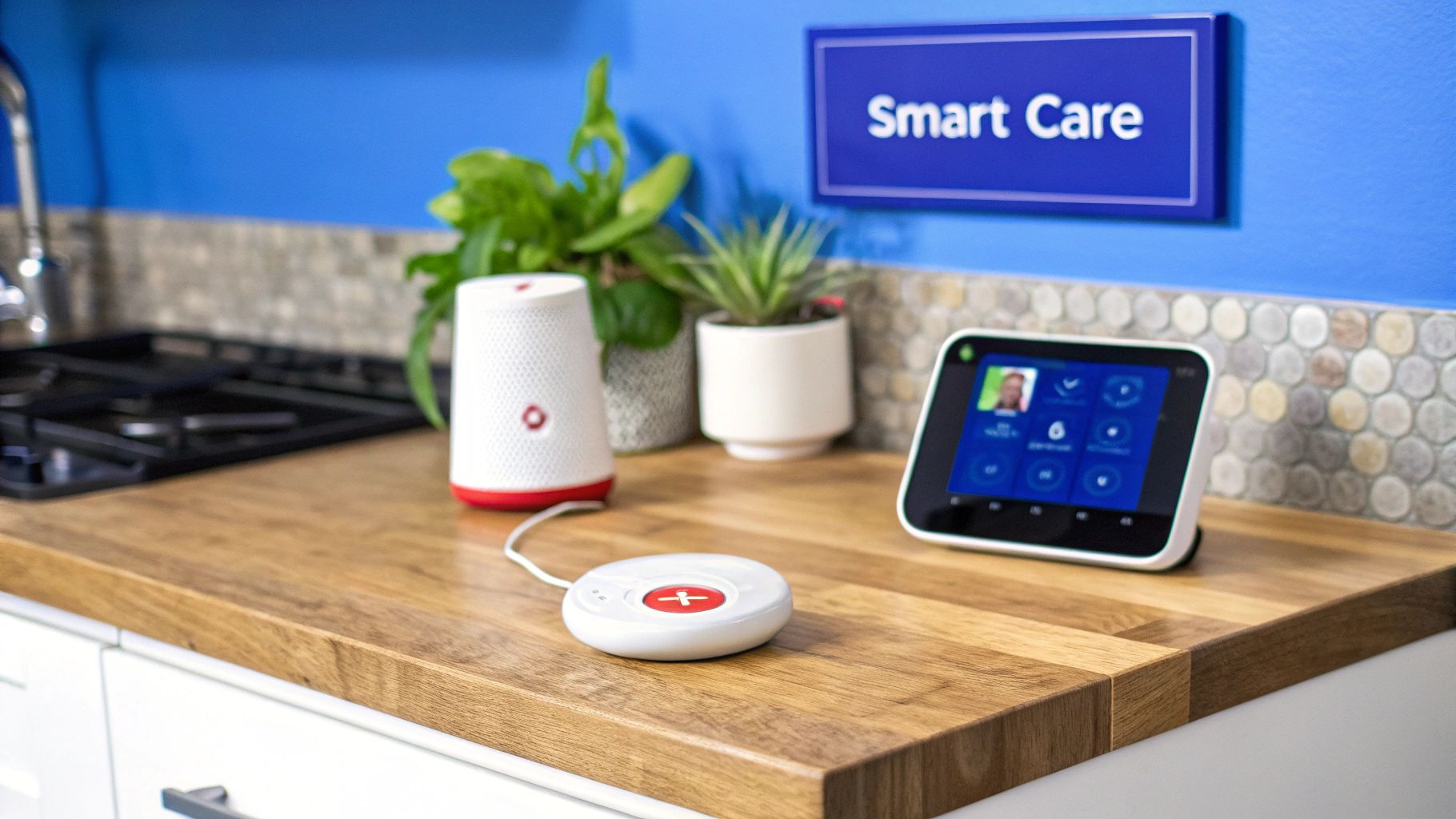
- Personal Emergency Response Systems (PERS): Medical alert buttons (wearable pendants or wristbands) and automatic fall detection systems that connect the user to a 24/7 emergency call center with the push of a button or upon sensing a fall.
- Smart Home Automation: Devices like automated lighting, smart thermostats, door/window sensors, and voice-activated assistants (like Amazon Alexa Care Hub) can enhance safety, comfort, and security, especially for those with mobility limitations.
- Medication Management Technology: Automated pill dispensers (like MedMinder) that provide reminders and dispense correct dosages at scheduled times, often alerting caregivers if a dose is missed.
- Safety and Location Tracking: GPS tracking devices for individuals prone to wandering (common with dementia), providing peace of mind for families.
- Caregiver Coordination Platforms: Apps and online portals that help family members and professional caregivers coordinate schedules, share updates, track tasks, and communicate effectively.
Why It Deserves a Place in the List:
This approach directly addresses one of the core challenges in the home care vs nursing home debate: ensuring safety and adequate supervision at home, especially when 24/7 human care isn't feasible or affordable. By extending the reach of caregivers and providing continuous monitoring and support, technology makes aging in place a more viable and secure option for a broader range of individuals, including those with chronic conditions or mild cognitive impairment. It offers a middle ground, enhancing the capabilities of home care to potentially delay or avoid the need for institutional care.
Benefits (Pros):
- Extended Independence: Allows seniors to remain in their familiar home environment longer.
- Enhanced Safety: Provides continuous monitoring and immediate alerts for falls or emergencies.
- Improved Health Outcomes: Timely data from remote monitoring can lead to better-informed healthcare decisions and proactive interventions.
- Peace of Mind: Offers reassurance to family members, especially those living far away.
- Reduced Caregiver Burden: Can lessen the need for constant direct supervision, providing respite for family caregivers.
- Potential Cost Savings: May reduce the need for higher levels of in-person care or delay costly nursing home placement.
- Better Care Coordination: Digital platforms streamline communication among family, caregivers, and medical professionals.
Challenges (Cons):
- Initial Costs: Technology hardware and subscription fees can be significant.
- Learning Curve: Seniors and sometimes caregivers may need time and training to adapt to new technologies.
- Reliability Issues: Requires reliable internet and power; malfunctions can occur.
- Privacy Concerns: Continuous monitoring can raise privacy issues for some individuals.
- Insurance Coverage: Coverage for telehealth is improving, but many monitoring systems and devices may not be covered by Medicare or private insurance (though some Medicaid waiver programs may offer support).
- Not a Substitute for Human Care: Technology cannot replace the need for hands-on assistance with ADLs or the value of human companionship.
- Resistance to Adoption: Some seniors may be hesitant or resistant to using technology.
When and Why to Use This Approach:
Technology-Enhanced Home Care is particularly beneficial for:
- Seniors who live alone and want to maintain independence but have some health risks.
- Individuals managing chronic conditions requiring regular monitoring.
- Families seeking additional peace of mind and ways to stay connected and informed about their loved one's well-being.
- Situations where 24/7 in-person care is not practical or affordable, using technology to bridge gaps in supervision.
- Supporting individuals with mild cognitive impairment through reminders, safety alerts, and location tracking.
- Facilitating smoother transitions home from hospital stays, allowing for continued monitoring.
In the context of home care vs nursing home, choosing technology-enhanced home care often reflects a commitment to maximizing independence and personalized care within the familiar setting of home, leveraging modern tools to mitigate risks traditionally associated with aging in place.
Examples of Implementation:
- GrandCare Systems: Offers a large touchscreen hub in the senior's home displaying messages, photos, schedules, and connecting to various sensors for activity monitoring and telehealth.
- Best Buy Health (formerly GreatCall): Provides mobile PERS devices (Jitterbug phones with urgent response buttons) and home-based monitoring systems (Lively Home).
- Electronic Caregiver: Offers systems like "Premier" which combine PERS, activity monitoring, medication reminders, and 24/7 support.
- Philips Lifeline: A long-standing provider of medical alert systems, now incorporating automatic fall detection technology.
Actionable Tips for Readers:
- Start Simple: Introduce one or two easy-to-use devices first (e.g., a PERS pendant) before adding more complex systems.
- Involve the Senior: Discuss technology options with the care recipient and involve them in decisions to improve acceptance and usage.
- Check Compatibility: Look for systems that can integrate multiple functions to avoid device clutter.
- Plan for Outages: Ensure backup power for critical devices (like PERS base stations) and have a non-tech backup plan.
- Assess Costs and Coverage: Investigate purchase vs. leasing options. Check thoroughly with insurance providers (including Medicare Advantage plans and relevant Medicaid programs) about potential coverage for devices or telehealth services.
- Test Regularly: Routinely test emergency alert systems to ensure they are functioning correctly.
- Prioritize User Support: Choose providers known for good customer service and technical support.
- Create a Tech Guide: Make a simple map or list showing what each device does, where it is, and basic troubleshooting steps.
Video Example:
Watch this video to see how some of these technologies work in practice:
By thoughtfully integrating technology, home care can become an even more robust and sustainable choice for many seniors and their families navigating the home care vs nursing home decision.
8-Care Options Comparison Matrix
| Care Option | Implementation Complexity 🔄 | Resource Requirements ⚡ | Expected Outcomes 📊 | Ideal Use Cases 💡 | Key Advantages ⭐ |
|---|---|---|---|---|---|
| Traditional In-Home Care | Moderate – requires caregiver hiring and scheduling | Requires professional caregivers, possible home modifications | Personalized care maintaining independence; variable intensity | Part-time or full-time care at home; preference for familiar environment | Personalized one-on-one care; flexible scheduling; promotes autonomy |
| Nursing Home Care | High – 24/7 medical and nursing staff coordination | Significant staffing and medical resources | Continuous medical supervision; comprehensive care | Individuals needing constant medical oversight; rehabilitation | Immediate medical response; comprehensive services; social interaction |
| Assisted Living Facilities | Moderate – managing facility operations and services | Staffing for basic healthcare, meals, transportation | Support with ADLs; socialization; balance independence and care | Seniors needing assistance without intensive medical care | Social and recreational activities; no home maintenance; safer environment |
| Adult Day Services | Low to Moderate – daytime program management | Staff for activities, health monitoring, transportation | Daytime supervision and engagement; caregiver respite | Seniors living at home needing daytime support and socialization | Cost-effective respite; structured social activities; health monitoring |
| Continuing Care Retirement Communities (CCRCs) | Very High – multi-level care coordination and contract management | Extensive staff, amenities, medical and housing resources | Seamless care transitions; lifestyle amenities; long-term security | Seniors planning long-term care with varying needs on one campus | Aging in place; predictable costs; comprehensive services; community |
| Family Caregiving with Support Services | Moderate – coordination among family and professionals | Family time and energy; supplemental professional services | Personalized, flexible care; risk mitigation for caregivers | Families preferring to provide care with professional backup | Cost-effective; maintains family bonds; flexible and evolving care |
| PACE (Program of All-inclusive Care for the Elderly) | High – interdisciplinary team and complex coordination | Adult day centers, in-home services, transportation | Comprehensive coordinated care at home; nursing home alternative | Nursing-home eligible seniors wanting to remain at home | All-inclusive care; coordinated services; no extra copays; preventive focus |
| Technology-Enhanced Home Care | Moderate – tech setup and ongoing management | Technology devices, internet, caregiver coordination | Extended independent living, enhanced safety and monitoring | Home care with desire for enhanced safety and remote monitoring | Reduces supervision needs; data-driven care; emergency response enabled |
Choosing the Path That Fits Best
The decision between home care vs nursing home often feels like the central question, but as we've explored, the landscape of senior care is rich with diverse options. From traditional in-home assistance and skilled nursing facilities to assisted living, adult day services, CCRCs, PACE programs, family caregiving support, and technology-enhanced solutions, numerous pathways exist to support aging individuals.
The most critical takeaway is that there isn't a single "right" answer. The optimal choice is deeply personal, hinging on a careful evaluation of individual health requirements, desired level of independence, personal preferences, the strength of existing support systems, and financial capacity. Understanding the specific benefits and drawbacks associated with each option, beyond a simple home care vs nursing home comparison, is essential. A significant factor in this decision is affordability. Properly planning for and managing the cost of long term care is crucial for securing quality support without jeopardizing financial stability.
Mastering the differences between these care models empowers you, your family, or your clients to make truly informed choices. This knowledge moves beyond the basic home care vs nursing home dilemma, enabling the selection of a care plan that genuinely enhances comfort, safety, and overall quality of life. It ensures that the chosen path aligns seamlessly with individual needs and values.
Your actionable next steps should include:
- Conducting a thorough assessment of the senior's current and anticipated needs (medical, social, personal).
- Having open and honest conversations with the individual and involved family members about preferences and concerns.
- Researching local providers and facilities specific to the options you're considering.
- Consulting with healthcare professionals, financial advisors, or elder care specialists for personalized guidance.
Taking the time to navigate these options thoughtfully ensures that the final decision promotes dignity, maximizes well-being, and provides peace of mind for everyone involved. While the process requires careful consideration, finding a supportive and appropriate care setting that truly fits is achievable.
If you're exploring in-home care solutions, particularly in the Mercer County, NJ area, Caring Hands Senior Services offers personalized support tailored to individual needs. Their expertise in providing compassionate home care, including assistance with Medicaid eligibility, can help you navigate the complexities and create a plan that allows seniors to age comfortably and safely in their own homes.
